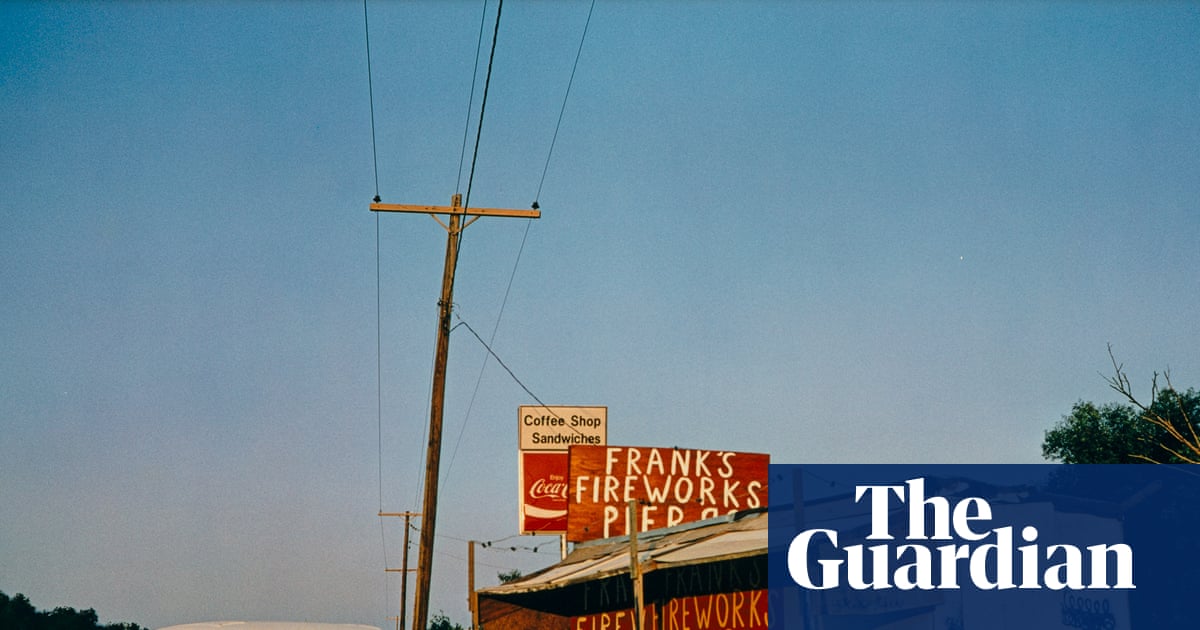
A new exhibition brings together new dye-transfer prints of the classically American photographer’s work
A
s a small child, Winston Eggleston was only vaguely aware that his father, William Eggleston, was a famous photographer. For all he knew other children also had parents who were friends with Dennis Hopper, or who spent hours tinkering on a piano between occasional, fevered photography sprees, or who had taken the world’s most iconic picture of a red ceiling.
“It’s all normal to you, because you don’t know anything different,” Winston recently recalled. “Looking back, I was lucky.”
But he was intrigued by the yellow boxes of Kodak film he saw lying around his house, and by an odd, sour-smelling paper on which his father occasionally printed photographs. These were materials for dye-transfer, a special technique used to print fashion and advertising photos of exceptionally vibrant color. As one of the first art photographers to embrace color photography – at a time when the art world regarded color as vulgar – Eggleston began using dye-transfer, in the 1970s, to give his photos a startling Technicolor pop.