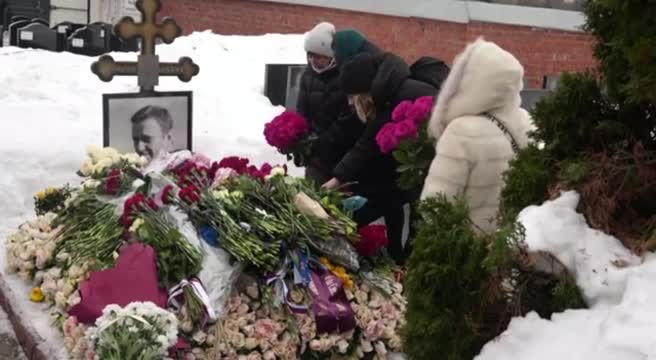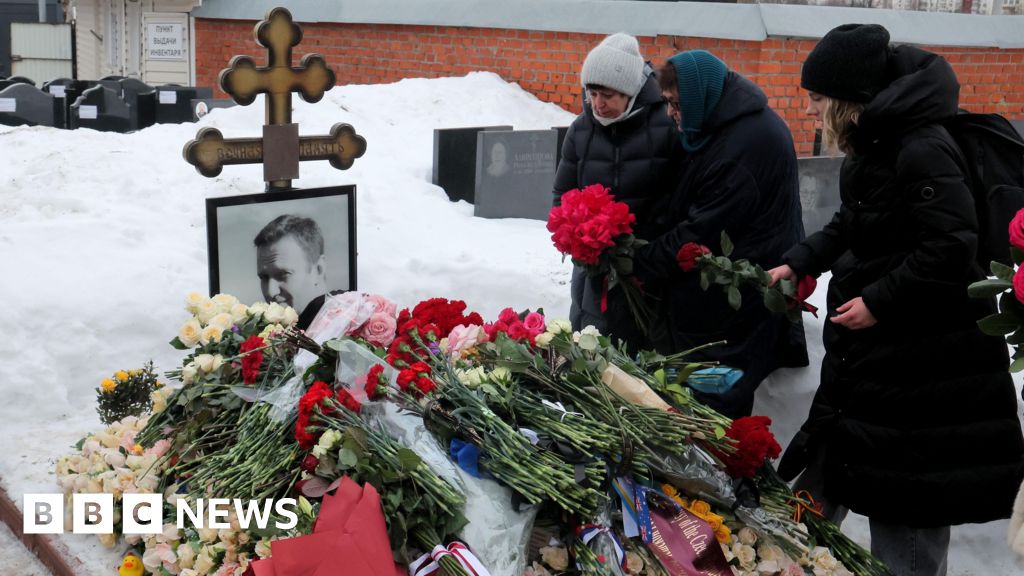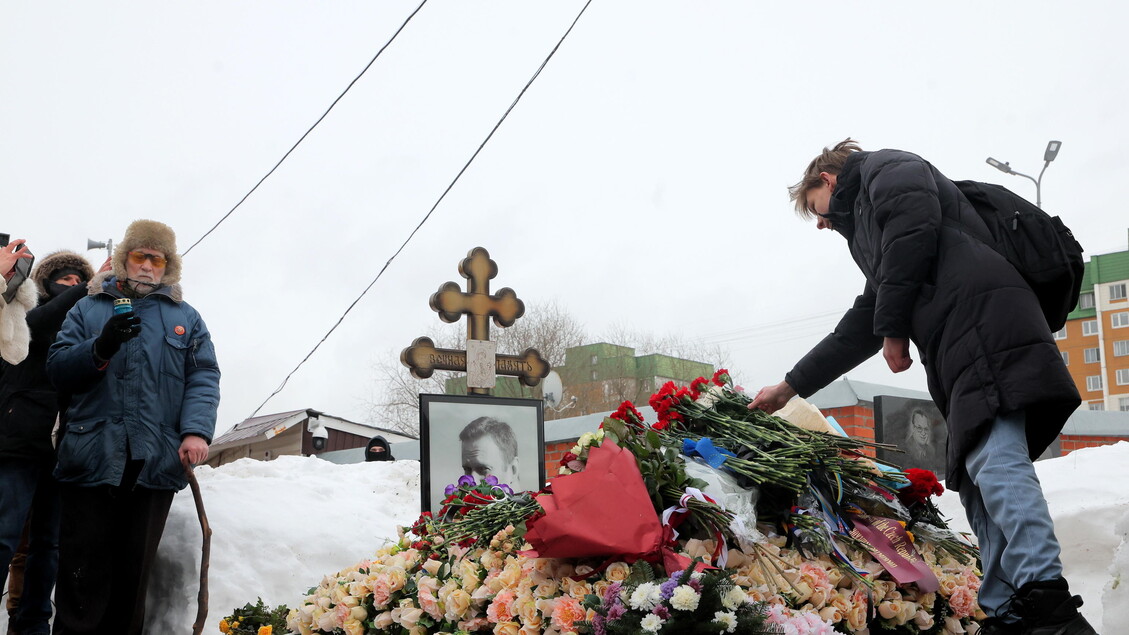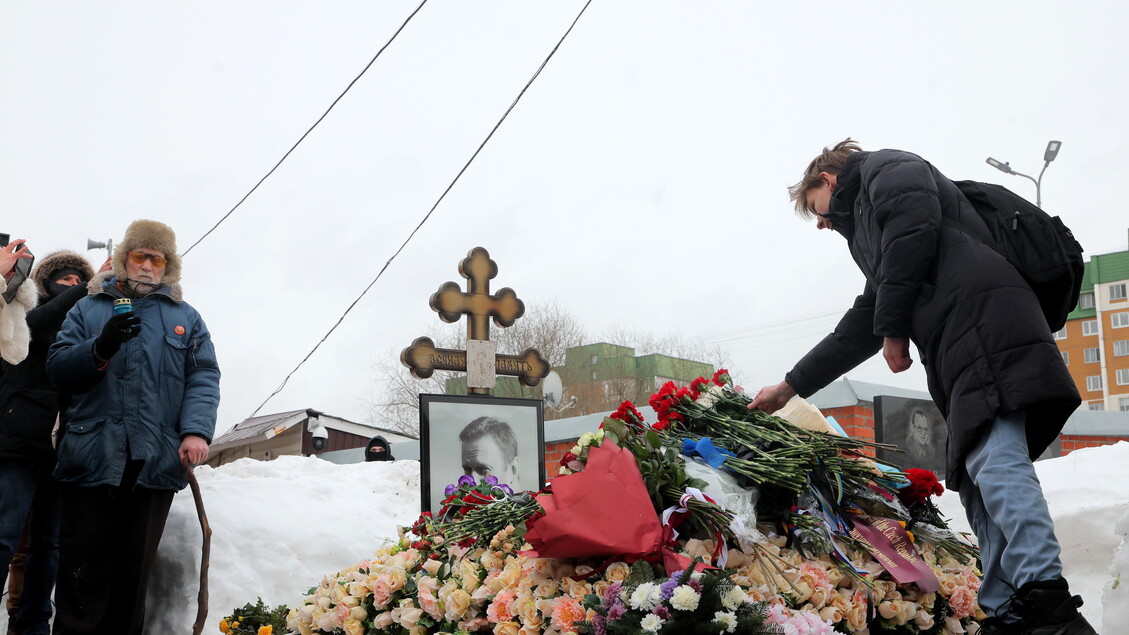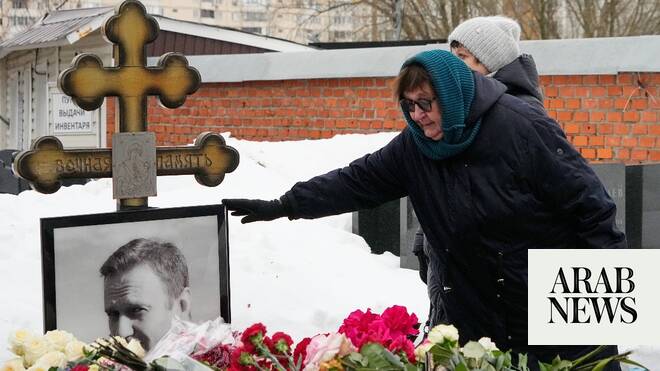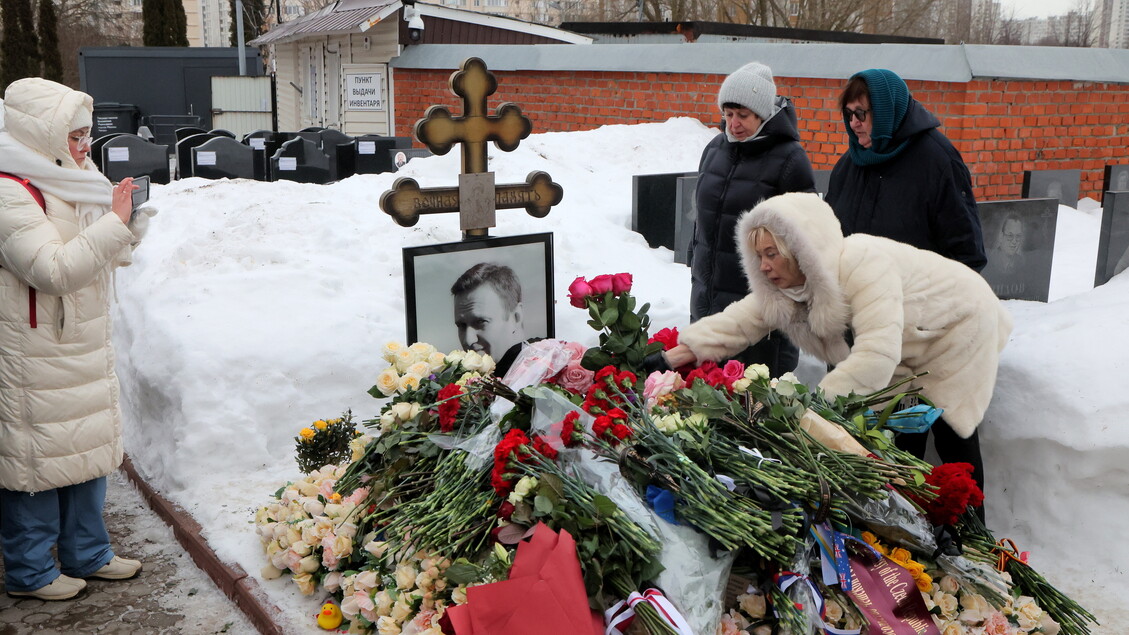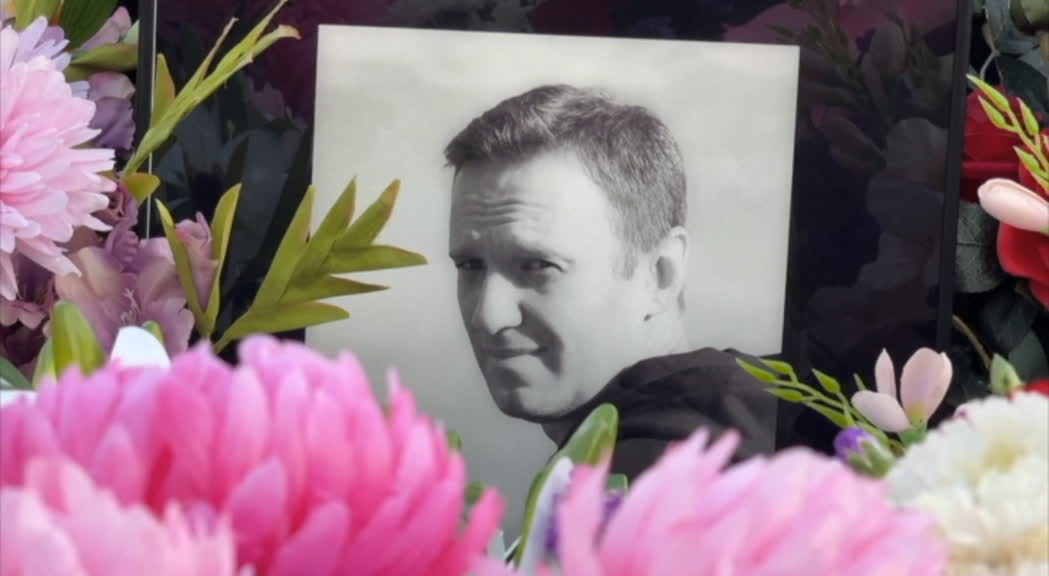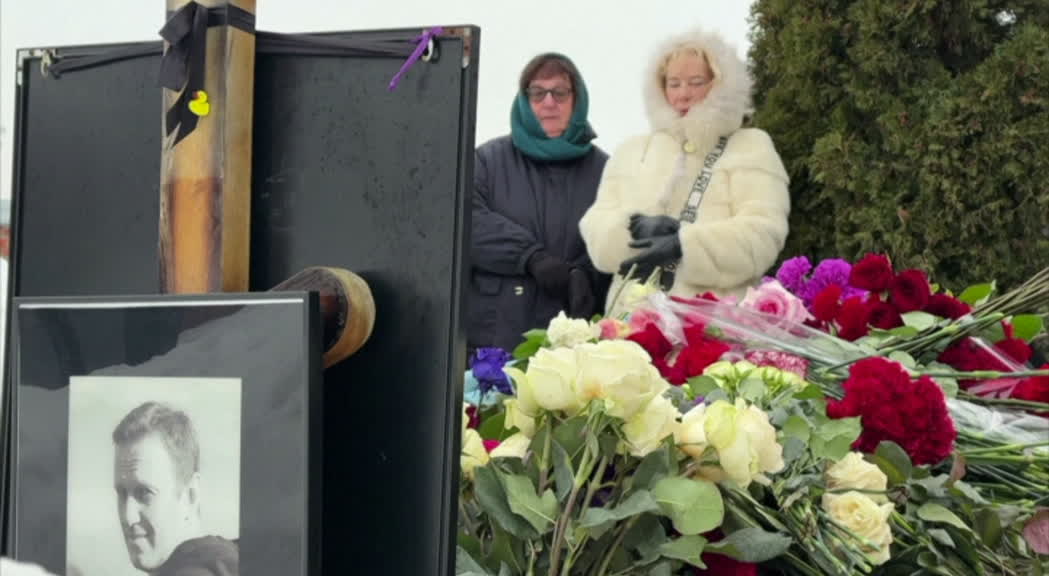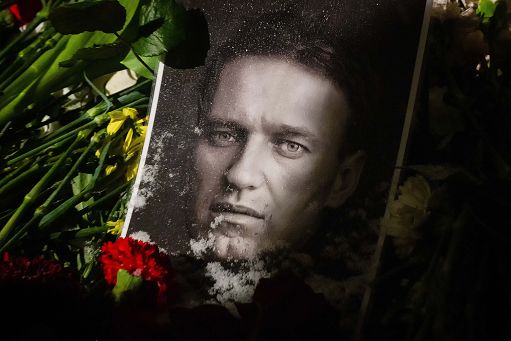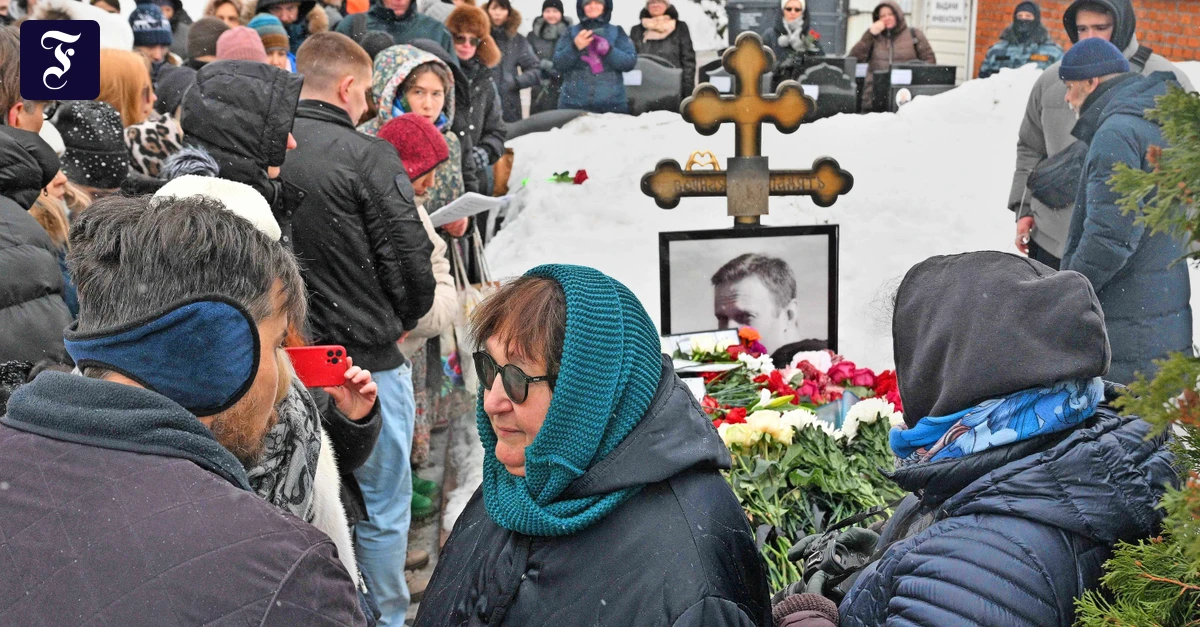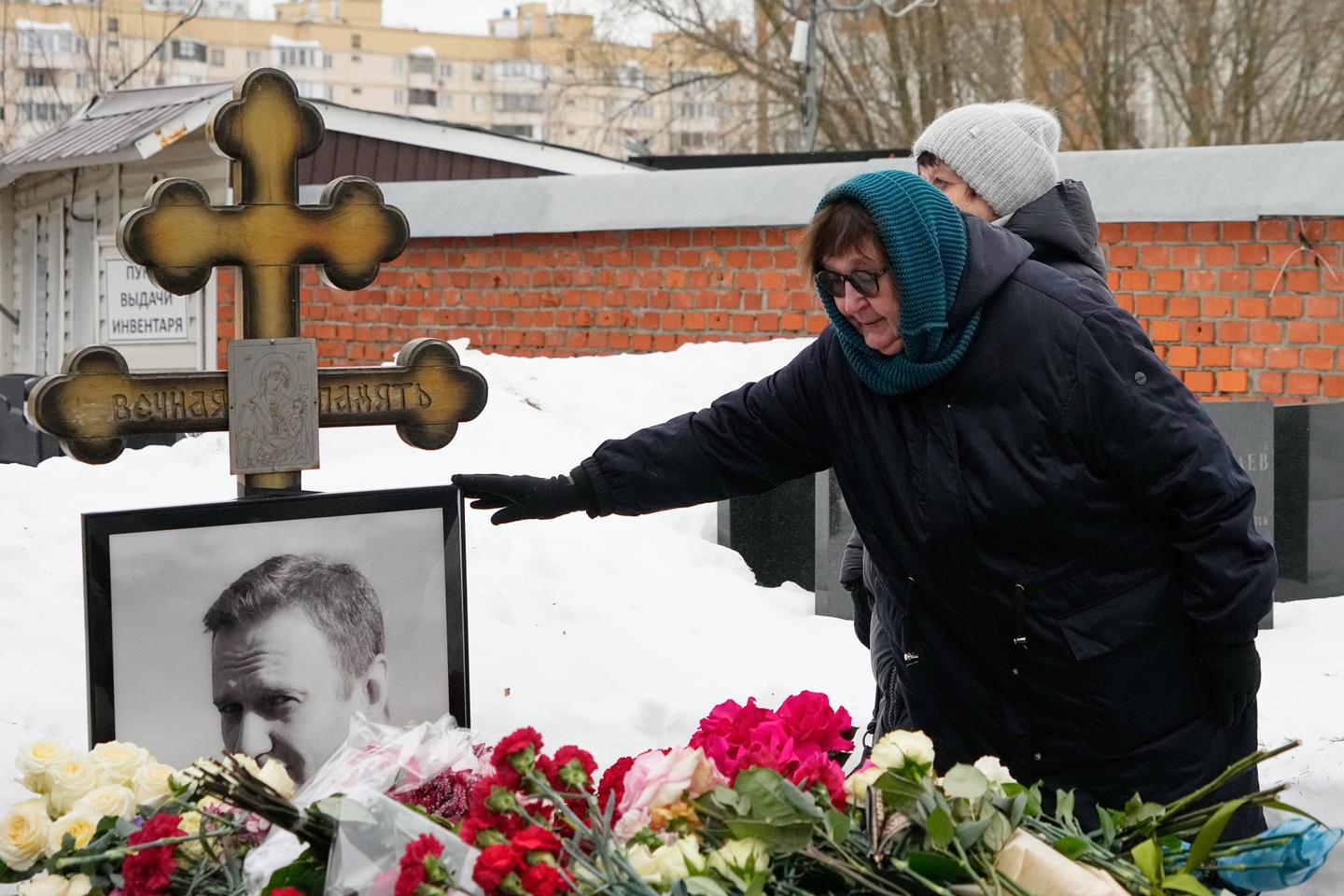
Lyudmila Navalnaya, Alexei Navalny's mother, in front of her son's grave at Borisovo Cemetery in Moscow, February 16, 2026. ALEXANDER ZEMLIANICHENKO/AP
In Vladimir Putin's Russia, it is not forbidden to lay flowers on the grave of its most prominent opponent. "It's one of the few remaining ways for us to come together publicly. Against the Kremlin. For Navalny..." explained Nastia, 25, reached by text message. Along with several hundred other Muscovites, the student went on Monday, February 16, to mark the second anniversary of Alexei Navalny's death in prison, at the cemetery where his body lies. "We are not alone!" the young woman insisted.
She asked to remain anonymous, like the other ordinary citizens contacted by Le Monde after the moment of reflection. They had to defy a prohibition: Any public support for Navalny's movement, whose organizations are officially accused of "extremism" and "terrorism," is subject to prosecution. The opponents laid their flowers in silence. The police and a few Kremlin supporters stood guard at the cemetery entrance.
"He was an incredibly courageous man, a true patriot, who died simply because he yearned for freedom and peace in his country. Here, we share the same ideas," Nastia said. "Here" is Borisovo Cemetery, about 20 kilometers southeast of the Kremlin, located in the suburban area where the Navalny family lived before his poisoning in Siberia in August 2020, his long months of treatment in Germany and then his arrest in January 2021 as soon as he returned to Moscow. On February 16, 2024, at the age of 47, the opposition leader died in a prison in Russia's far north, where he had been transferred two months earlier to serve a 19-year sentence for "extremism."