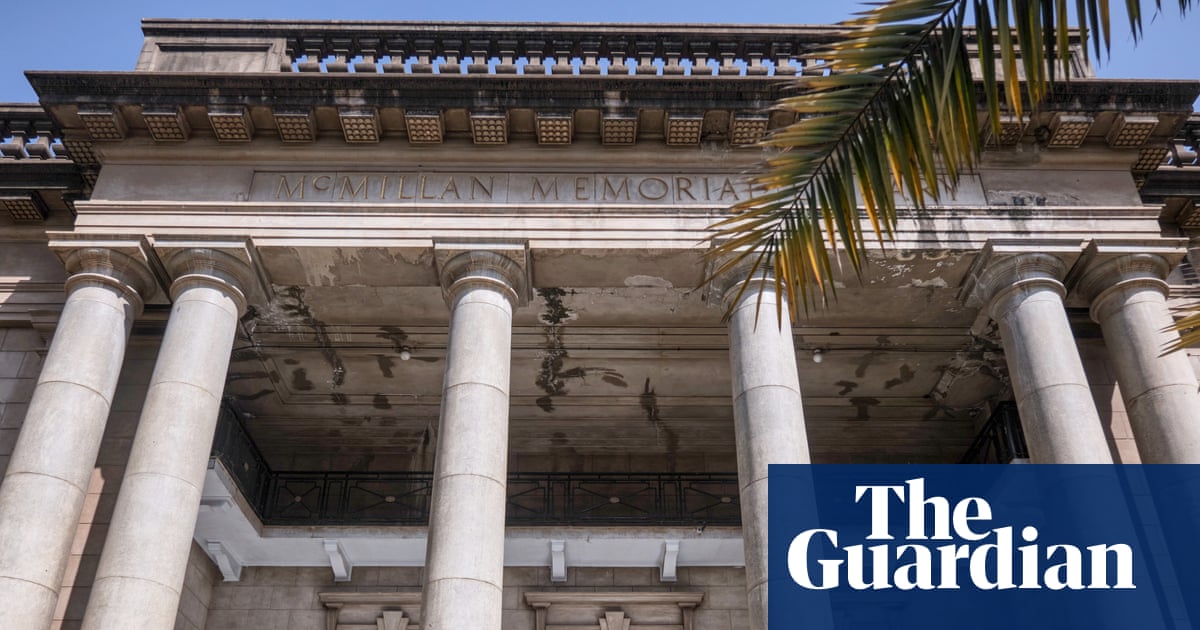
Once a whites-only enclave, the grand McMillan Memorial library is one of three in the Kenyan capital that have been transformed for the community
own a steep, narrow staircase, the basement of the McMillan Memorial Library in Nairobi holds more than 100 enormous, dust-covered bound volumes of newspapers. Here too are the minutes of council meetings and photographic negatives going back more than a century.
“Here lie some of the minute-by-minute recorded debates from the time British colonial powers ruled Nairobi, when it was a segregated city,” says Angela Wachuka, a publisher. Seconds later, a power cut plunges the room into darkness. “We still have a great deal of work to do,” she adds.
Wachuka and writer Wanjiru Koinange first ventured into this neoclassical building when they were hunting for a venue to host the Kwani?, now Kenya’s most significant literary festival but which until then had been held mostly in private gardens. The McMillan library, in the heart of Nairobi’s central business district, seemed ideal.
The only building in Kenya protected by an act of parliament, the library has colonial roots, built by Lucie McMillan in memory of her husband, Sir William Northrup McMillan, an American-born settler. It was inaugurated in 1931 as a “whites-only” space, the racial segregation continuing until 1958, when the city council took over its management.