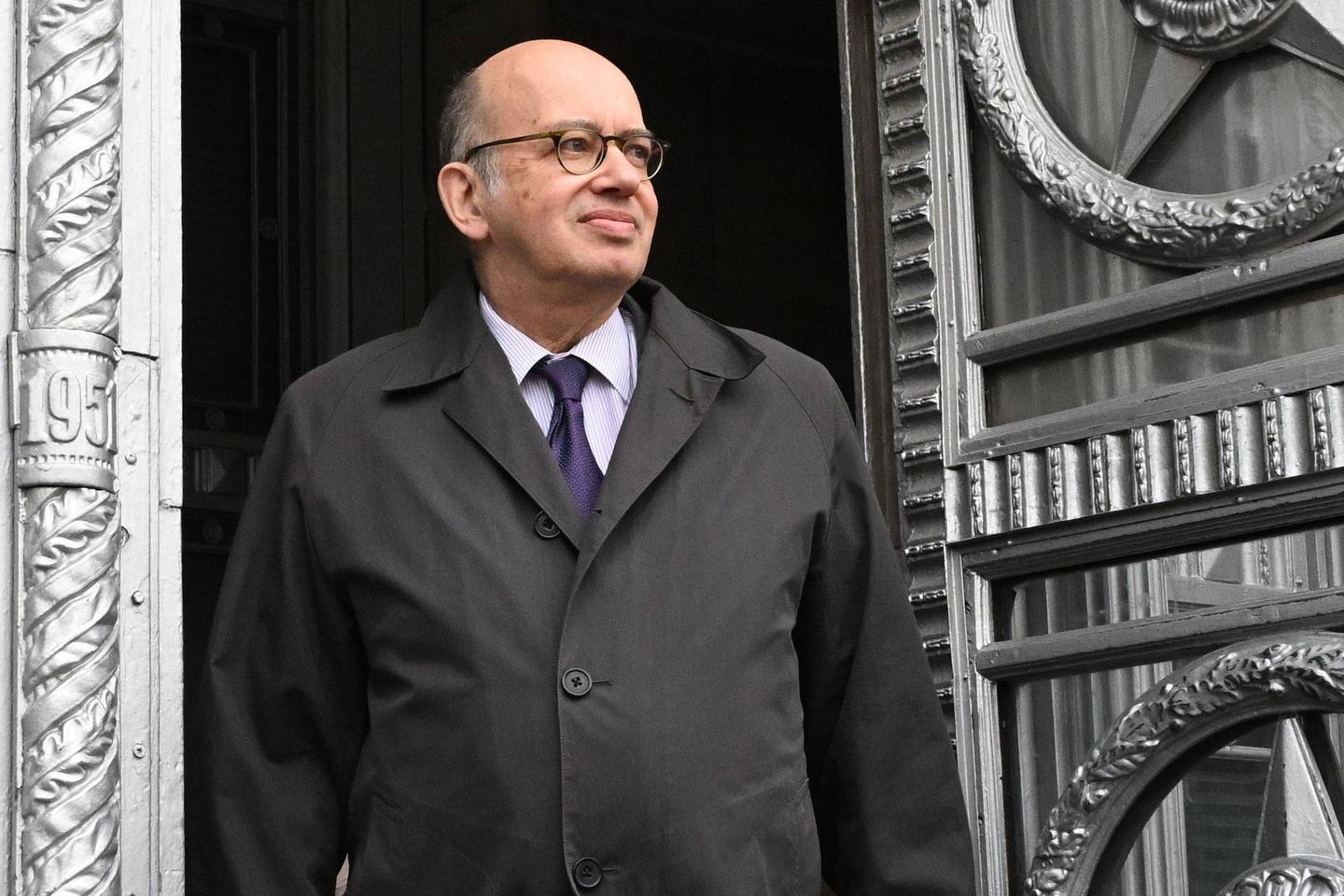
Pierre Lévy, in Moscow, in 2024. ILYA PITALEV/SPUTNIK/SIPA
French ambassador to Moscow from 2020 to 2024, Pierre Lévy witnessed the mounting tensions that led, in February 2022, to Russian President Vladimir Putin's "special military operation" against Ukraine. In Au cœur de la Russie en guerre ("At the Heart of Wartime Russia" 2025, untranslated), he recounts this "descent into the abyss." Le Monde interviewed him ahead of his participation in the La Nuit de l'Europe ("Europe Night") conference, organized by Sciences Po University in Strasbourg on February 20-21.
On February 24, the anniversary of the Russian invasion of Ukraine and the start of the war, the United Nations is expected to adopt a resolution. Will this be a mere formality, or will the vote reveal the new geopolitical realities?
This vote in the United Nations General Assembly will serve as a barometer. On March 2, 2022, just after the invasion of Ukraine, 141 countries [out of 193] voted for the resolution condemning Russian aggression, calling for respect for territorial integrity and the principles of the UN Charter. Five countries voted against (Russia, Belarus, Eritrea, North Korea, Syria) and 35 abstained, including China. The situation was clear. Then, in 2025, there were two resolutions: One submitted by Ukraine and backed by the Europeans, the other by the US under Donald Trump, who, de facto, allied with Vladimir Putin's Russia to promote their shared idea of a quick peace, without condemnation of Russian aggression or defense of Ukraine's territorial integrity.