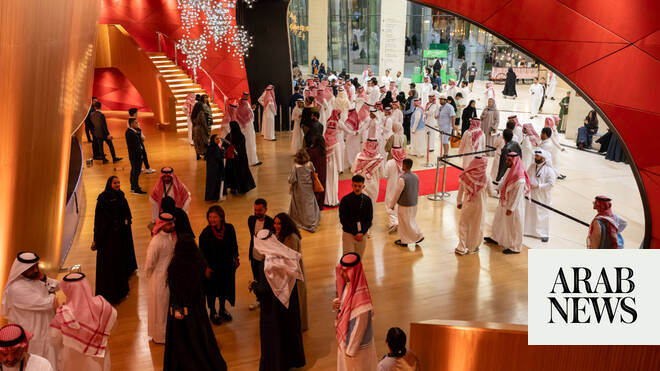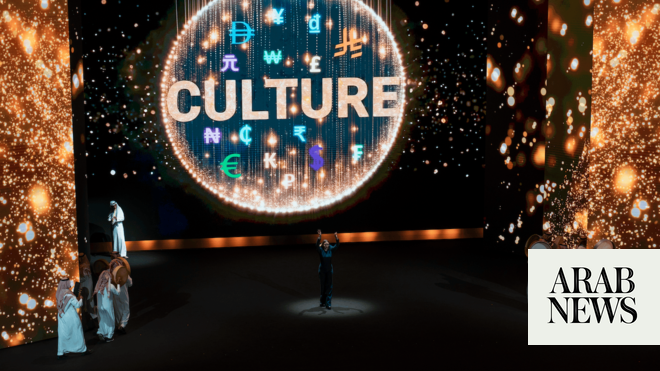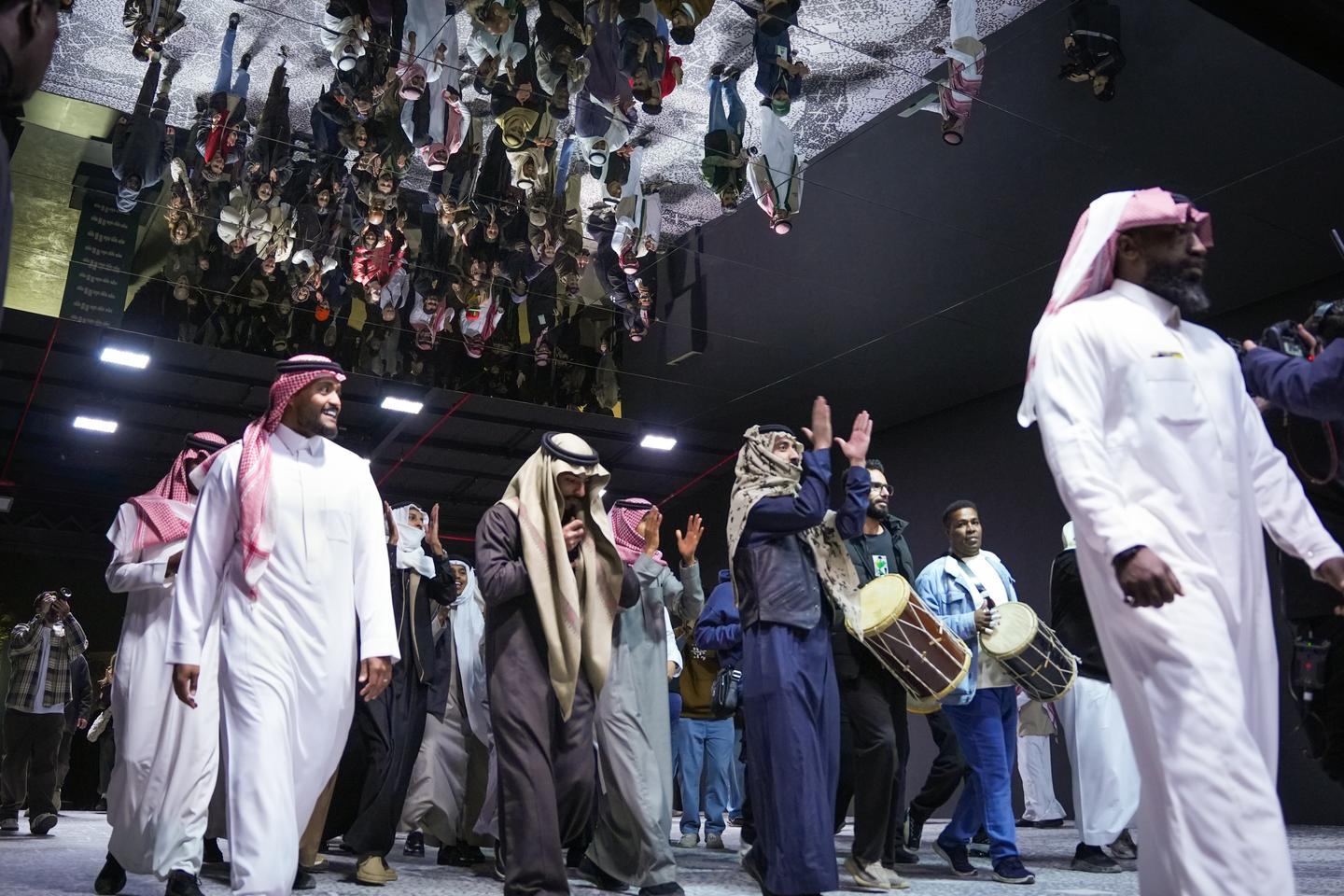
The parade at the JAX arts hub during the Diriyah Contemporary Art Biennale in Saudi Arabia, on January 30, 2026. ALESSANDRO BRASILE/THE DIRIYAH BIENNALE FOUNDATION
Riyadh, January 29. An unusual parade set off through the new arty JAX hub, a string of former industrial warehouses transformed into cultural spaces. Located on the outskirts of the Saudi capital, it hosted the third edition of the Diriyah Contemporary Art Biennale. Pick-up trucks and camels moved side by side through the streets, before the beat of drums took over. The performance culminated in a grand finale, a concert put together by Saudi artist and rapper Mohammed Alhamdan, blending Bedouin songs with electronic music. The message was clear: The Wahhabi kingdom is changing rapidly, but not breaking with its roots. "This is not folklore. People here are very young, hyperconnected – they know what's happening in the world," said Sabih Ahmed, co-curator of this Biennale with Nora Razian, which had a distinctly Global South orientation.
Western artists have become a rare sight here, with the exception of Frenchman Théo Mercier, whose immense sand sculptures evoke a world in decay, somewhere between ruined data centers and fossilized cars. Instead, attention shifted to the Palestinians Taysir Batniji and Hazem Harb, who each, with restraint, referenced the suffering of Gaza. Or to Colombian Daniel Otero Torres, who paid tribute to slain environmental defenders in Latin America. Ahmed explained, "We don't want to show what the West expects to see, but rather connections that are the very opposite of the tired, one-dimensional clichés served up by CNN."