As a teenager I wondered what I would have in common with this Nordic island. Then my teacher gave me a book of poetry
L
ying in my bed, I listened to what sounded like a woman screaming outside in the dark. I picked up my pen. A month of living in this Icelandic village and I was still unaccustomed to the impenetrable January gloom and the ferocity of the wind; its propensity to sound sentient. I had started to feel like the island was trying to tell me something, had a story it wanted me to write.
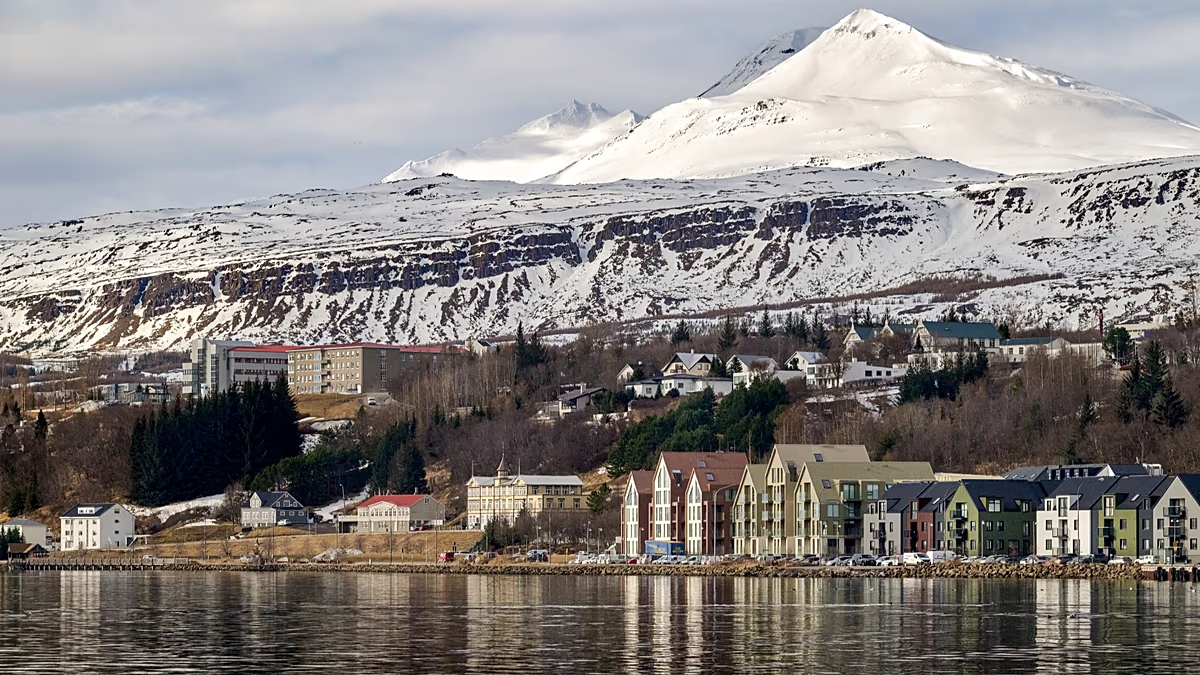
Sauðárkrókur, a fishing town in the northern fjord of Skagafjörður, was all mountain, sea and valley. There were no trees to slow the Arctic winds, and I had already been blown sideways into a snowbank while walking home from Fjölbrautaskóli Norðurlands vestra, my new high school whose name I could not yet pronounce. At night, my dreams were filled with a soundscape of weeping women. When I woke, their wailing continued in the gusts outside. That was when I wrote. I wrote to understand myself in this new place. I wrote to understand Iceland, its brutality and its beauty.
When I applied for a foreign student exchange at 16, I did not give much thought to where I would like to live. It was enough to have a year of respite from the pressure to decide what to do with my life. Since I was six years old, I had wanted to write, needed to write as one needs to breathe, but, influenced by wider social rhetoric regarding the arts, I had come to believe that writing wasn’t serious or worthy. Yet the thought of shackling myself to some other acceptable profession by way of university applications filled me with dread, and when the local Rotary club announced it would sponsor a student for a year abroad, I saw the opportunity as a lifeline. With no language studies under my belt, I was told that a host country would be selected for me based on “my personality”. When I received a letter informing me that I would be sent to Iceland, I was surprised. I knew nothing of this small Nordic island of 250,000 people. I wondered what we would have in common.