JEDDAH: Artificial intelligence is increasingly moving from the margins of healthcare innovation into its operational core. Rather than replacing clinicians, AI is being deployed to address persistent challenges across health systems, from administrative overload and staff burnout to fragmented data and inefficient patient flow.
Speaking to Arab News, Abbes Seqqat, chief executive officer of Rain Stella Technologies, and Eric Turkington, chief product officer, discussed how AI is already transforming healthcare delivery — and why its impact is most meaningful when embedded directly into clinical workflows rather than treated as a standalone tool.
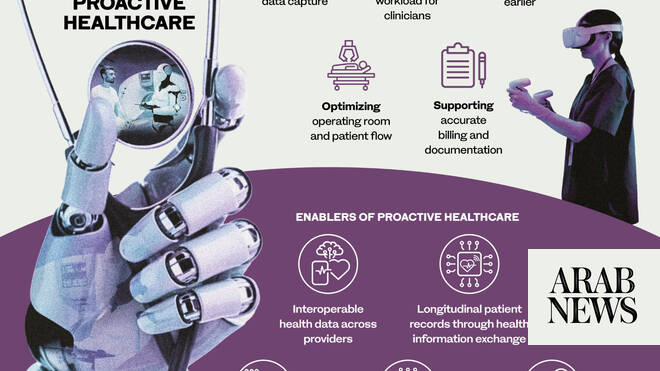
Seqqat describes AI’s role as accelerating a structural shift in healthcare delivery. “AI is accelerating the shift in healthcare from reactive to proactive care, because AI fundamentally helps detect, analyze and predict,” he said, noting that many health systems lack the resources to perform these tasks at scale.
Abbes Seqqat, chief executive officer of Rain Stella Technologies. (RST photo)
While AI use cases in healthcare are broad, Seqqat emphasized that the most effective applications today focus on operational and clinical fundamentals, including reducing administrative burden, identifying patient risks earlier, and capturing clinical data more reliably and in real time.