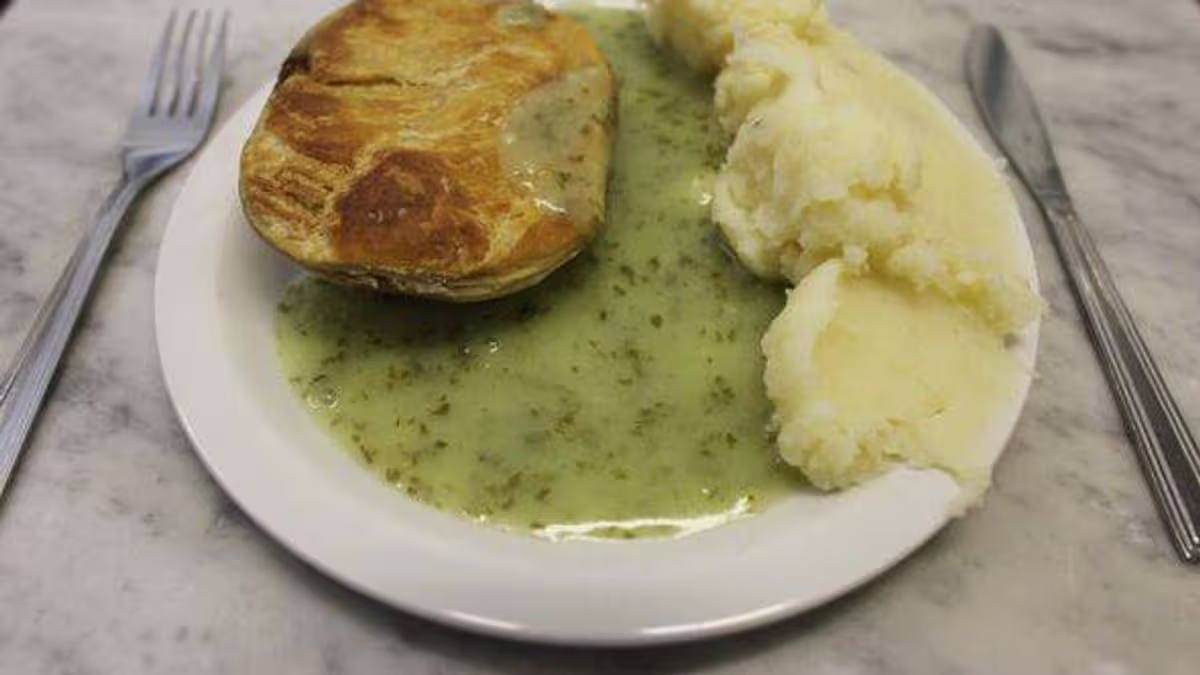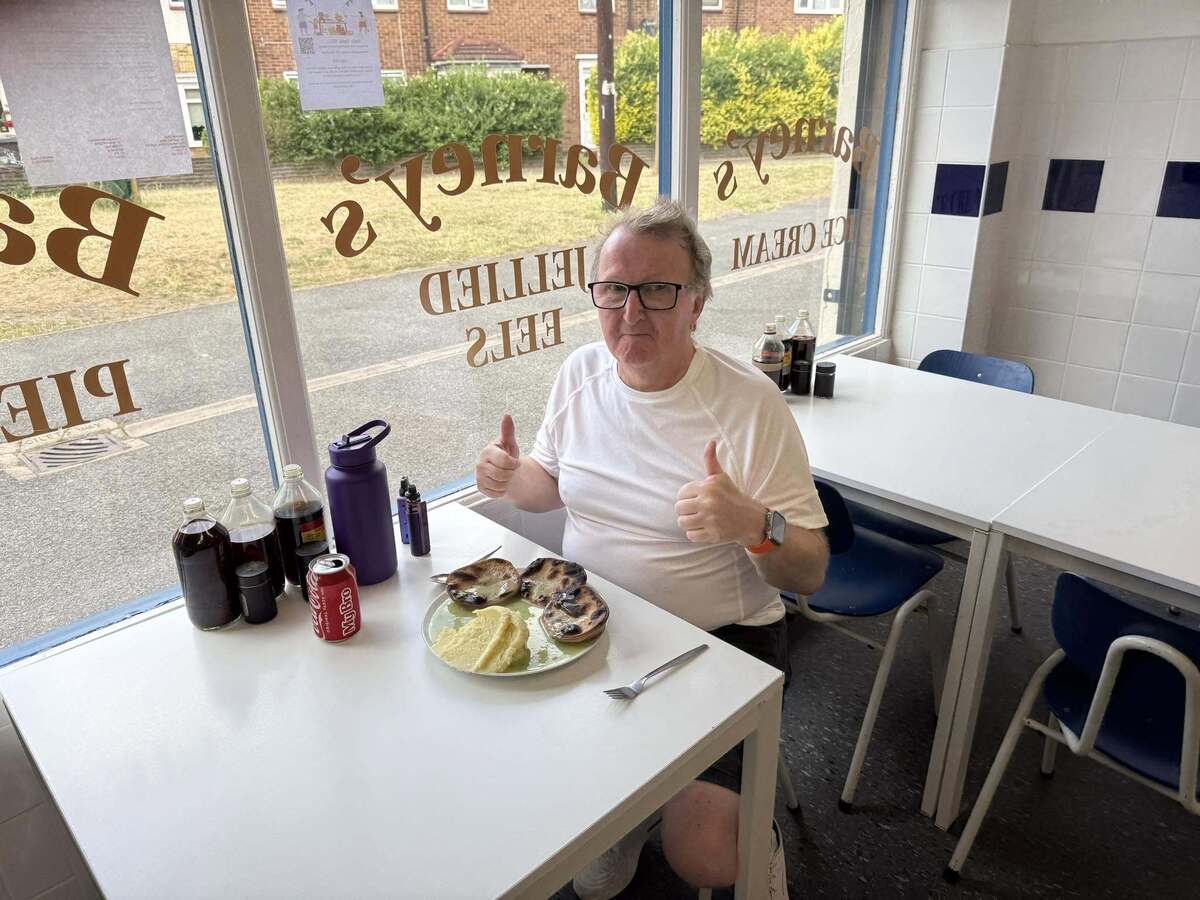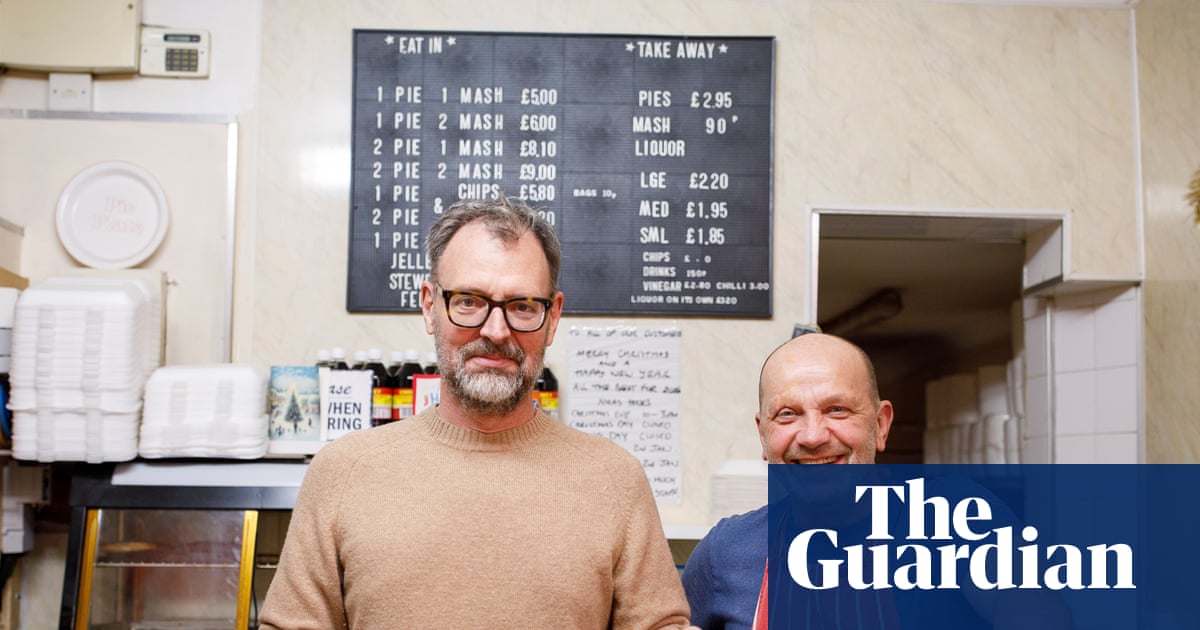
There used to be hundreds of pie and mash shops in London. Now there are barely more than 30. Can social media attention and a push for protected status ensure their survival?
O
utside it’s raining so hard that the sandwich board sign for BJ’s pie and mash (“All pies are made on the premises”) is folded up inside. The pavement along Barking Road in Plaistow is a blur through the front windows and deserted, and there are only two customers in the shop. Another sign – this one on the counter – says “CASH ONLY”.
Card machine companies often tell proprietor Nathan Jacobi that he’s missing out by not catering to customers who favour cashless transactions. “They’re the ones missing out,” he says. “Cos they ain’t getting pie and mash.”
London’s pie and mash shops, once threatened with extinction, seem to be experiencing a kind of resurgence. “London’s original fast food, ‘pie and mash’ is making a surprise comeback in the British capital …” announced the Washington Post in a recent article. “This renewed demand for hearty ‘cockney cuisine’, so-called for its working-class East End roots, has been observed across the city.” The revival is said in part to be down to the TikTok generation’s fascination with these bygone establishments and their obscure customs. M Manze’s in Bermondsey – London’s oldest surviving pie and mash shop, founded in 1902 – has never been busier. At Goddards at Greenwich, the Post reported, there are queues down the street every weekend.