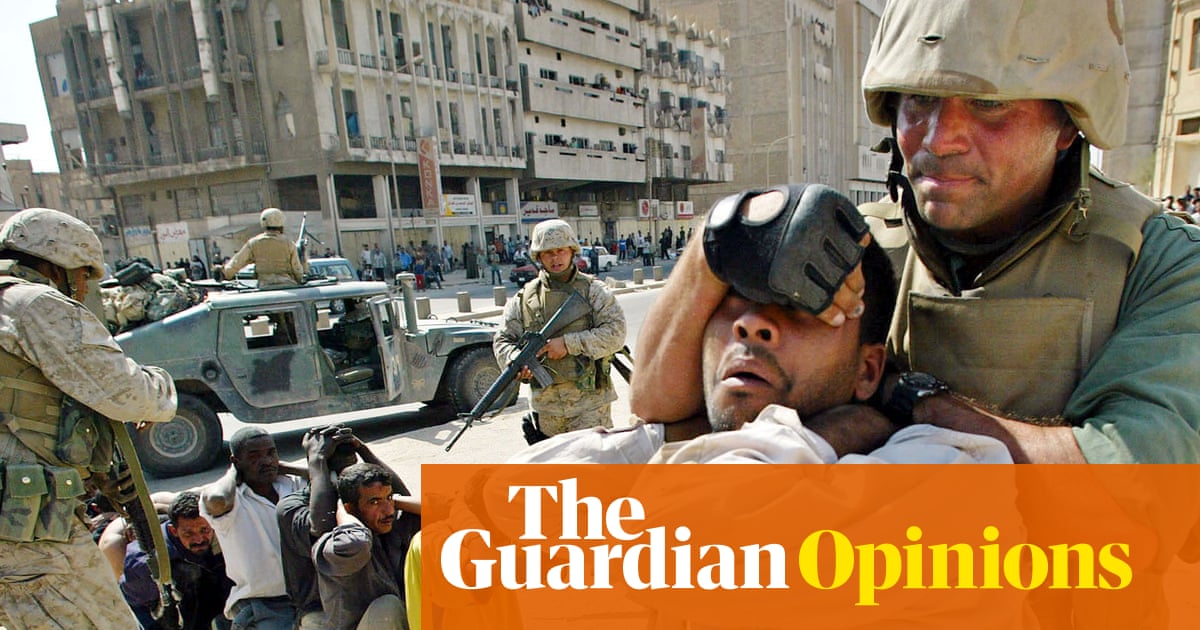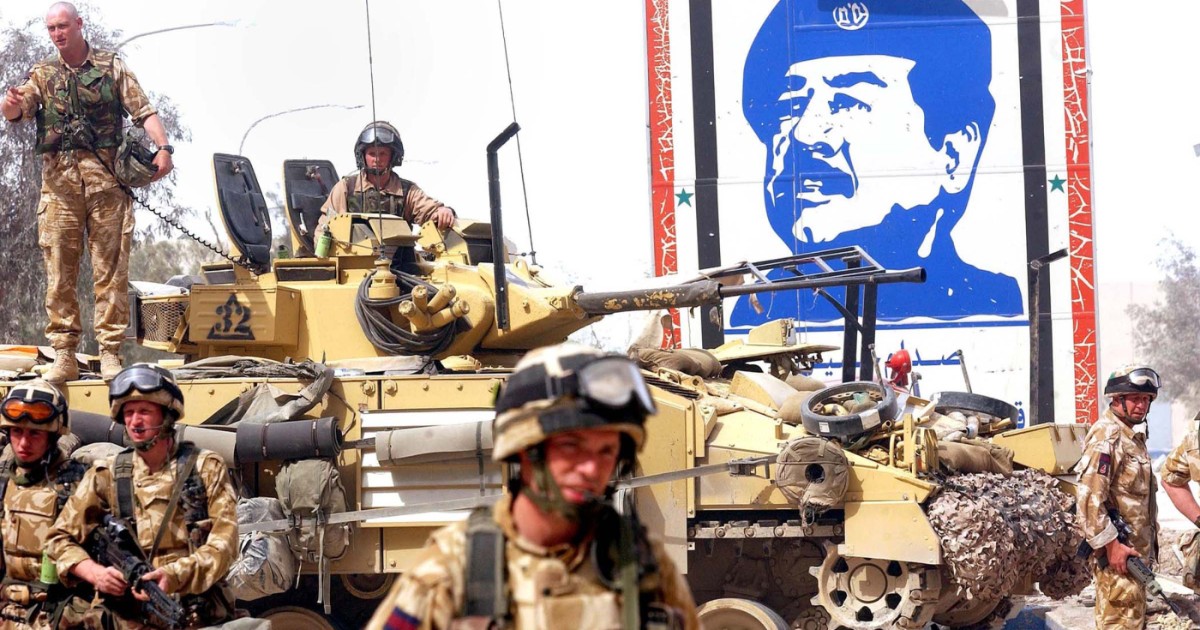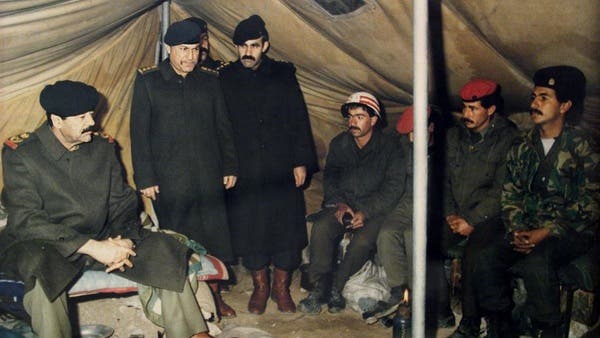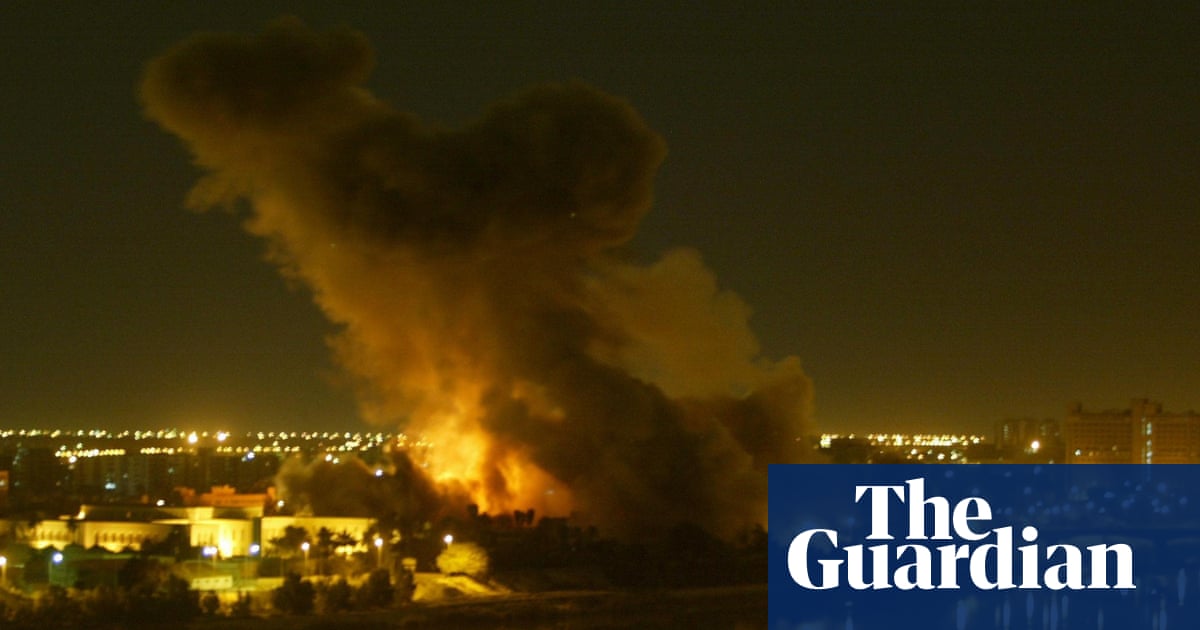
In spring 2003, exuberance at the fall of Saddam was swiftly followed by a descent into deadly chaos. Whether moving independently or embedded with troops, Guardian reporters witnessed the violence on the ground
T
he allied attack on Iraq began on 20 March 2003. The Guardian’s 4am edition on Friday 21 March carried the headline: “Land, sea and air assault.” The report was by Julian Borger in Washington and Rory McCarthy in Camp As Sayliyah, on the outskirts of Doha, the capital of Qatar. It opened: “The ground war began in Iraq last night as British and American marines stormed beaches on the Gulf coast in an assault on the south-eastern city of Basra, while explosions lit up Baghdad under a heavy bombardment by cruise missiles.”
The first British fatalities came shortly afterwards when a US helicopter crashed in Kuwait, killing all on board. Suzanne Goldenberg’s front-page report from Baghdad revealed that only two hours after the decapitation effort, Saddam Hussein himself had made a defiant appearance on television. A Guardian leader stated that the plain fact was this first “surgical strike” had missed its mark. Even had it reached its target, it would have been difficult to applaud. “State-ordered assassination sets an abominable precedent that encourages unwelcome emulation … The US must tread carefully – for the legal and moral grounds for this war are already very shaky.”