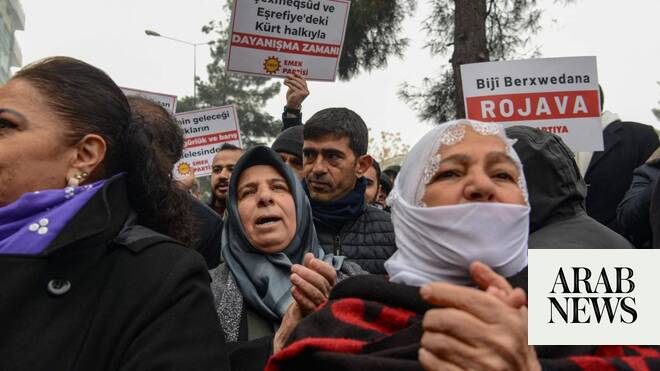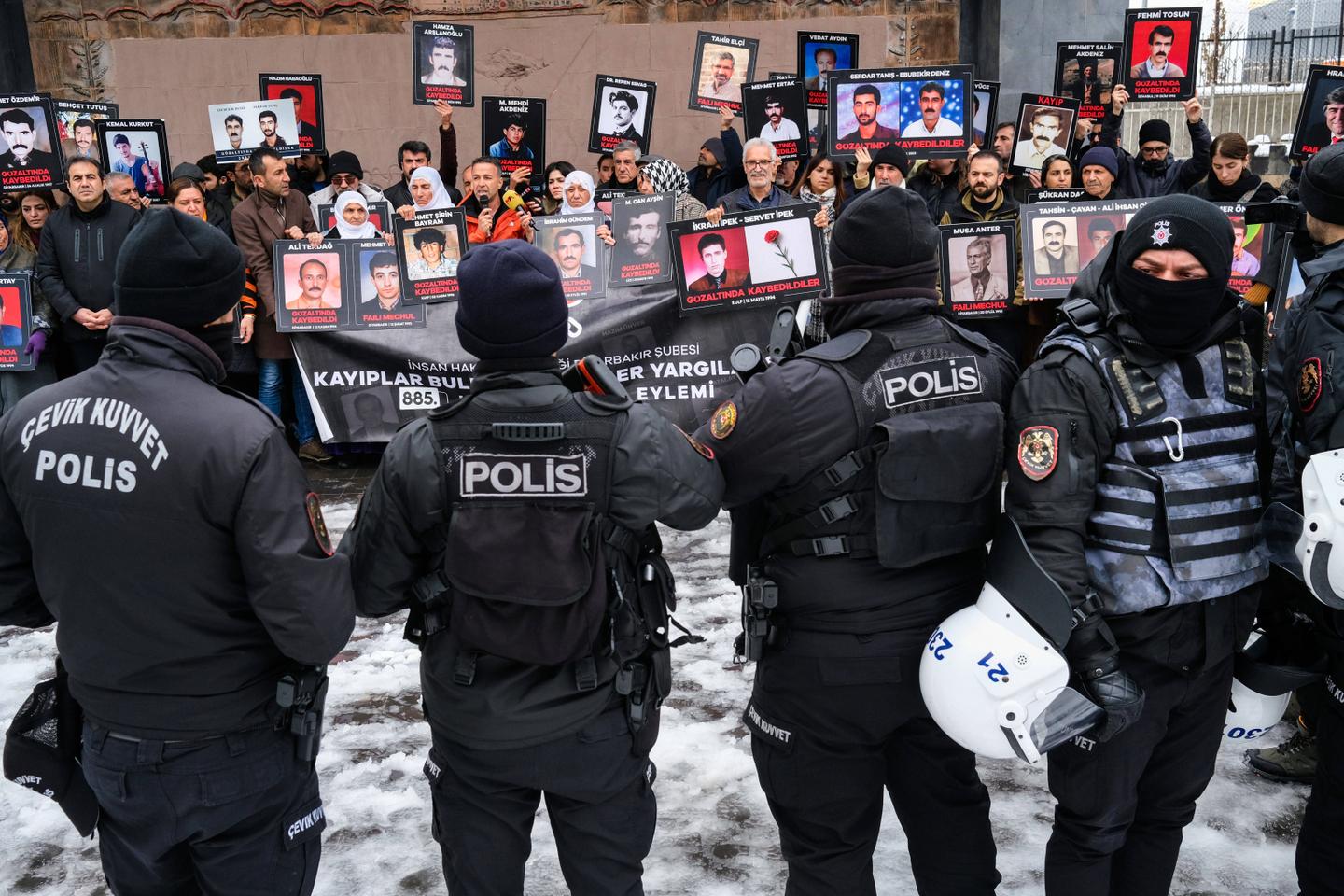
Families and loved ones held up portraits of missing persons during a demonstration in Diyarbakir, Turkey, on January 24, 2026. BILAL SECKIN/MEI/SIPA
The convoy of cars sped along the muddy roads, pausing for a few moments at a checkpoint manned by heavily armed soldiers before driving off again to the next village, just as lost in these desolate and impoverished lands as the last. Stepping out of their vehicles, exchanging handshakes, about a dozen people crisscrossed this deeply southern Kurdish region of Turkey, on the Syrian border, to meet with residents in their homes, gathered around hot tea or standing together out in the cold. Their gazes were heavy, their voices rushed. Everyone spoke only of the scent of war that had lingered in the air for days, despite the agreement reached on Friday, January 30, between Kurdish forces of northern Syria and the authorities in Damascus.
Men and women alike, the members were activists from the local branch of the Turkish pro-Kurdish DEM party (Demokratik Eşitlik ve Mücadele Partisi, the third-largest political force in Turkey), who had come from Suruç, a town that sits opposite Kobani, its twin city in Syria. Located just across the border, less than 5 kilometers away in a straight line, the Kurdish city – symbolic for its victory over jihadists in northeastern Syria – had been encircled since January 21 by the forces of the Syrian central government. From Suruç and the surrounding villages, its hill and flat-roofed gray houses can be easily distinguished behind the border wall built by the Turkish authorities.