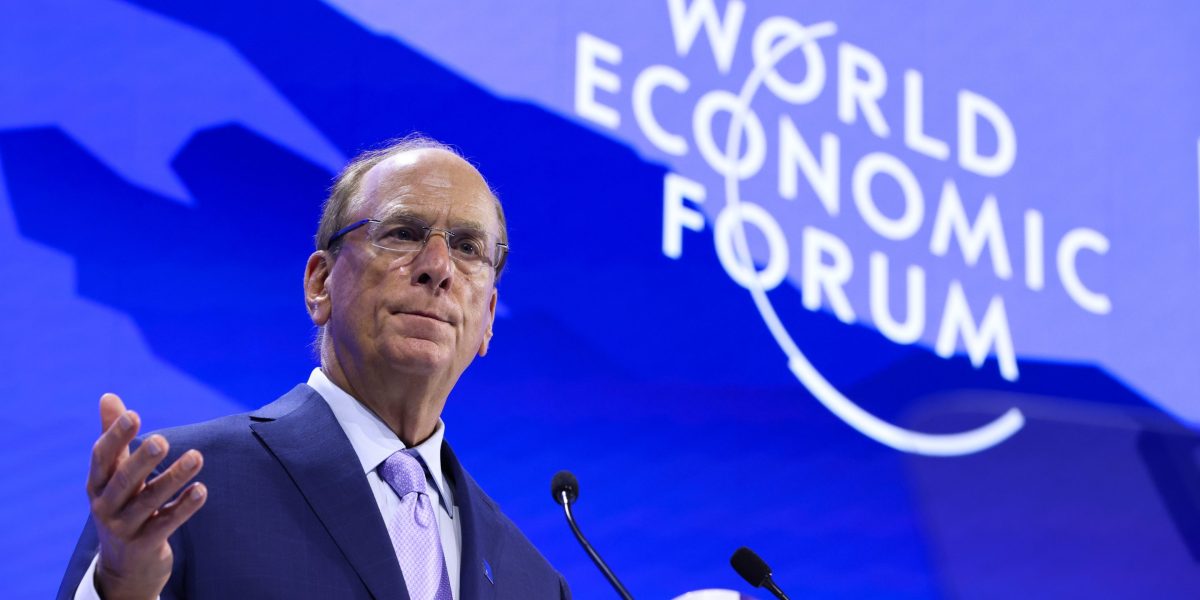
The artificial intelligence revolution could create even greater wealth inequality, according to BlackRock CEO Larry Fink. That’s why Fink recommends global business and political leaders be proactive in figuring out how to ensure workers aren’t left out of the financial growth AI is likely to create.
“If AI does to white-collar work what globalization did to blue-collar [work], we need to confront that directly. Not with abstractions about ‘the jobs of tomorrow,’ but with a credible plan for broad participation in the gains,” Fink said on Jan. 20 in his opening remarks at the World Economic Forum in Davos, Switzerland.
Fink was referring to some experts linking increased international trade and U.S. companies outsourcing labor overseas in the second half of the 20th century to a decrease in blue-collar jobs and lower wages for American workers, even as corporations have benefitted.
Now, the rise of generative AI technologies could have a similar effect on white-collar workers, Fink argued, at a time when several notable CEOs across industries — from Amazon’s Andy Jassy to Ford’s Jim Farley — have touted plans to slow hiring or reduce headcounts while offloading work to AI tools.
The comparison to past technological disruption is an apt one, says economist Lawrence D. W. Schmidt, an associate professor of finance at the Massachusetts Institute of Technology who studies the effects of AI on the labor market. From the digital age to logistics and communications technologies that helped enable globalization, past technological disruptions have typically created “both winners and losers” in the workplace, Schmidt says.