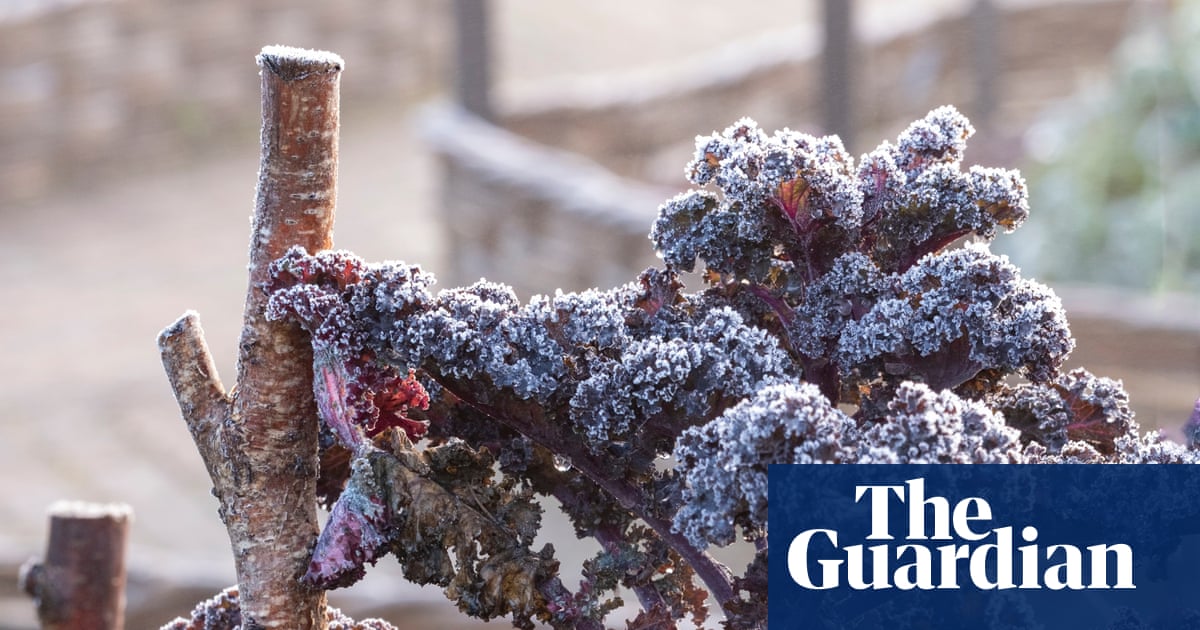
Garden crops such as apples, garlic, carrot and beetroot will grow better if they experience low temperatures in winter
H
aving made it through January, I’m wishing for the swift arrival of spring. After a long winter (they always feel long) seasonal change starts to loom. Yet I remind myself why, for many of the plants and crops we love, a sustained cold period is essential.
While little plant growth takes place in winter, important biological processes happen in this stillness. For a great number of plants that are able to survive cold weather, a good period spent below a certain temperature is key to their flowering in spring – a process called vernalisation.
The exact temperature and duration each plant needs to spend below it depends on the species and even the variety, although most of the fruit trees we grow outdoors in the UK have this “chill requirement”. For example, apple trees need to be exposed to between 700 and 1,000 hours below 6C (43F) but above freezing. Interestingly, plant breeders are developing varieties that have a far lower winter chill requirement so that apples can be grown in warmer climates than the UK’s, which is naturally ideal for them.