WASHINGTON: Take two snowballs and call me in the morning?
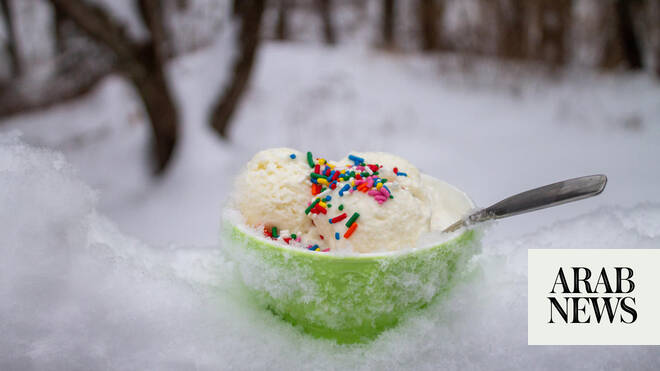
Dr. Sarah Crockett, who specializes in emergency and wilderness medicine, doesn’t explicitly tell her patients at New Hampshire’s Dartmouth-Hitchcock Medical Center to swallow snow, but she often prescribes more time outside. If that time includes eating a handful of ice crystals straight or adding ingredients to make snow cones and other frozen treats, she’s all for it.
“To stop and just be present and want to catch a snowflake on your tongue, or scoop up some fresh, white, untouched snow that’s collected during something as exciting as a snowstorm, I think that there’s space in our world to enjoy that,” Crockett said. “And while we need to make good choices, I think these are simple things that can bring joy.”
Getting outdoors to enjoy simple pleasures is unlikely to be front of mind for people in a 1,300-mile (2,100-kilometer) stretch of the United States where a massive weekend storm brought deep snow and bitter cold. Freezing rain and ice brought down power lines and tree limbs, leaving hundreds of thousands of homes without power or heating in the South, while snow upended road and air travel from Arkansas to New England.