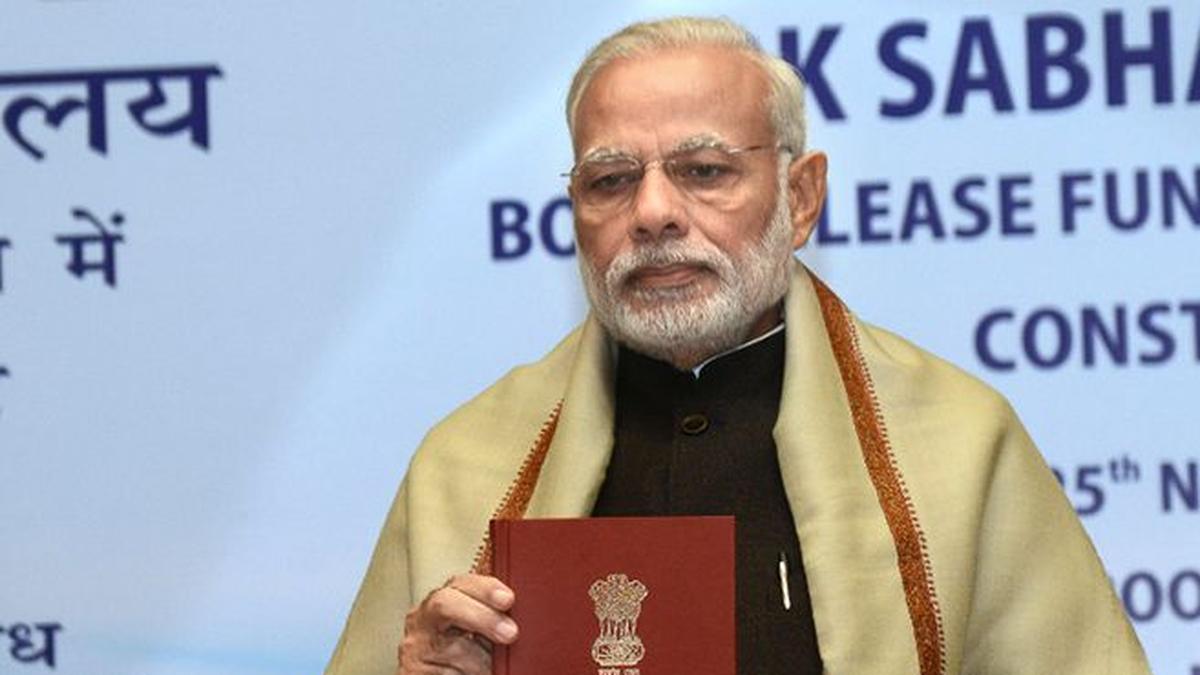
As India celebrates its 77th Republic Day on Monday (January 26, 2026), its founding document — the Constitution — has seen 106 amendments. Indira Gandhi’s 16-year tenure as Prime Minister saw the highest number of amendments (29), while Chandra Shekhar’s seven-month tenure saw the least (1). Under its current PM, Narendra Modi, India’s Constitution has seen eight amendments of which only one has been struck down by the Supreme Court.
In Mr. Modi’s eleven-year tenure, the Parliament passed five constitutional amendments in his first term (2014-2019) and three in his second term (2019-2024). The 99th Amendment — Modi government’s first attempt to amend the Constitution — allowed for the formation of National Judicial Appointments Commission (NJAC) to recruit, appoint, transfer judicial officers including judges, thereby replacing the Collegium. It was immediately struck down by the Supreme Court as ‘unconstitutional’.
The initial amendments deal with judicial appointments, India’s foreign policy with Bangladesh and overhauling of India’s taxation. However, the remaining amendments have altered India’s social fabric amending laws for communities — Scheduled Caste/Scheduled Tribes (SC/ST), Other Backward Classes (OBC), Economically Weaker Sections (EWS) and women.