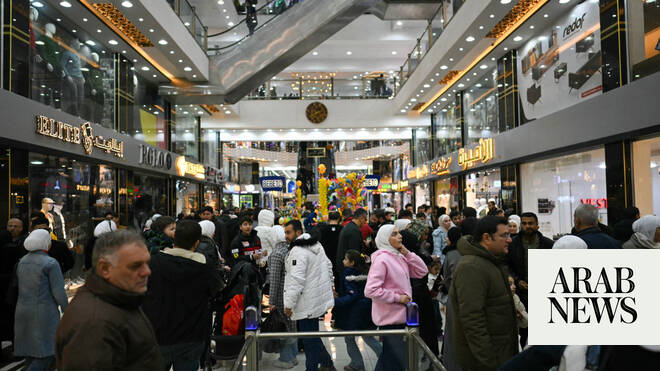
LONDON: After more than a decade in crisis mode, Syria’s micro, small, and medium-sized enterprises are beginning to shift their gaze from survival to possibility, as the gradual lifting of sanctions following Bashar Assad’s removal in December 2024 sparks cautious economic optimism.
That shift is especially visible among parts of the private sector, which has endured years of shortages, isolation, and a lack of investment over the course of Syria’s grinding, 14-year civil war.
For Amira Saradar, a Damascus-based dentistry student who launched a home-based bakery called Maple in 2021, the change has meant easier access to basic supplies that were once difficult to source.
Before Assad was toppled, sourcing and paying for ingredients for her Western-style desserts — including creme brulee cream puffs, lemon swirl biscuits and tiramisu cookies — was a constant struggle.
“When Maple started, Assad was still president and sanctions hadn’t been lifted, so everything was harder to get,” Saradar told Arab News. “Prices were much higher than they should have been, and the profit margin was very low.”