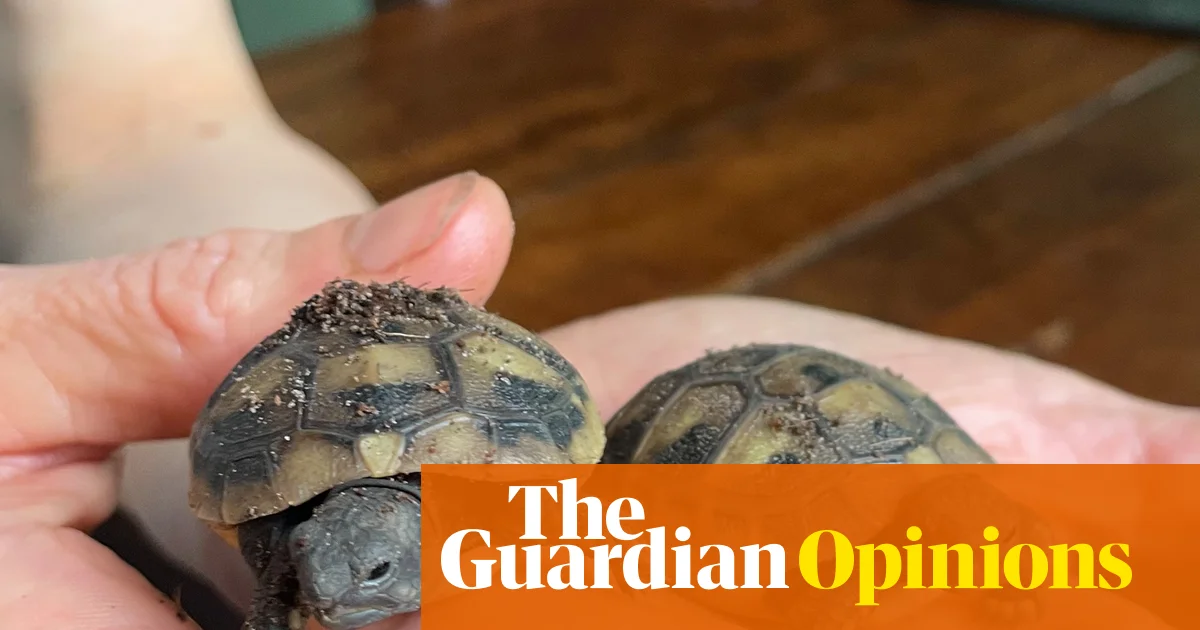
A surprise family member – a sweet, youthful tortoise – is staving off my maternal hunger pangs after our human offspring recently decamped
I
t feels pathetic to admit this, but I’m still a bit unmoored by my sons leaving after Christmas. There’s a readjustment required every time – back to tidy silence, to my studiedly casual WhatsApps going unread, to imagining their days by checking their weather. With my caretaking impulses thwarted, I’m anxious and unsettled, forever offering unwanted care parcels and unsolicited advice. “Let them live their lives,” I bleat to myself, while doing everything but.
In my defence, I wonder how natural it is to live in a monogenerational pod. My current round of wondering was prompted by reading about the rise of the “stay-at-home hub-son”. This subcategory of boomerang kids was first identified last year, after 28-year-old Brendan Liaw described himself as a professional stay-at-home son on the US quiz show Jeopardy!, prompting a rash of think pieces (and understandable eye-rolling in many communities where intergenerational living is commonplace).
Much of the hub-son discourse is anecdotal, but it’s rooted in demographic fact, both in the US and here: ONS data released in July showed 34% of 20-34-year-old men lived with their parents in 2024, compared with only 22.1% of women in that age bracket. The Washington Post recently talked to some happy homebody sons including Abdullah Abbasi, who makes tongue-in-cheek stay-at-home-sons (SAHS) merch, and Luke Parkhurst, who lives with his mum and is embracing the SAHS life. “I can look someone in the eyes and say, ‘Hell, yeah, I’m a stay-at-home son,’” he said.