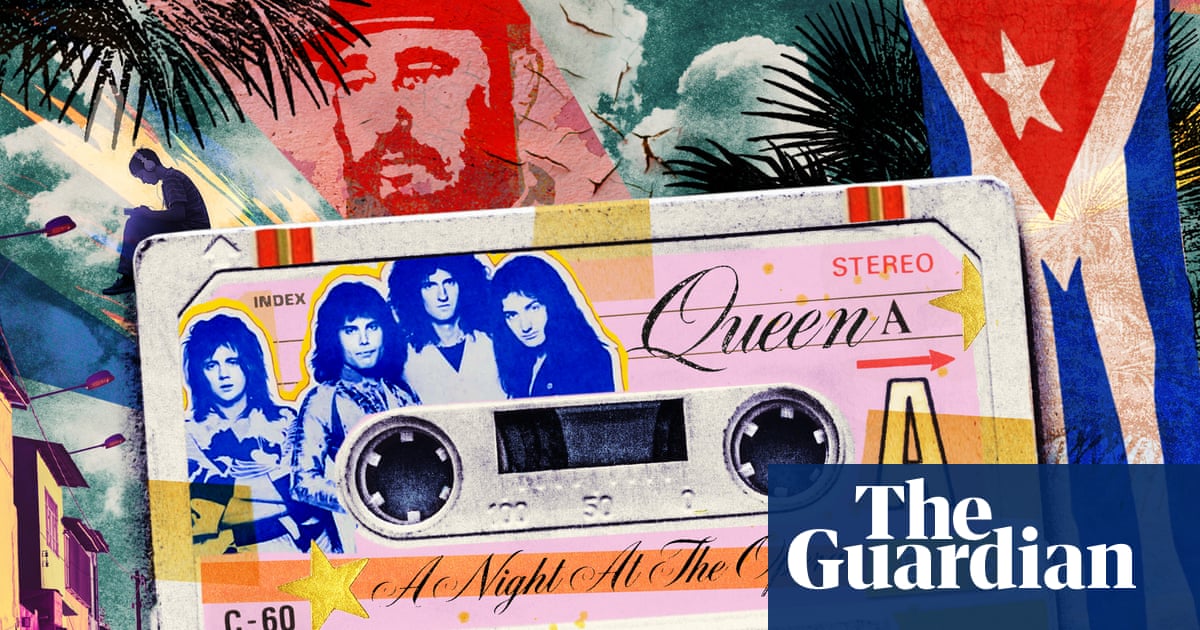
Listening to Brian May’s multi-tracked epic on a battered cassette player when I lived in repressive Havana inspired lit a spark of rebellion inside me
T
hroughout my childhood and teenage years growing up in 80s Cuba, Fidel Castro’s presence, and the overt influence of politics, was everywhere – on posters, on walls, in speeches that could last four hours at a stretch. The sense of being hemmed in, politically and personally, was hard to escape.
I had been raised to believe in communism, and for a long time I did. I even applied twice to join the Young Communist League, only to be rejected for not being “combative” enough: code for not informing on others. Friends were expelled from university or jailed for speaking too freely and my family included people in the military and police, so I had to be careful not to endanger them. But amid that stifling conformity, something else had begun to take hold.
When I was 13, my first girlfriend’s father, a sailor, brought back LPs from abroad. Through those records, I discovered rock’n’roll. In Cuba at the time, that was no small thing. Western music arrived years late, passed hand to hand through a black market of cassette tapes copied and recopied.