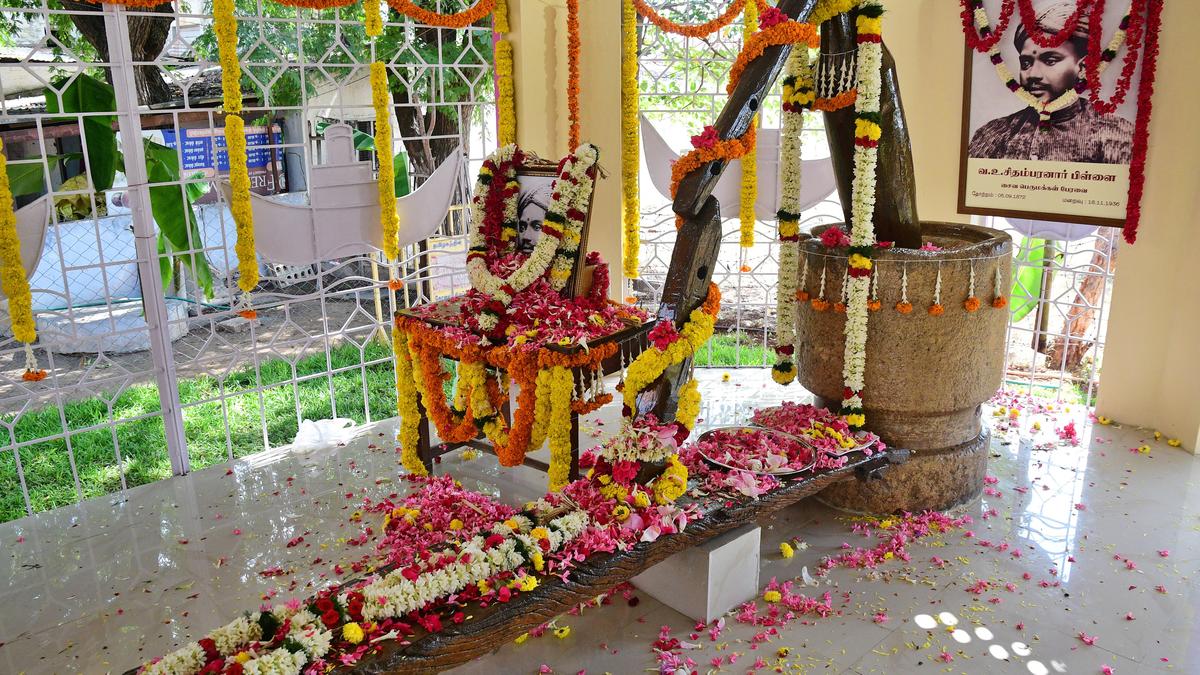
V.O. Chidambaram Pillai, fondly known as VOC and Sekkizhutha Chemmal (‘the great man who pulled the oil press’), might otherwise have been remembered by the lesser title Kayiru Thiritha Chemmal (‘the great man who spun coir’). This change came about owing to the “kind attitude” of a British jailer named Mitchell. When Mitchell saw VOC’s hands bleeding from the harsh labour of separating coir and spinning rope in the Coimbatore prison, he advised him to work at the oil press instead. VOC accepted the suggestion and pulled the oil press, a task normally performed by bulls. “Though it earned him the title Sekkizhutha Chemmal, words fail to express the physical pain he endured during that period,” Kurusamy Mayilvaganan writes in Kelatha Kathai (The Unheard Story).
Helping hand
Unable to bear the sight of VOC pulling the oil press under the scorching sun, fellow prisoners were deeply moved. “When British officers were not around, they joined him in pulling the press. They asked him to rest under a tree and eat sesame seed balls and insisted that he pull the press only when the deputy jailer was present,” writes Mr. Mayilvaganan. His book chronicles the 1,449 days VOC spent in prison.
VOC was arrested on March 12, 1908, and released on December 24, 1912. During these four years, he was lodged at the Palayamkottai, Coimbatore, and Kannanoor prisons. He was sentenced to double transportation for life and exile on the charge of sedition. In a telegram to the Director of Criminal Intelligence, the Director of the Madras Crime Branch said, “Tinnelvelly sedition cases. In the first case Subramani Siva sentenced to ten years’ transportation and Chidambaram Pillai to transportation for life; in second case Chidambaram Pillai again sentenced to transportation for life.” Subsequently, the punishment was reduced to four years.