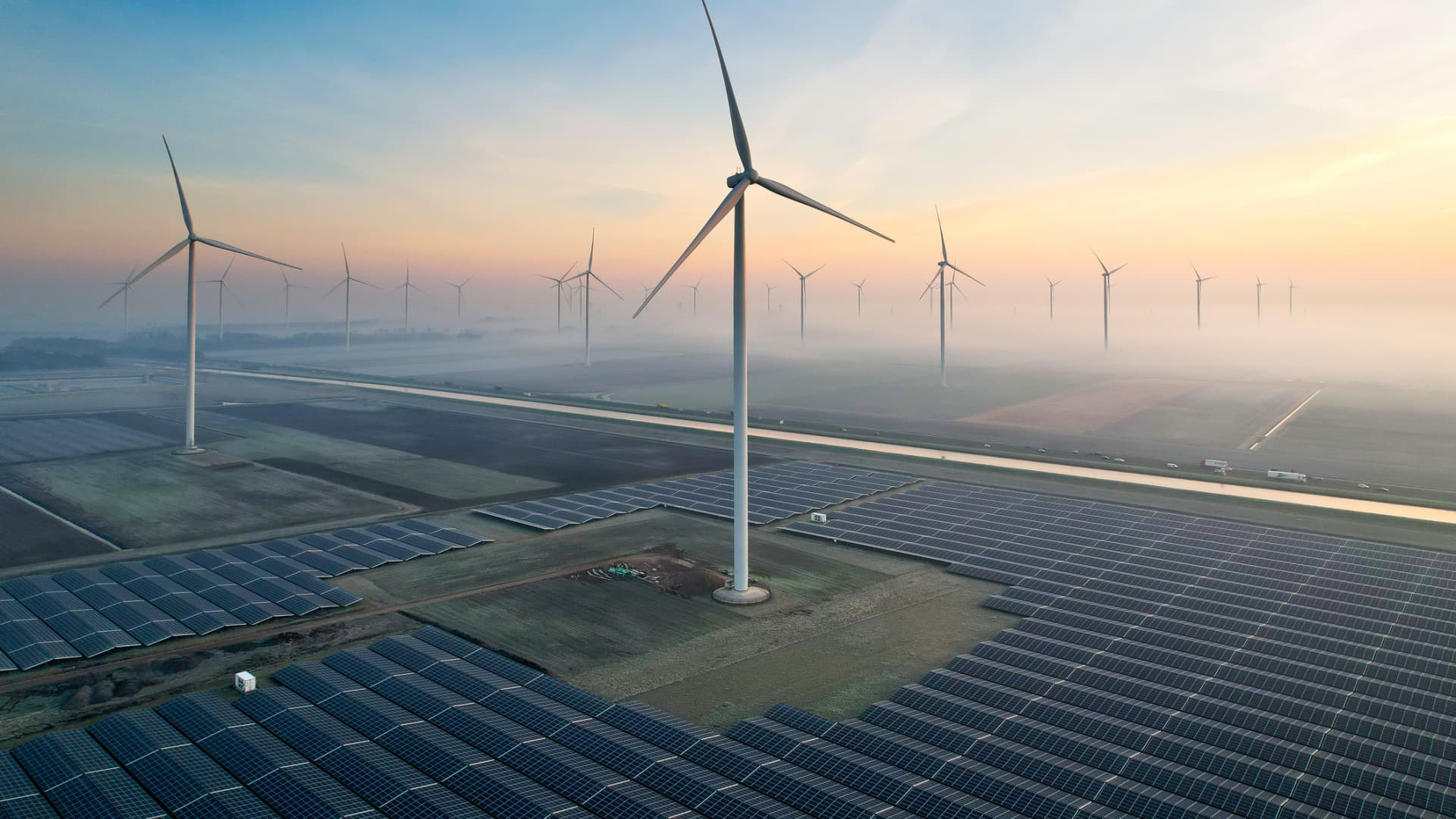
Stalled demand for energy in Europe pushed investors away from renewables, but artificial intelligence could see cash flow back into the sector, while also uplifting fossil fuels.
Global electricity generation from renewables is expected to jump by 60% in 2030, accounting for 45% of total electricity output, per the International Energy Agency. Almost 50% of European power came from renewables in 2024, and the region has a strong pipeline of solar and on- and offshore wind waiting to be connected to the grid.
“The problem we have now is integrating all of that variable supply into our power markets,” Peter Osbaldstone, research director for European power and renewables at Wood Mackenzie, told CNBC.
Pressure on integration results in pressure on prices, “which undermines the economics of investments, which makes the whole process of supporting a decarbonized power mix more difficult, more expensive for governments to bear,” he said.
As AI-driven power demand grows, market watchers are eyeing fossil fuels to beat the energy bottleneck. The IEA revised its 2025-2030 growth forecast for renewables downward by 5% compared to 2024, reflecting the changing sentiment and policy, largely from the U.S.