https://arab.news/4jyda
With the world struggling to feed 8 billion people today, how will we feed 10 billion by 2050? Meeting the nutritional needs of a growing population requires not just a radical increase in food production — almost all of it plant-based — but also a more equitable distribution to ensure that no one is food-insecure.
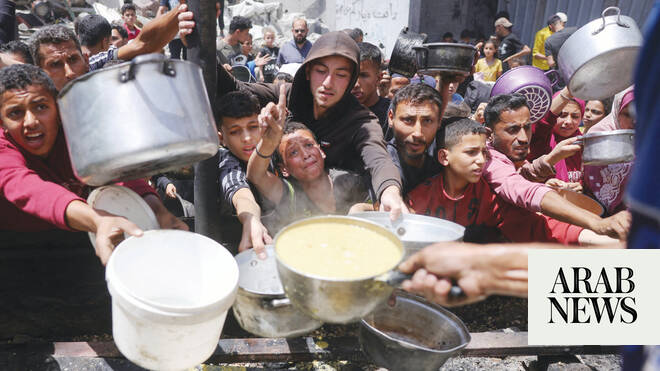
That is a tall order. The current food system is already buckling. About 673 million people go to bed hungry every night and, in 2025, we witnessed two famines (in Gaza and Sudan), each driven by conflict, climate shocks and soaring food prices. At the same time, 1.66 billion hectares — 60 percent of which is agricultural land — have been degraded by the very practices we rely on to feed the world.
Global hunger stems not from a lack of capacity to produce enough food, but partly from our failure to produce it efficiently and distribute it evenly. Conflict and insecurity remain the dominant causes of hunger across 20 countries and territories, leaving nearly 140 million people facing acute food insecurity. Disasters have inflicted an estimated $3.26 trillion in agricultural losses worldwide over the past 33 years — an average of $99 billion annually, or roughly 4 percent of global agricultural output; and recent supply-driven food price spikes have pushed tens of millions of people into hunger almost overnight. Worse, these are not one-off shocks. They represent the new normal.