The city’s architecture travels through time and continents, incorporating everything from slabs of the Italian Alps to meteorites that hit southern Africa 2bn years ago
I
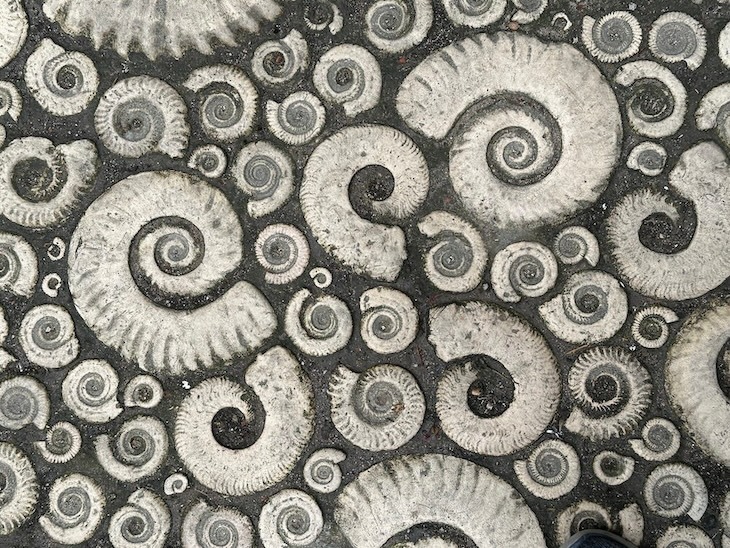
n the heart of London’s Square Mile, between the windows of a tapas restaurant, a 150m-year-old ammonite stares mutely at passersby. The fossil is embedded in a limestone wall on Plantation Lane, sitting alongside the remnants of ancient nautiloids and squid-like belemnites. It’s a mineralised aquarium hiding in plain sight, a snapshot of deep time that few even glance at, a transtemporal space where patatas bravas meet prehistoric cephalopods.
How often do you give thought to the stones that make up our towns and cities? To the building blocks, paving slabs and machine-cut masonry that backdrop our lives? If your name’s Dr Ruth Siddall, the answer to that question would be yesterday, today and every day for the foreseeable. Her passion is urban geology, and it turns out that the architecture of central London – in common with many places – is a largely unwitting showcase of Earth science through the ages.
“This is York stone,” she says, pointing at the slabs beneath our feet as we wander the pavement of Eastcheap. An e-scooter swishes past. “It’s a fine-grained sandstone, around 310m years old, quarried in the Peak District. It was once a prehistoric riverbed – you can still see the ripples in the surface – although to picture the world back then you need to imagine Sheffield looking like the Brahmaputra [river, which spans China, India and Bangladesh].”