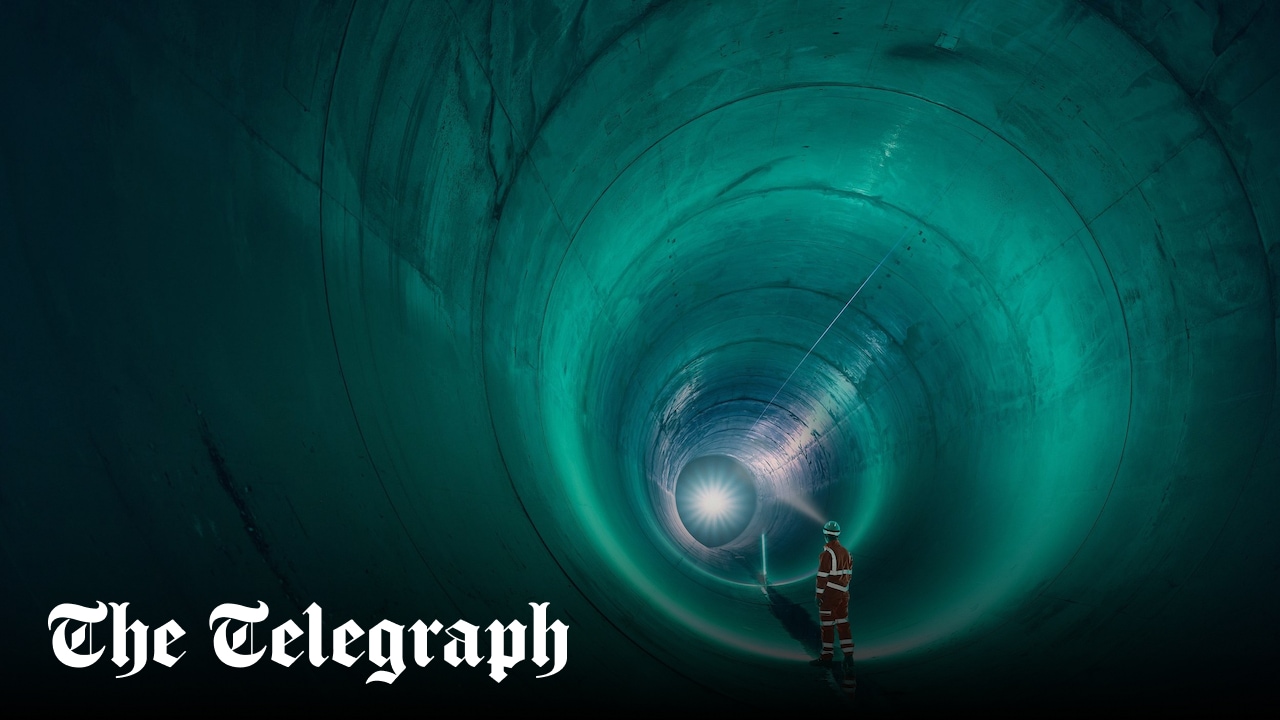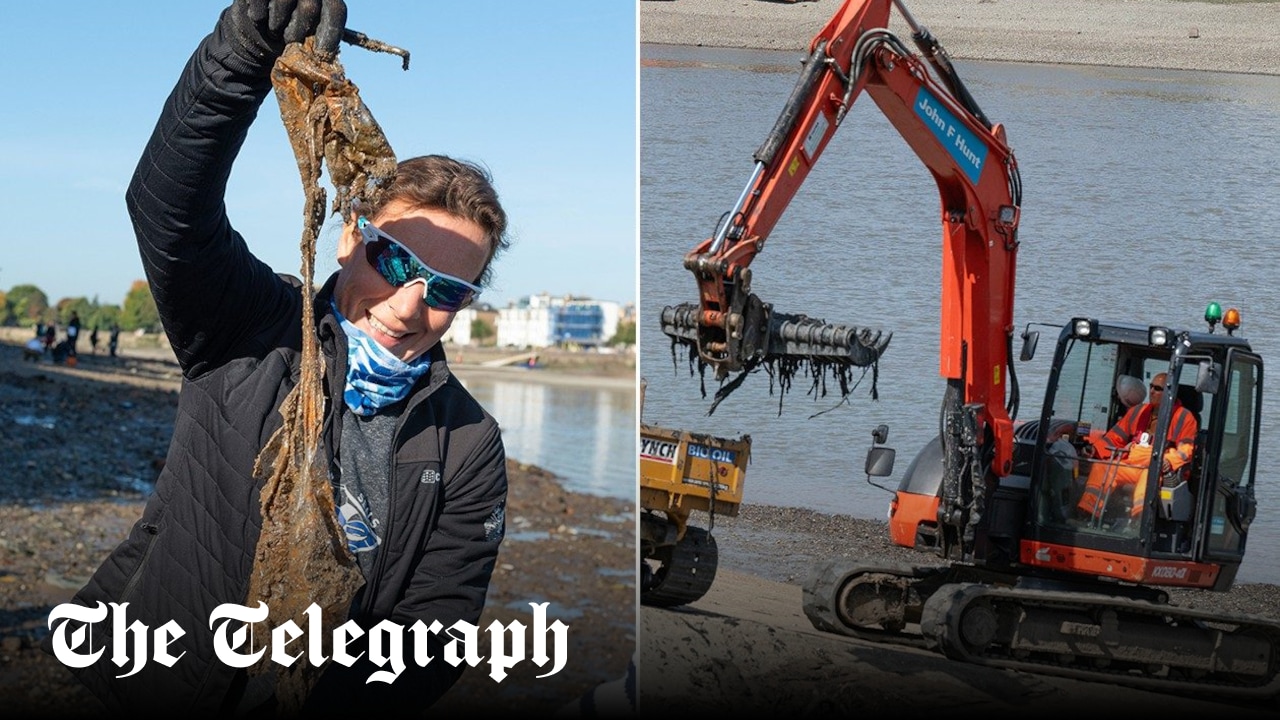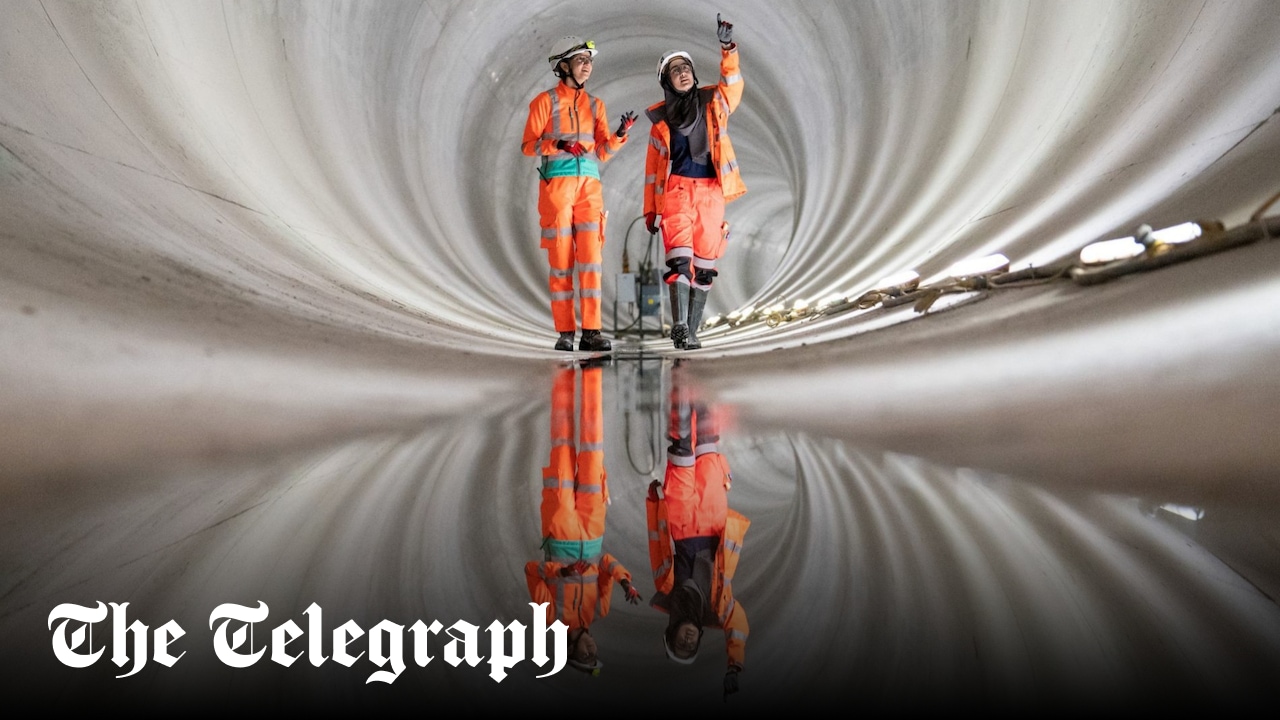
Built to tackle 18m tonnes of rising excrement, the Tideway project has also generated dramatic new public spaces dotted with giant artworks. Our writer takes the ‘stink tower’ tour of the capital
A
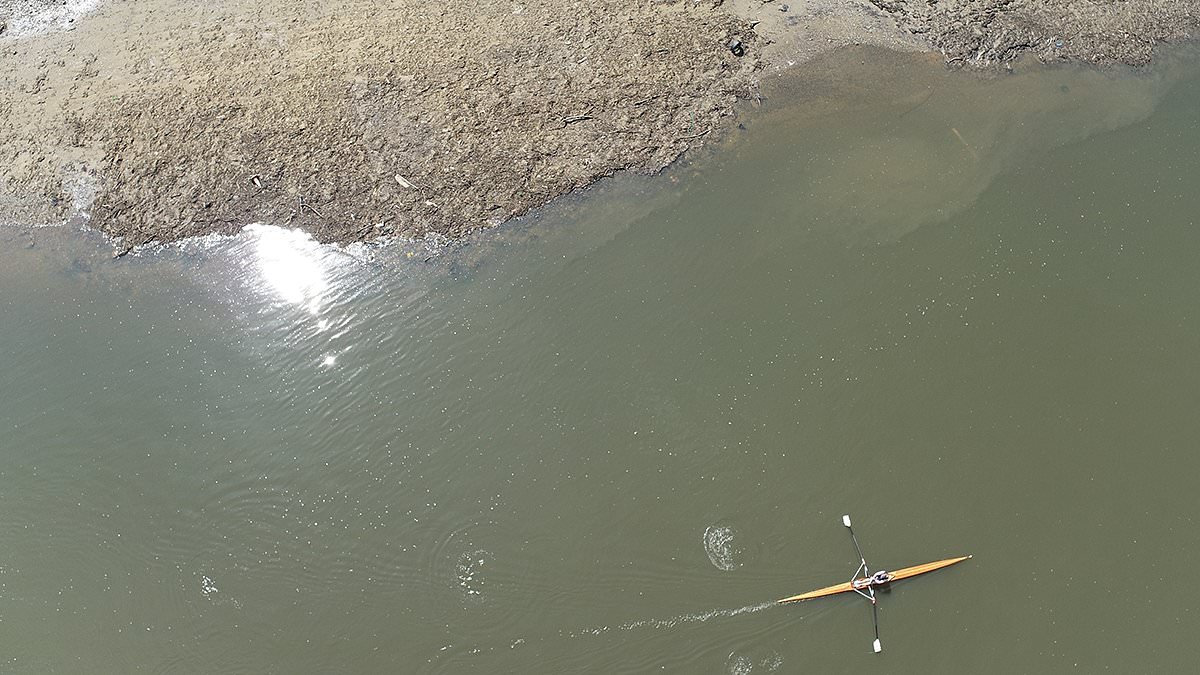
group of colossal black tombstones has landed on the north bank of the Thames in London, looking like mysterious monoliths from another civilisation. They stand near Blackfriars Bridge as imposing bookends, rising almost 10 metres, folded in places to form platforms and benches, slipping down in others to become one with the pavement. Water trickles from the summit of one huge slab, running down ridges and splashing into a sunken pool. Another pair rise straight out of the river wall, hoisting wooden fenders with them from the swirling brown waters below.
“I wanted to make something that comes from nowhere,” says Scottish artist Nathan Coley, as he clambers on to one of his concrete blocks, which form part of the most prominent new public artwork in Britain’s capital, set to be unveiled next month. “They are chunky, abstract, brooding objects that don’t reference anyone or anything. They can be joyful, beautiful and brutal at the same time.”
Coley is better known for his big illuminated signs, but there may be a good reason he didn’t want his sculptures to reference their subject this time. His slabs are the most visible part of the Tideway project, London’s £4.6bn super sewer, built to prevent 18m tonnes of sewage overflowing into the river each year. These enigmatic structures are, in effect, memorials to the era of flushing fecal matter straight into the Thames. “The thing about the super sewer,” Coley says, “is that it’s all hidden. So no one knows where they’re spending all this money. I wanted to make something really exciting to celebrate it.”