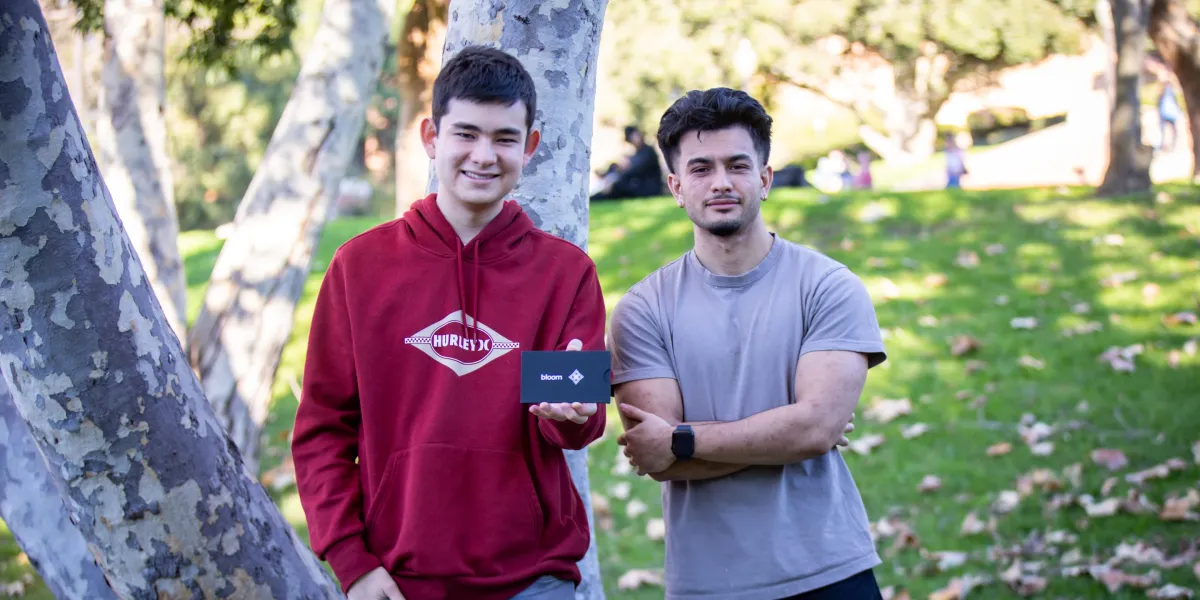
When Sebastian Crespin-Cimino leaves the apartment where he lives with his parents in Paris's 15th arrondissement, he scans a small device with his smartphone. From that moment on, until further notice, his social media apps – Instagram, Snapchat and TikTok – are blocked on his phone. This small, magnetic square, placed among family photos on the entryway cabinet, acts as a switch, making the selected apps inaccessible.
For the past 10 months, this 23-year-old, a master's student in international business at Université Paris-Dauphine-PSL, has been using the app blocker in different situations: before going to bed, when working and when leaving home. His motivation? To regain control of his time, which he sometimes feels is "sucked up by social media," explained the French-Venezuelan.
Born into an era of social media and often called "digital natives," many Gen Z – the generation born from the late 1990s to the early 2010s – have begun questioning their digital habits. The feeling of losing control, amplified by the rise of infinite scrolling, has led many to adopt various strategies to take back their time.
You have 81.96% of this article left to read. The rest is for subscribers only.