https://arab.news/8w4d2
Rewilding is a term that has grown in popularity in recent years, from its first usage in the 1990s to gradually gaining influence in the conservation sphere until breaking into the mainstream in the last decade.
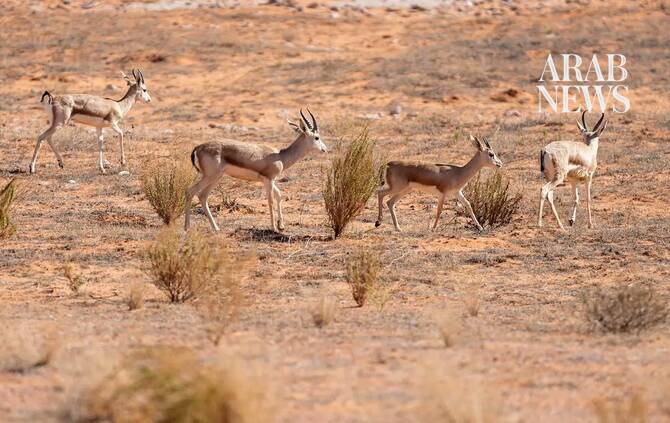
Exact definitions vary, but for the Royal Commission for AlUla, rewilding means working with nature to restore damaged ecosystems at scale. It is helping the natural processes recover and rejuvenating biodiversity to the point that they are resilient and self-sustaining. It is not, as some people may assume, removing humans or all interventions. Instead, it aims to find a better balance between people and nature, recognizing that we, too, are part of the landscape.
Rewilding projects around the world vary greatly in size, scope and context. In Europe and the US, where the concept of rewilding largely originated, it is often about allowing the return or reintroduction of species that were hunted out of existence in recent centuries, such as wolves, lynx, beavers and white-tailed eagles.
This can be a natural solution for conservation goals, such as easing overgrazing by deer to allow woodland to regrow, or an animal’s role as ecosystem engineers, like beavers building leaky dams that filter river water, slow floods and create ponds where other species thrive. On a smaller scale, rewilding can be targeted interventions, like the removal of manmade dams allowing salmon runs for the first time in decades, or using traditional goat breeds to help regenerate wildflower meadows.