The cost of free knowledge
The push for paid API access follows years of rising infrastructure costs as AI companies scraped Wikipedia content at an industrial scale. In April 2025, the foundation reported that bandwidth used for downloading multimedia content had grown 50 percent since January 2024, with bots accounting for 65 percent of the most expensive requests to core infrastructure despite making up just 35 percent of total pageviews.
By October, the Wikimedia Foundation disclosed that human traffic to Wikipedia had fallen approximately 8 percent year over year after the organization updated its bot-detection systems and discovered that much of what appeared to be human visitors were actually automated scrapers built to evade detection.
The traffic decline threatens the feedback loop that has sustained Wikipedia for a quarter century: Readers visit, some become editors or donors, and the content ostensibly improves. But today, many AI chatbots and search engine summaries answer questions using Wikipedia content without sending users to the site itself.
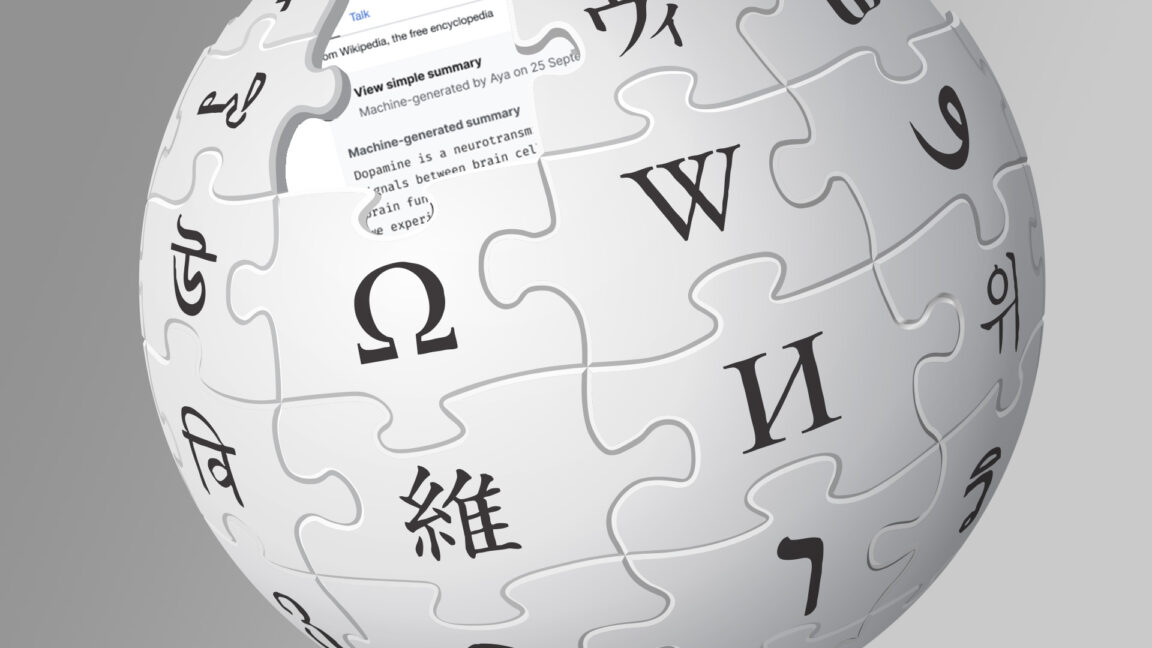
Meanwhile, the foundation’s own experiments with generative AI have met resistance from the volunteer editors who maintain the site. In June, Wikipedia paused a pilot program for AI-generated article summaries after editors called it a “ghastly idea” and warned it could undermine trust in the platform.