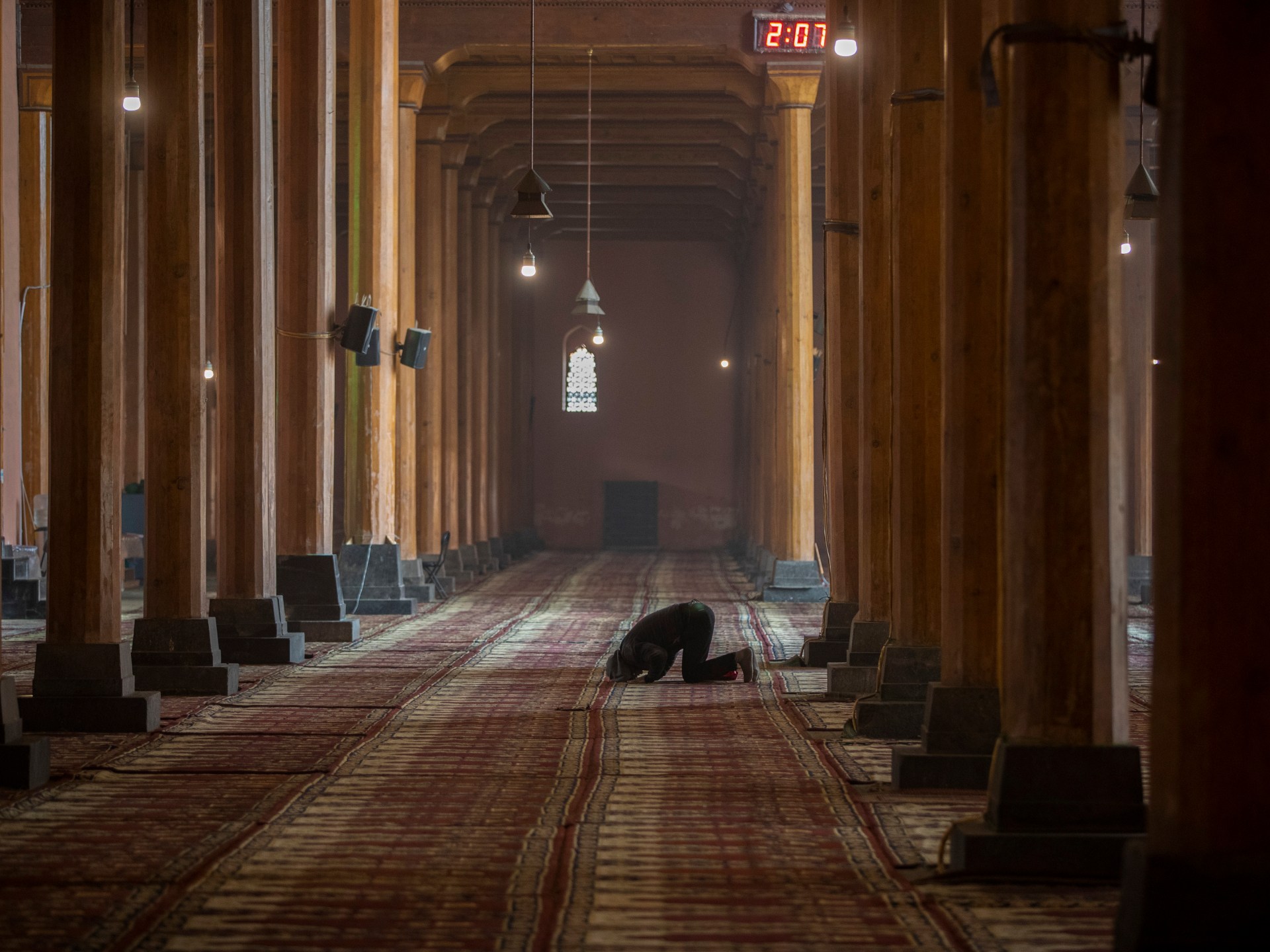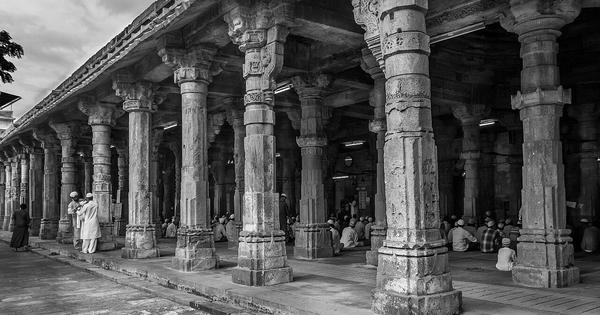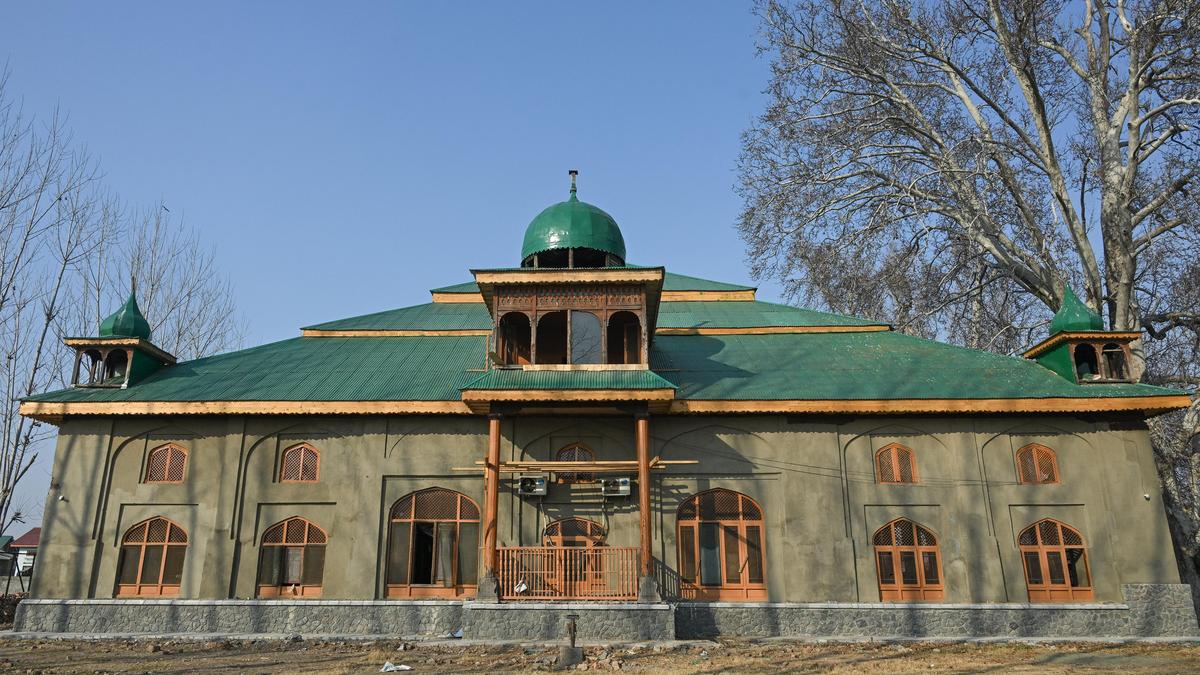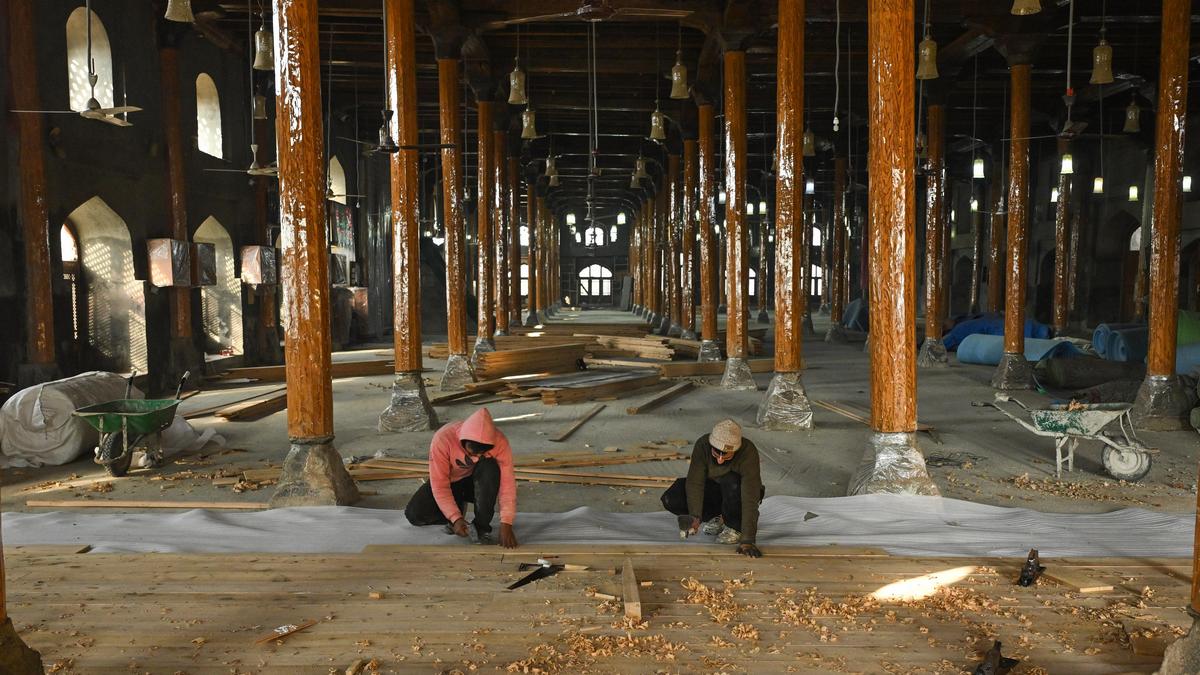
Aali Masjid, a 15th-century structure and the second-largest hypostyle mosque in Kashmir, is “losing its historical and architectural character” because of the latest intervention initiated by the Jammu and Kashmir Government, as part of a developmental and conservation plan, the Indian National Trust for Art & Culture Heritage (INTACH) has warned.
“The use of cement concrete over the exposed brick masonry floor, a technique introduced for scientific reasons, has exposed the entire structure to rampant dampness. Exposed brick masonry provides a breathing interface that allows water to evaporate and reduces dampness. I fear the 15th-century structure will weaken with each passing year because of this intervention,” Saleem Beg, convenor of INTACH’s Kashmir Chapter, told The Hindu.
The J&K Government has approved a ₹4.85-crore development and conservation plan for the historic structure constructed by Shahmiri king Sultan Hassan Shah in 1471. The mosque, whose prayer hall spans over 4,000 square feet area, is the second biggest in Kashmir after the historic Jama Masjid in Srinagar.
The latest construction plan was introduced after an earlier plan was shelved for “lack of appropriate intervention and conservation details” at the highest level in the Union Territory. However, INTACH fears that the fresh intervention, too, could have a long-term negative impact on the mosque’s structure.