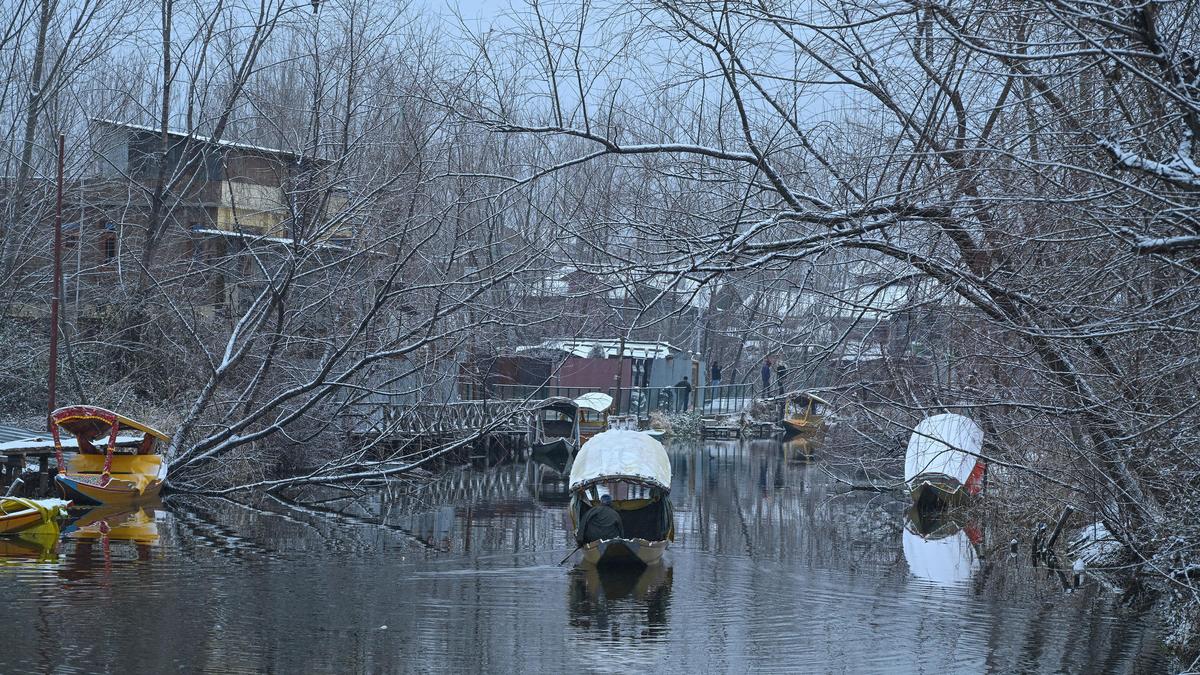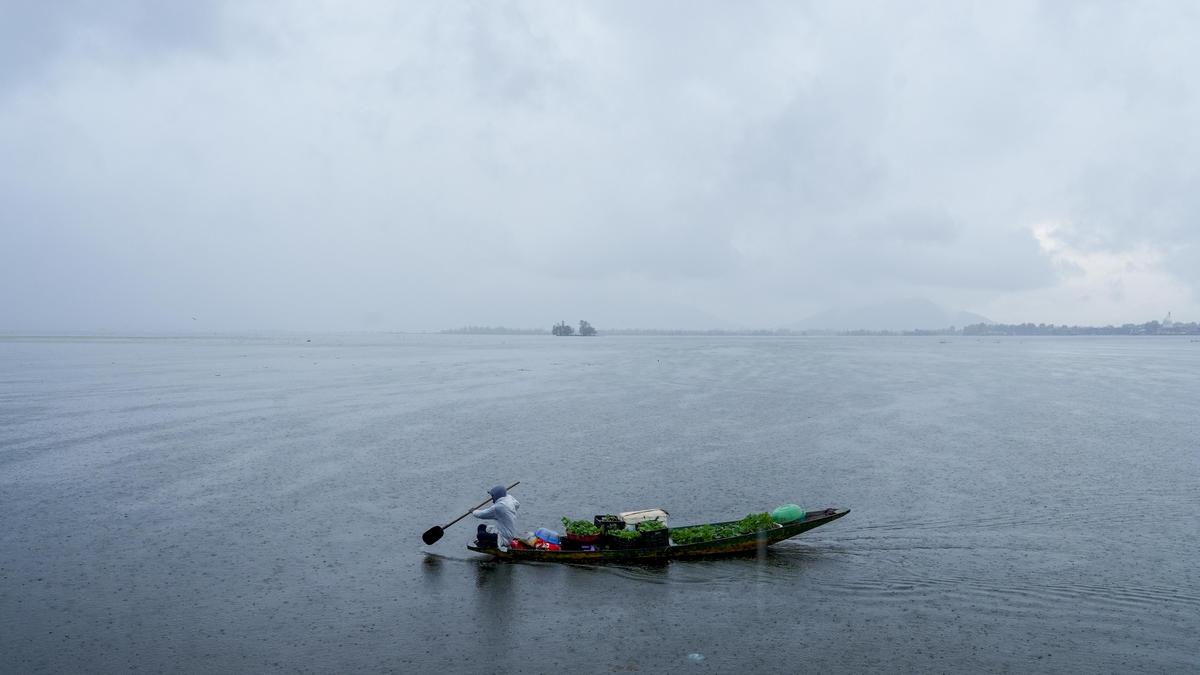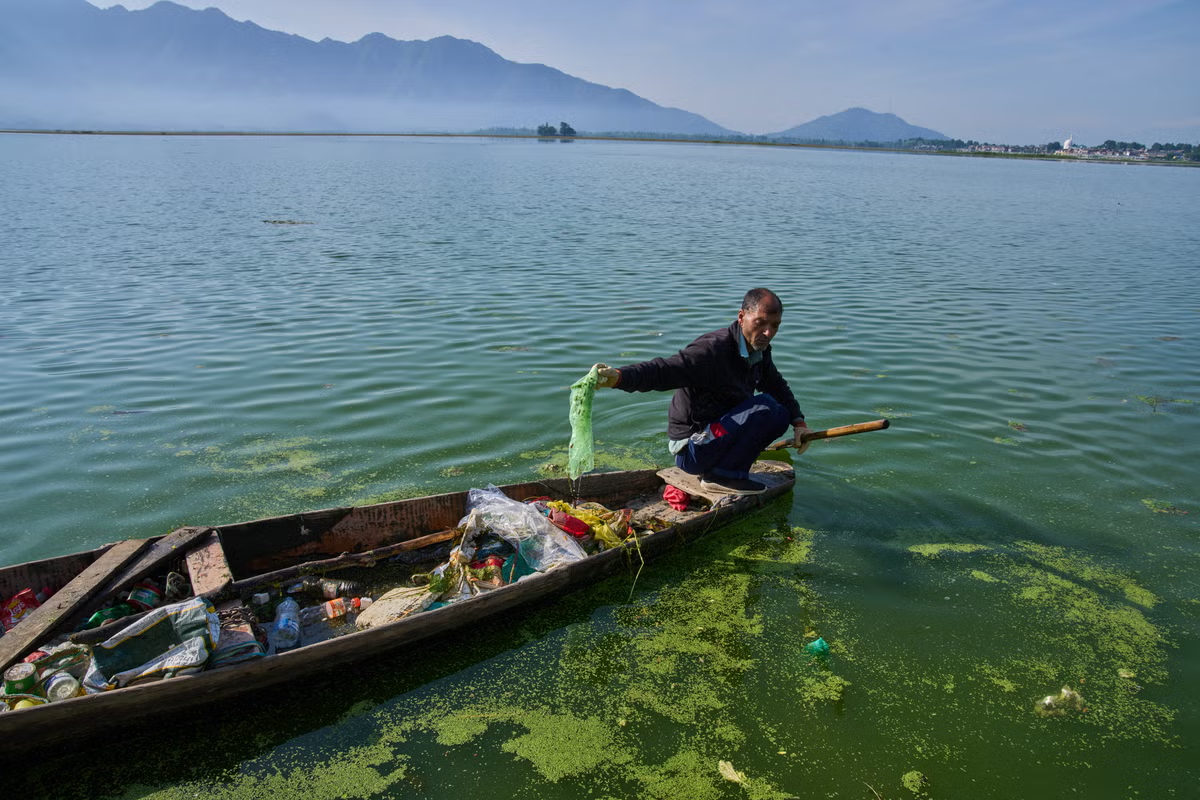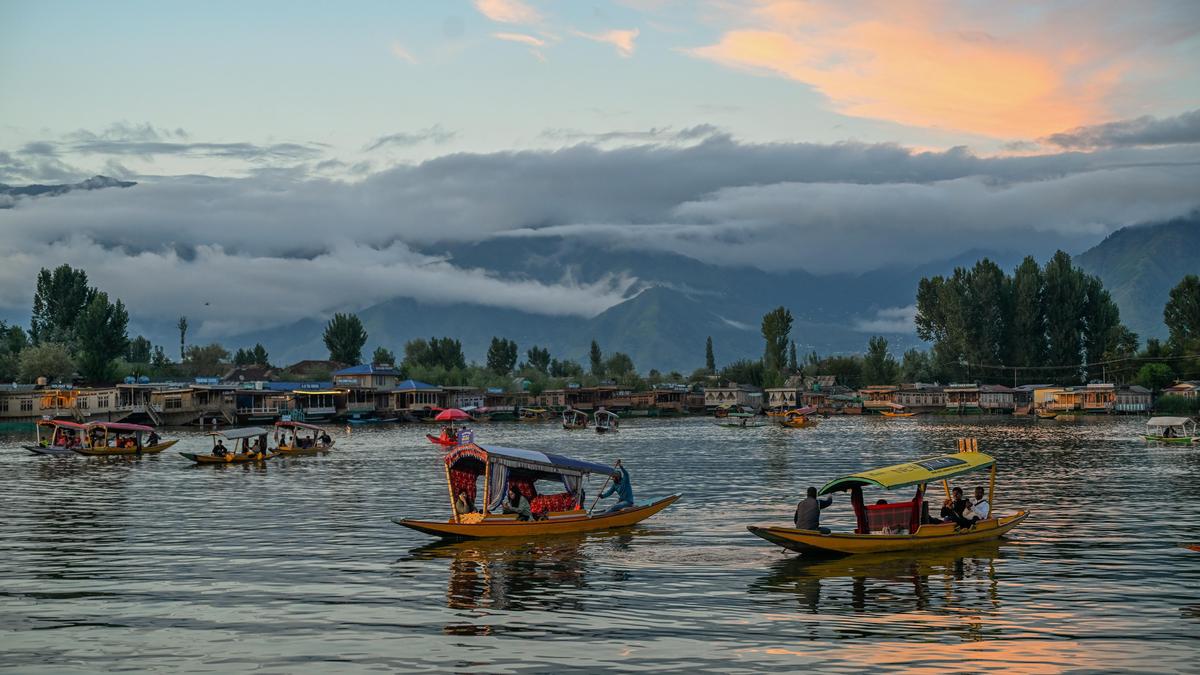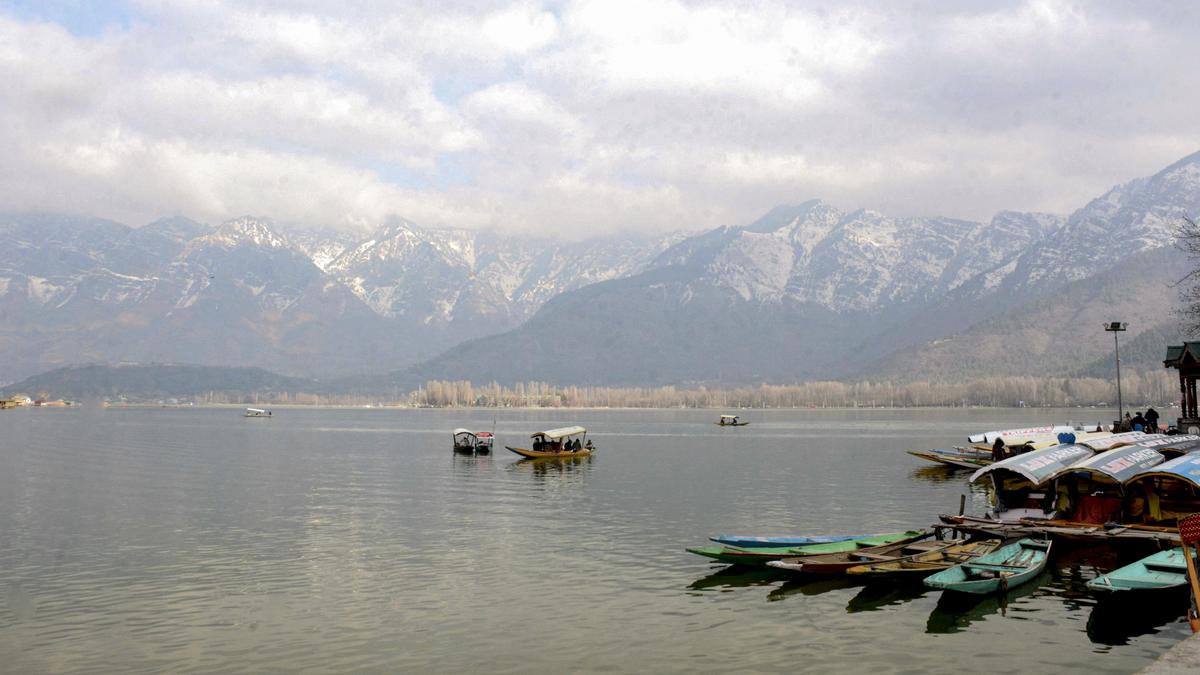
The Jammu and Kashmir government this month decided to shelve the ₹416.72-crore restoration and conservation plan for the famous Dal Lake in Srinagar. The decision was made public in the J&K Assembly in response to a question by ruling National Conference (NC) legislator Tanvir Sadiq. The government has now proposed an in-situ conservation plan that would allow the dwellers to live on the lake. The shelved restoration and preservation plan, introduced by the Manmohan Singh government in 2009, aimed to address key issues ailing the lake by shifting around 9,000 Dal Lake dwellers. It sought to tackle problems such as the shrinking area of the lake, depleting water quality, uncontrolled discharge of effluents into the water body and growing population.
What issues does Dal Lake face?
Over the past four decades, the lake has recorded an extreme decline in water quality due to anthropogenic pressures, according to a 2022 survey conducted by Sher-e-Kashmir University of Agricultural Sciences and Technology (SKUAST). It warned of extreme pollution loads and encroachment in and around the lake, the incursion of invasive plants and animals leading to rapid degradation of water quality.
The study observed that untreated sewage discharged from several point and non-point sources has severely deteriorated water quality. The situation has been further exacerbated by deforestation, grazing, agriculture, and changes in land use and land cover patterns in the lake’s catchment area. The reduction in the number of inflows and internal water channels has also led to poor water circulation.