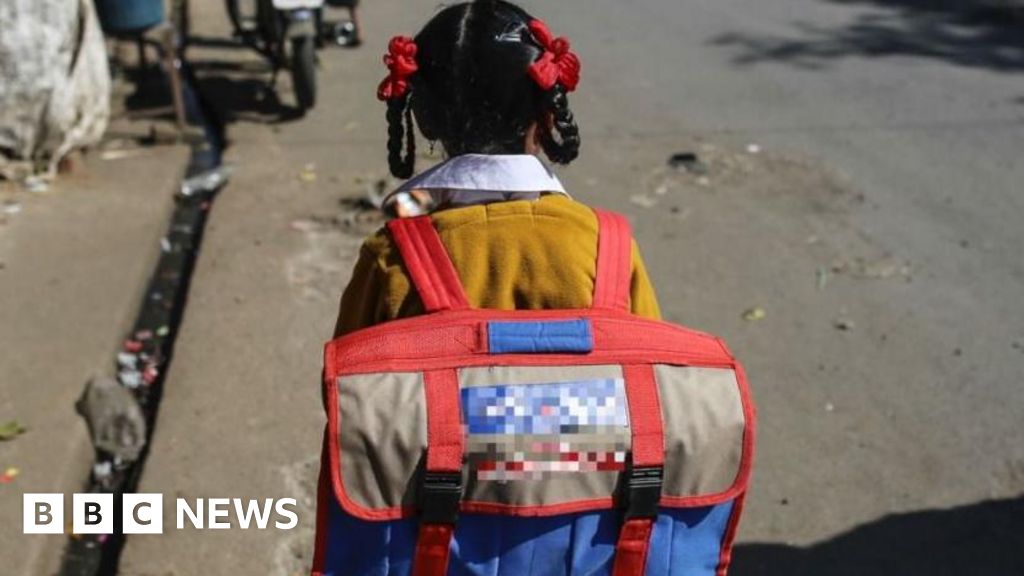
Pooja* was 16 years old when she was accused of murdering her mother.
The teenager, who lived with her alcoholic stepfather in a poor neighbourhood in the northern Indian state of Uttar Pradesh, was arrested in 2018 and sent to jail.
Her lawyer told the police that Pooja was a minor. According to Indian law, she should have been produced before a Juvenile Justice Board (JJB) - a three-member bench that deals with matters concerning children in conflict with the law - within 24 hours of her arrest. But this was not done, Yamina Rizvi, a lawyer who took over Pooja's case in 2024, told the BBC.
JJBs, which comprise of a principal magistrate and two social workers, decide if a child aged 16-18 should be tried as an adult in case of heinous crimes - a provision introduced in India's Juvenile Justice law after the 2012 Delhi gang rape case.
But instead of appearing before a JJB, Pooja was lodged in a prison for six years while her case was heard in an adult court.