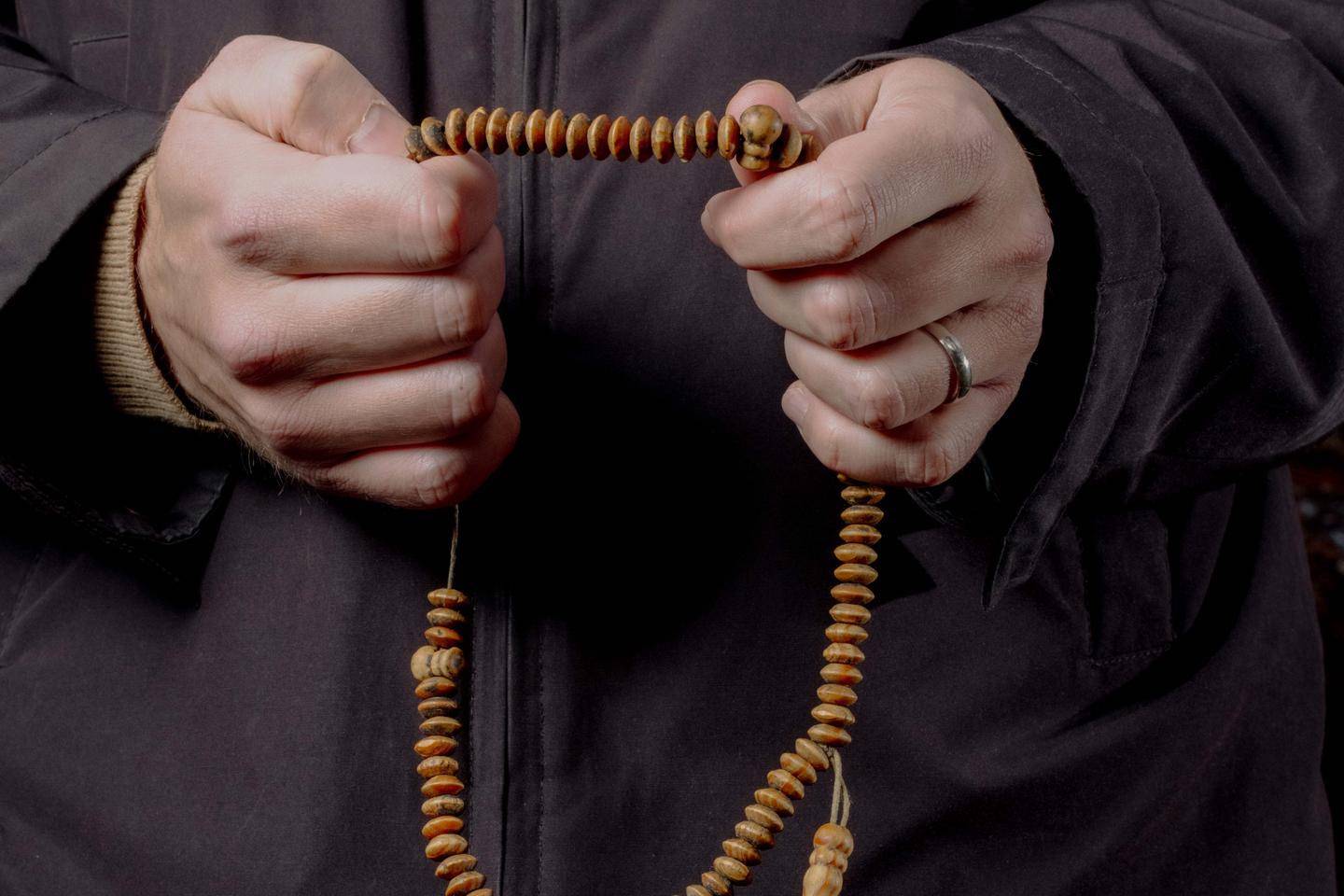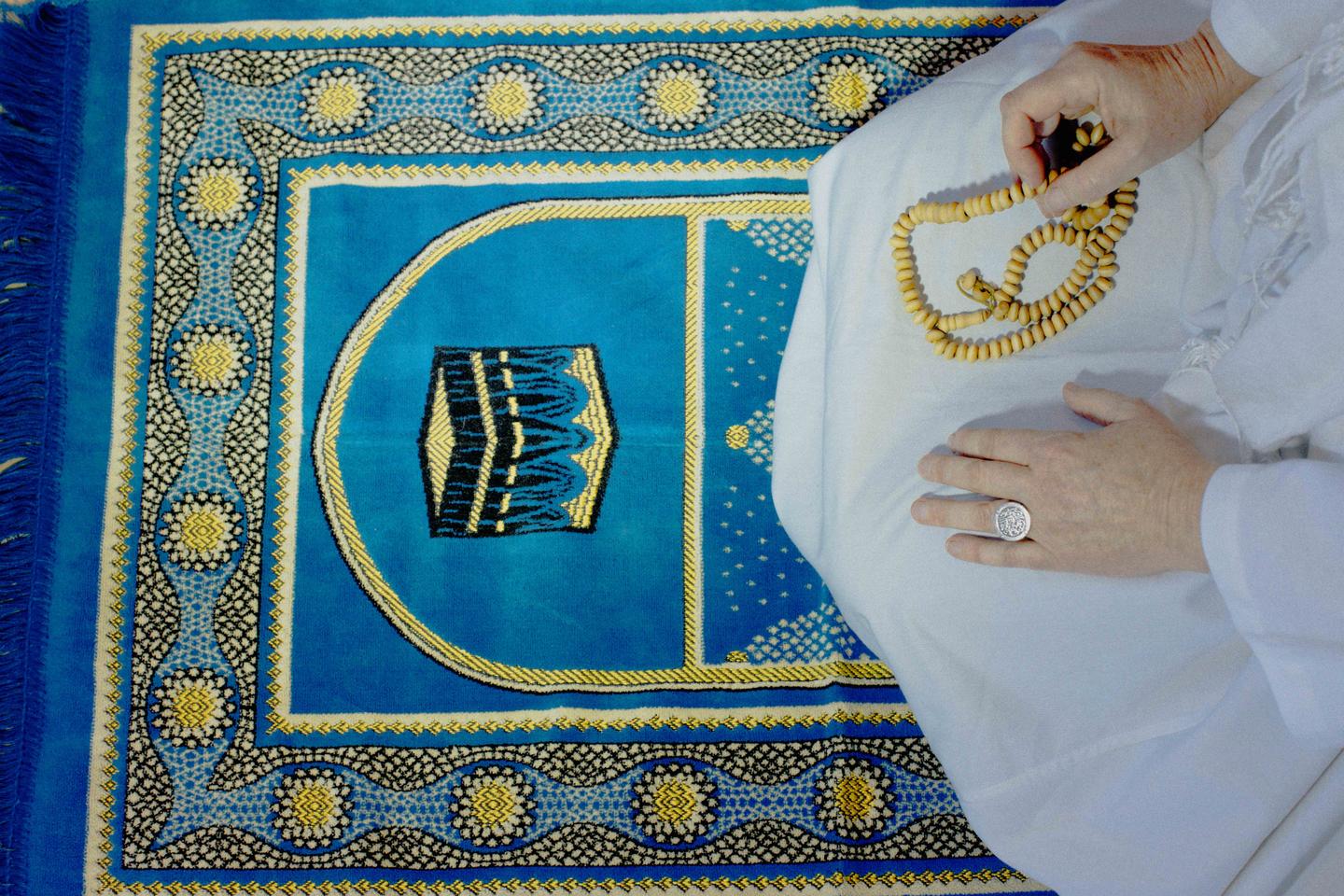
Annika on her prayer rug with her misbaha (Muslim prayer beads), Pluvigner, France, November 21, 2025. ALINE DESCHAMPS FOR LE MONDE
"I have been searching for truth for a long time. I grew up in a Protestant family, but although I was baptized and confirmed, the Lutheran churches, which are very austere, never really touched me. Like many Norwegians, I found God more in nature than in church. Deep inside, I felt unease, a sense of lack and a calling toward a more mystical existence. I was searching for true freedom.
When I was a young adult, this search led me to transpersonal therapy. I started practicing yoga and meditation. As it happened, my psychotherapist was also a spiritual guide. He had previously been a Zen Buddhist monk, and I thoroughly enjoyed discovering the teachings of that tradition. At the time, I was on a spiritual journey without any particular attachment: I drew inspiration from what spoke to me in different religious currents, including Christianity, Buddhism, Hinduism and Tantra.
One day in 2001, during a fasting and meditation retreat, my therapist put on music and suggested I try the whirling dervish dance. This practice, which comes from Sufism – the mystical tradition within Islam – was inspired by the great poet Rumi, who lived in Anatolia [present-day Turkey] in the 13th century. It is a form of active prayer meant to allow communion with God. While spinning, the right hand, raised toward the sky, receives divine grace, which the dervish transmits to the earth with the left hand, turned toward the ground.