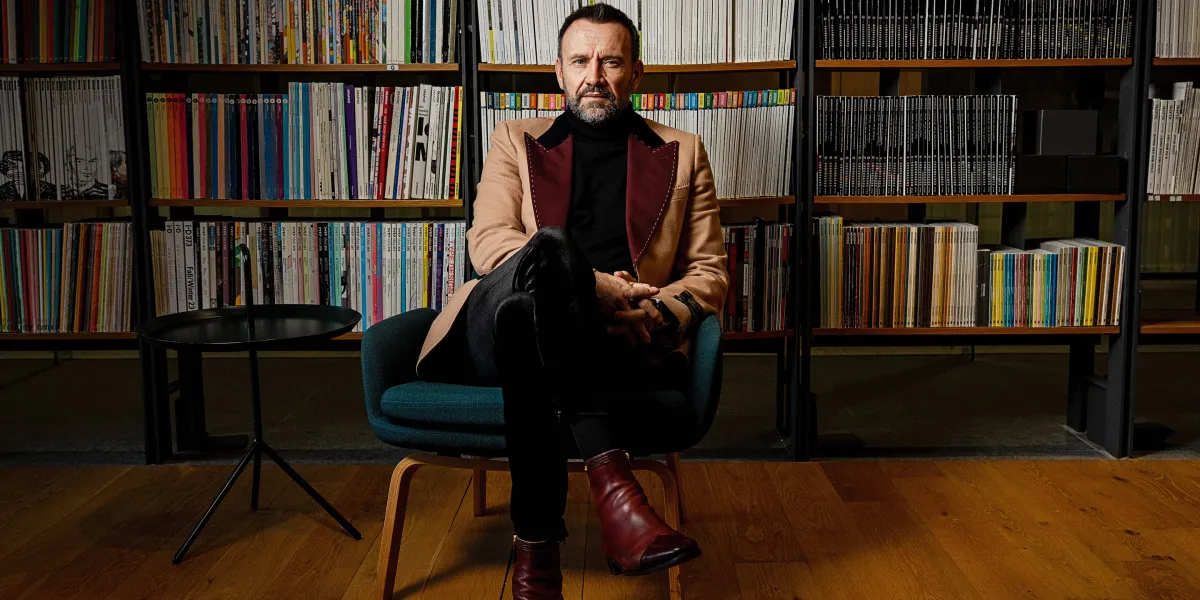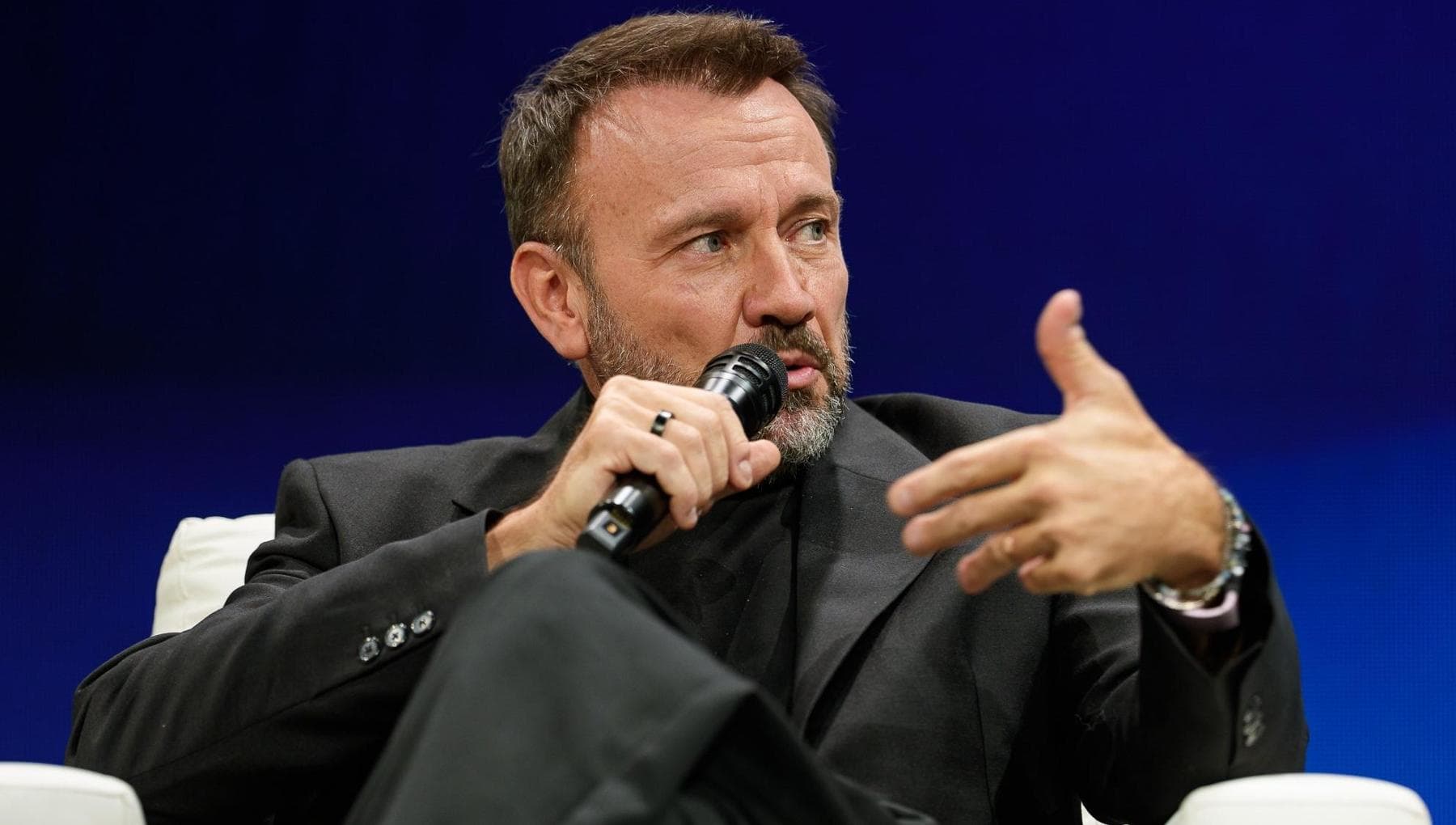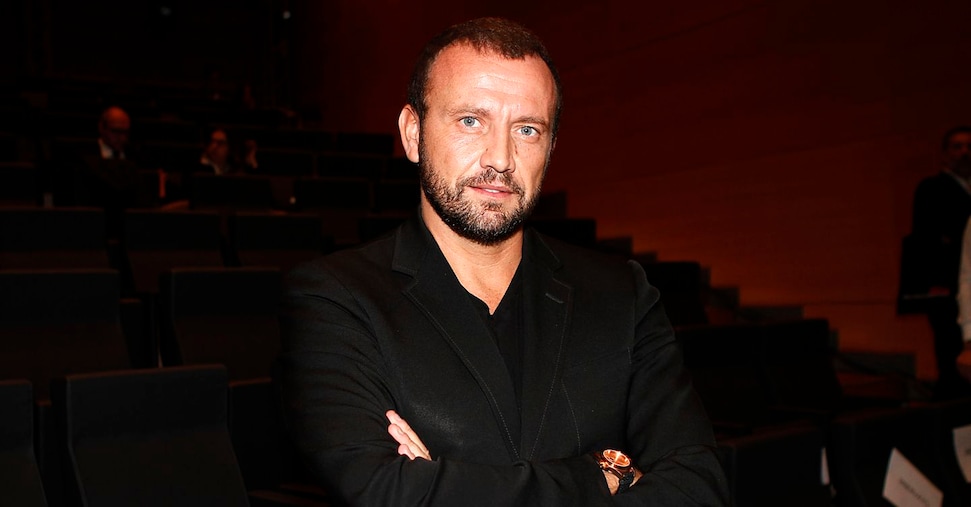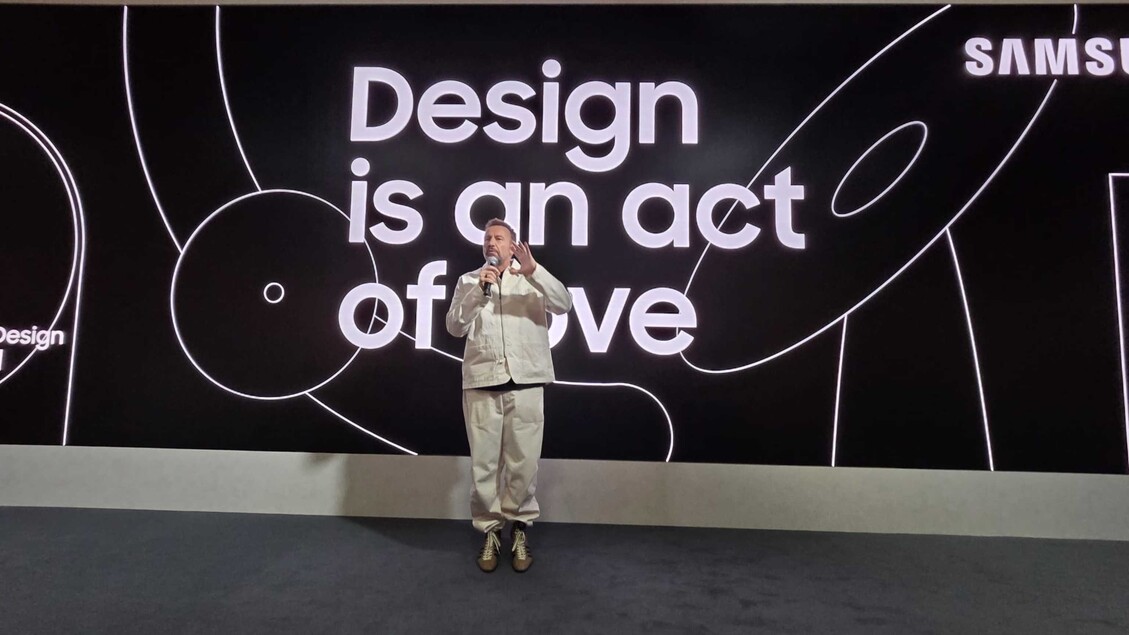
Mauro Porcini, Samsung Electronics’ first-ever chief design officer, sees his path leading design at some of the world’s largest companies as something close to a calling.
“It felt like faith, God, or whatever you believe in, was looking down and saying ‘Wait a second, before going after your dream, you need to prepare yourself. You need to be ready,’” Porcini says in his office at Samsung’s R&D center near Seoul’s lively Gangnam district. “I needed to get ready for probably my dream job: Being in tech, in a world where tech is about to completely change the way we live.”
Porcini feels slightly out-of-place in the Korean chaebol’s offices. Hailing from Gallarate, a small town outside of Milan, Porcini wears plaid trousers with white racing stripes down the side, platform boots, and a beige jacket with a red lapel, quite different from the more plainly-dressed Korean designers and office workers that sit at Samsung’s desks.
For decades, Samsung, maker of consumer electronics like smartphones, televisions, computer monitors and refrigerators, relied on its vast internal design workforce to become a brand rivaling Apple in prestige.
But renewed competition now threatens to unseat the Global 500 manufacturer from its place at the top of the consumer electronics market. Apple likely overtook Samsung to become the No. 1 smartphone seller in 2025 for the first time in over a decade, according to Counterpoint Research, a market intelligence firm. And up-and-coming Chinese firms like Xiaomi (for phones) and TCL (for TVs) are starting to encroach on Samsung’s premium markets. Then add AI, which threatens to shake up what smart devices can do.