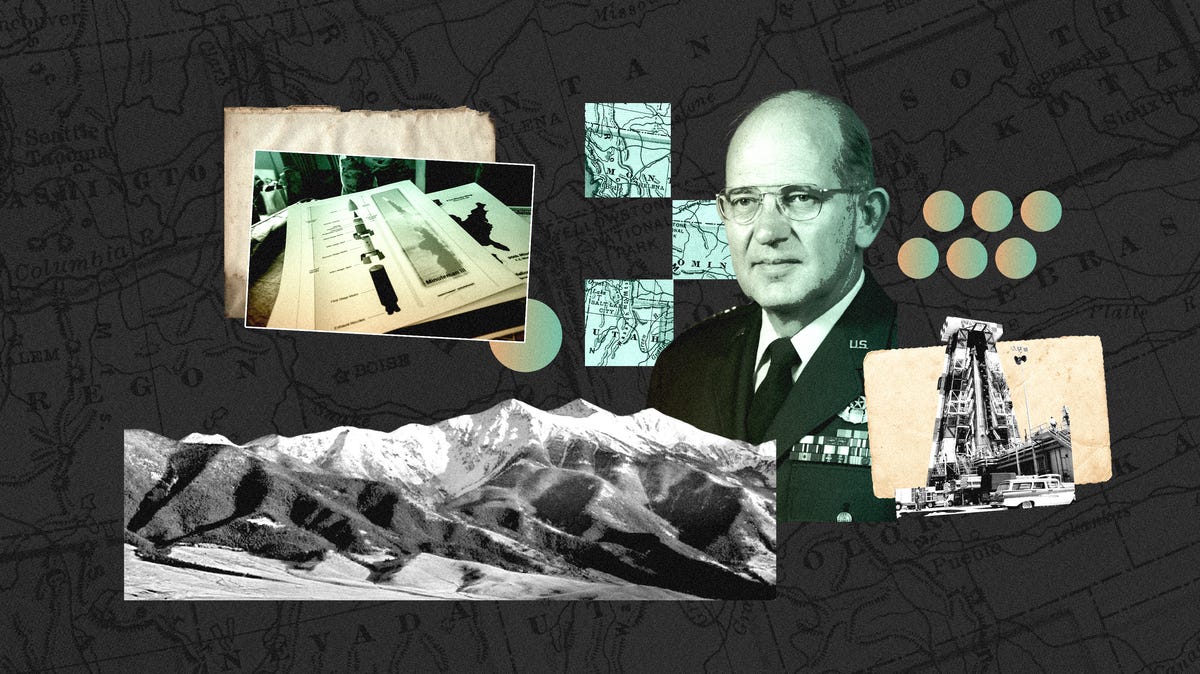
The sponge metaphor first emerged in 1978 when the Air Force’s top general announced a new plan to base cutting-edge nuclear missiles in the Southwest.
The “Missile, Experimental,” or MX, a powerful intercontinental ballistic missile, or ICBM, could hurl up to 11 nuclear weapons accurately against targets on the other side of the world.
All land-based ICBMs, including the MX, have an inherent vulnerability: when based in underground launch silos, they can be targeted in a surprise nuclear attack by enemies aiming to knock out America’s ability to retaliate.
But to Gen. Lew Allen, a nuclear physicist and bomber pilot who was then the Air Force’s chief of staff, that vulnerability was an advantage during the country’s arms race with the Soviet Union.
At that time, the MX missile fields were proposed to include thousands of missile holes, and the missiles would be secretly rotated between them. Allen argued the Soviets would have to target all the silos (including the empty ones) to destroy the missiles, making the fields “a great sponge” designed “to absorb” thousands of Soviet nuclear warheads that could otherwise hit targets in more populated areas.