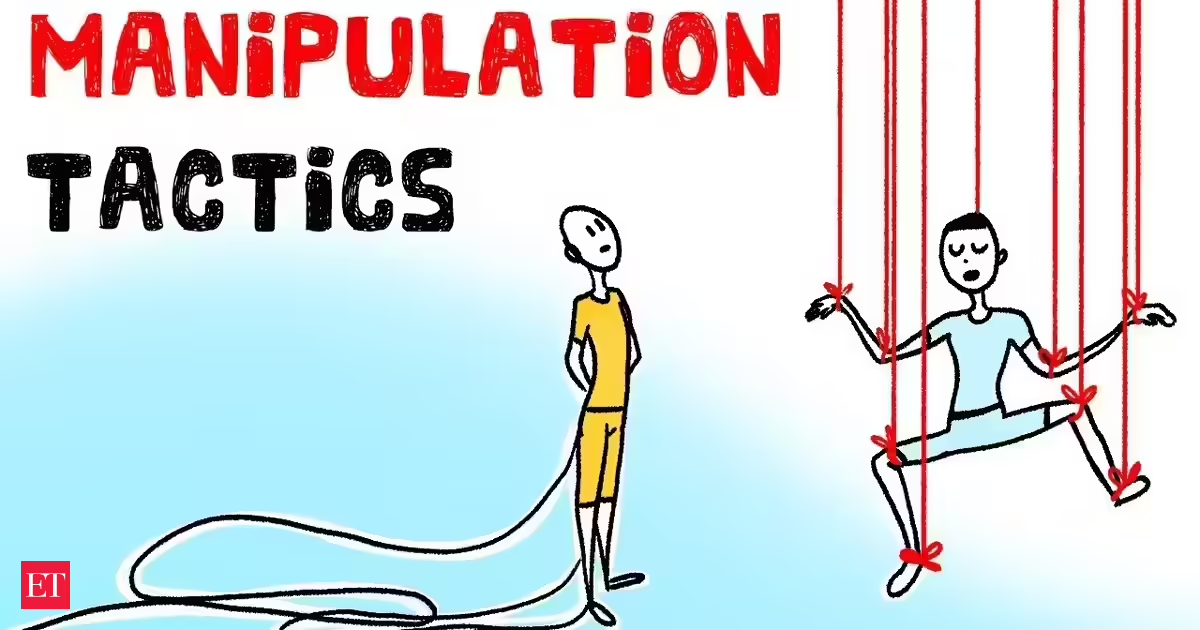
Manipulation doesn’t always look dramatic or explosive. It could be a loaded comment in a meeting, a subtle guilt trip in an email, or a casual remark that leaves you questioning yourself long after the conversation ends.
What makes manipulators effective is their ability to influence how you feel. Research on social influence and coercive control shows that manipulators aim for emotional impact: the drop in your confidence, the spike in your anxiety, the moment you start defending instead of deciding.
In my decade advising Fortune 500 companies as a behavioral researcher, I’ve seen this pattern at every level: the person who controls the emotional tone often controls the direction of the interaction.
The most powerful response to a manipulator isn’t to confront them. This often backfires, triggering gaslighting, denial, or escalation. Here’s a simple strategy I teach to help you “CUT” through manipulation.
When your nervous system spikes, your thinking narrows and your behavior becomes easier to steer. Studies on emotional regulation show that staying physiologically calm preserves decision quality under pressure. Slow your breath. Lower your voice. Buy yourself a few seconds before responding.