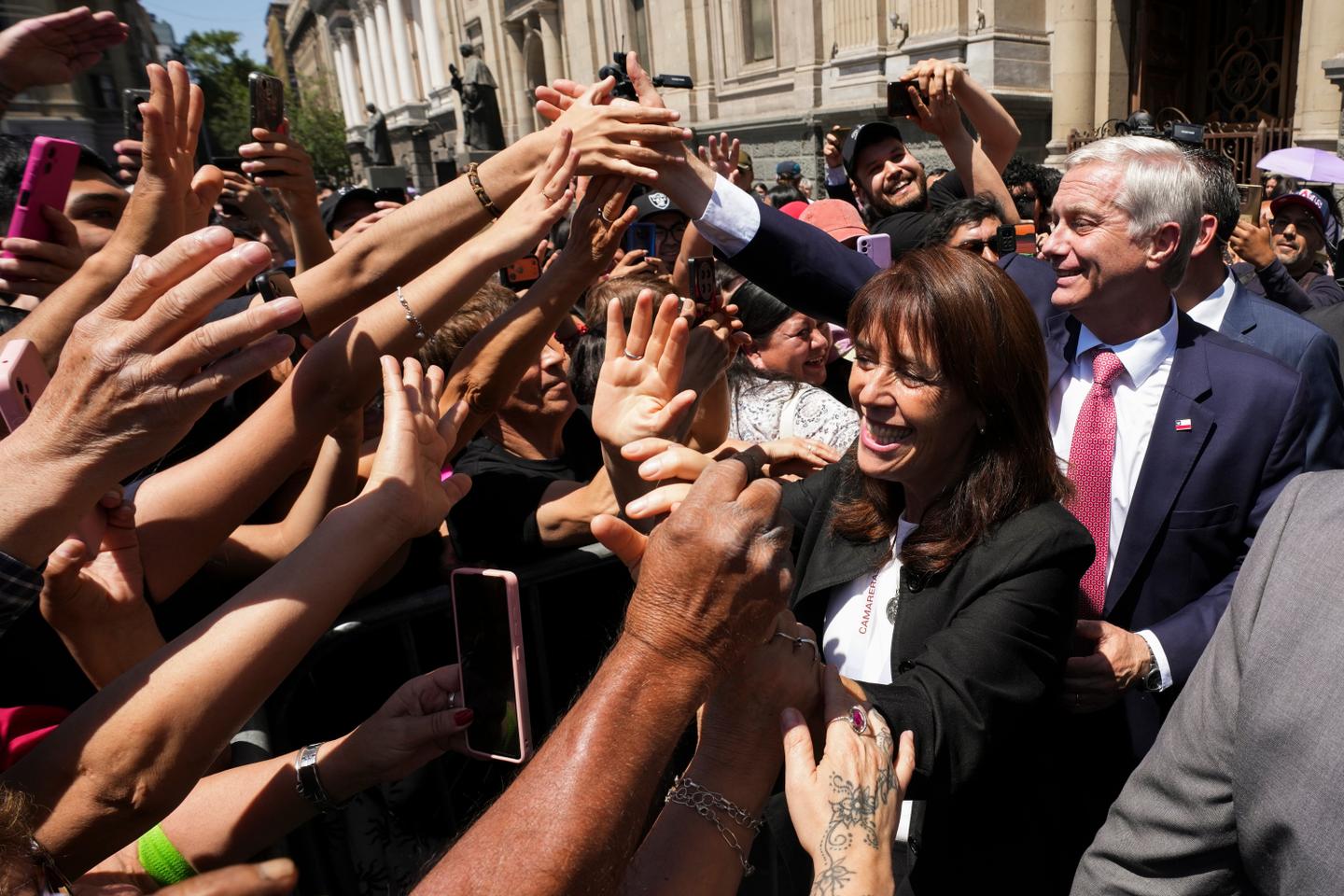
Chile's president-elect, José Antonio Kast, and his wife, Maria Pia Adriasola, stand in front of Santiago Cathedral after attending mass on December 19, 2025. ESTEBAN FELIX / AP
Ultra-conservative José Antonio Kast was elected on Sunday, December 14, with 58% of the vote, after promising to crack down on insecurity and expel 336,000 undocumented migrants. Claudia Heiss, a political scientist at the University of Chile, emphasized the role of the estallido social ("social explosion") – the broad protest movement against Chile's neoliberal system that took place between October 2019 and March 2020 – in the rise of the far right in Chile.
What is your initial take on José Antonio Kast's decisive victory?
A very important factor is that the public's main concern is security, an issue on which the far right has managed to outmaneuver both the left and the traditional right. They put forward much more attention-grabbing proposals, advocating a tough, iron-fisted approach. The results show an electorate more receptive to populism, tired of elites and traditional public policies.
What role did the return to compulsory voting, for the first time since 2012, play in the outcome?