This article is part of the FT Financial Literacy & Inclusion Campaign’s seasonal appeal. The appeal is supported by lead partner Experian which is generously match-funding other donations.
The drive north-west from Aurangabad towards the historic Ellora cave temples is one of typical alarm for the western visitor. Within the city limits, six vehicles routinely squeeze into three lanes. Then amid lush rural landscape the organised chaos continues on single-lane highways, to a soundtrack of horn-honking. Families of four on mopeds snake past rice-laden tuk-tuks as hand-painted lorries thunder head-on towards them.
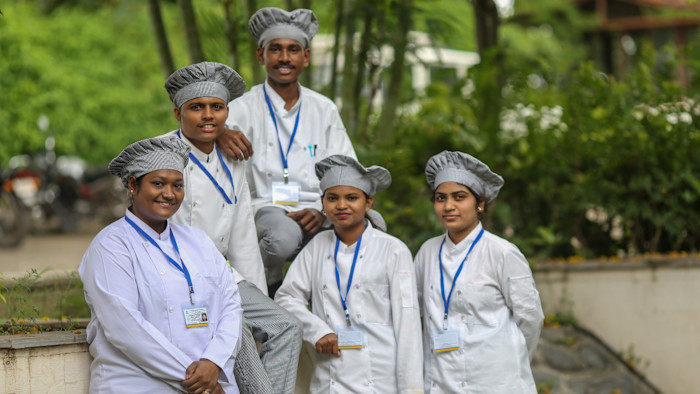
The left-turn down a potholed track to the Pratham Arora Center for Education brings peace from the noise and stress of the road. It is a welcome retreat, too, for the 2,000 students who pass through this centre each year, taking two-month residential courses in healthcare, hospitality and automotive skills, among other disciplines.
Pratham colleges like this one are lifelines for young people from rural families, who aspire to better-paid careers or more adventurous lives than the agrarian backgrounds they hail from.
Most are second-chance youngsters who have left school with little in the way of formal qualifications. The site near Aurangabad, a mid-sized Indian city 170 miles east of Mumbai, sources students from 750 surrounding towns and villages, training them for free and securing them jobs at the end of the programme.