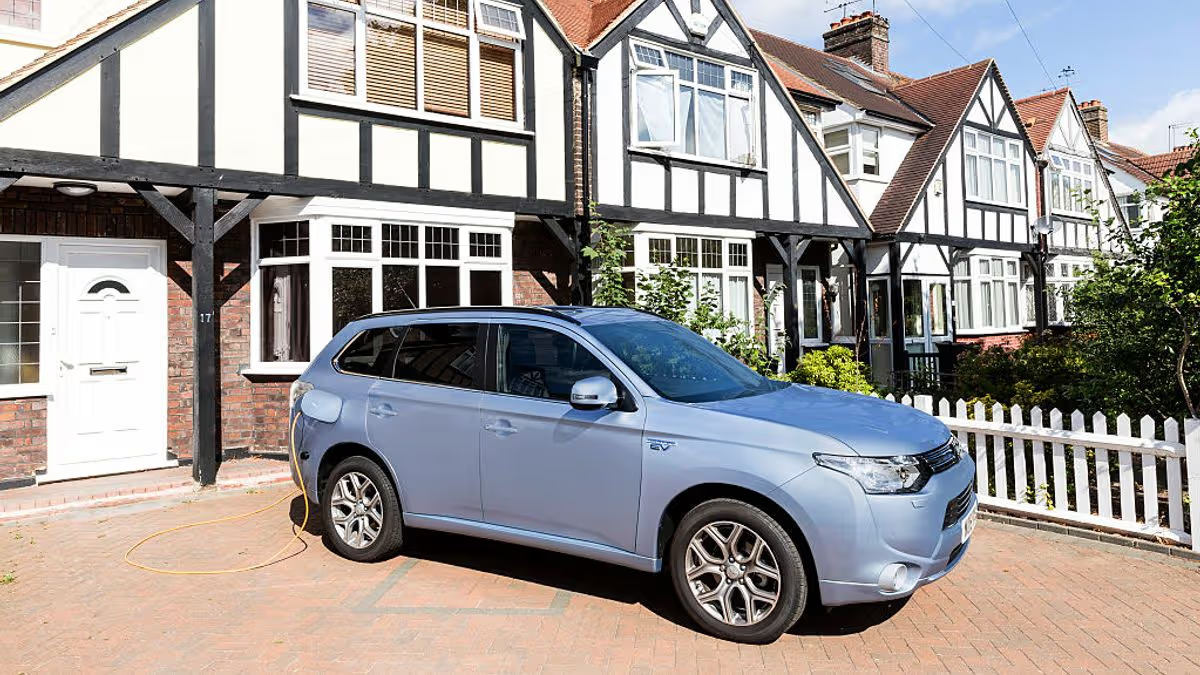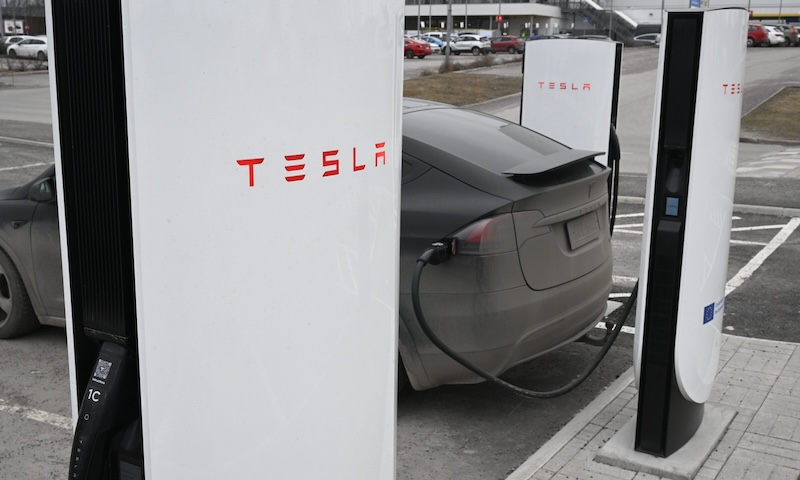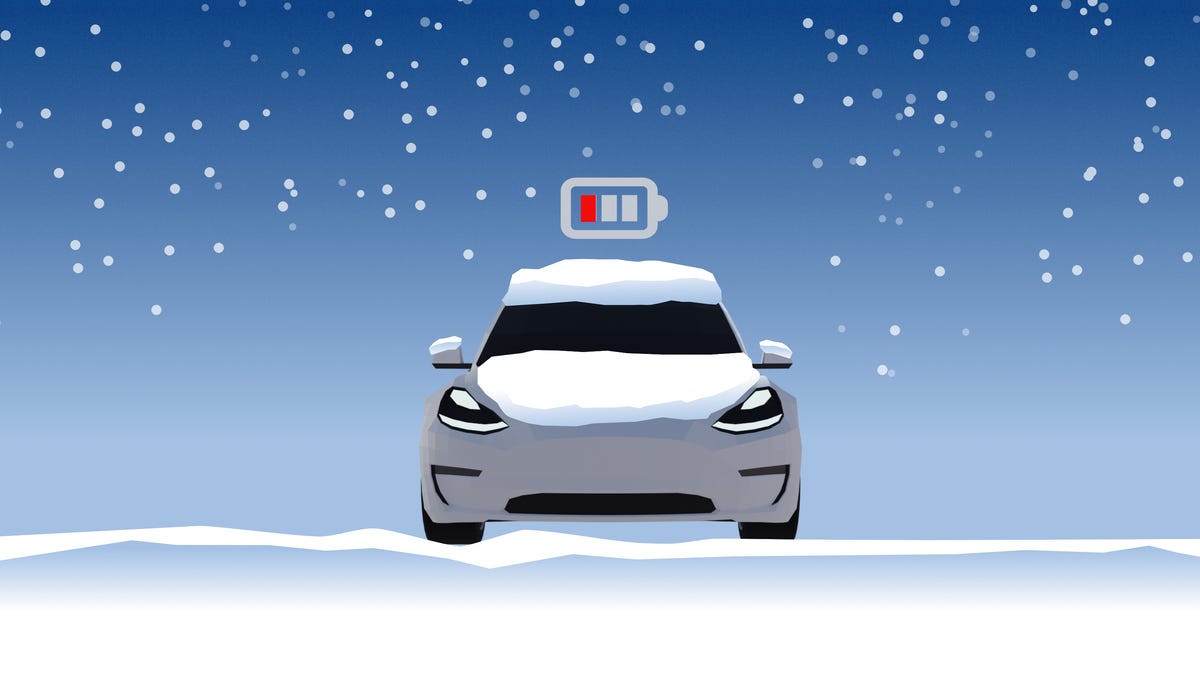
Cold makes the chemical process that electric vehicle batteries use to store energy slow down, which is why with much of the US in a deep freeze, EV owners are dealing with reduced battery performance and increased charging times. A 2024 study by Consumer Reports found that an EV can lose about 25% of its range when cruising at 70 mph in temperatures below 20 degrees. The group tested four models made by different manufacturers in warm, mild and cold temperatures and found they achieved an average of nearly 182 miles on a battery charge, compared to an average of nearly 275 miles in the same driving conditions on a warm day.
Though to be fair this isn't just an electric vehicle problem. The gas mileage of a conventional gasoline car is about 15% lower at 20 degrees than at 77 degrees, according to the US Department of Energy.
Unable to view our graphics? Click here to see them.
Currently something under 2% of all vehicles in the United States are electric, according to Experian, so the problem isn’t affecting large numbers of people. Also, the state with the highest sales is still California, where extreme cold is uncommon. But that’s changing. US electric vehicle purchases accounted for 9.2% of all new car registrations in 2024, according to an Experian Automotive report.