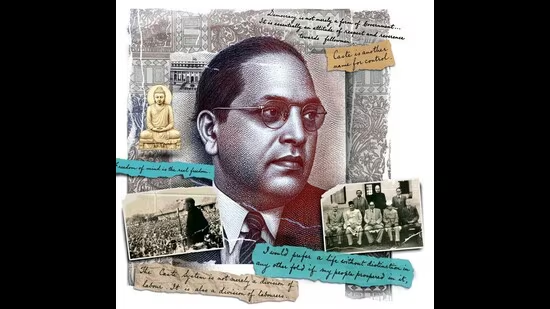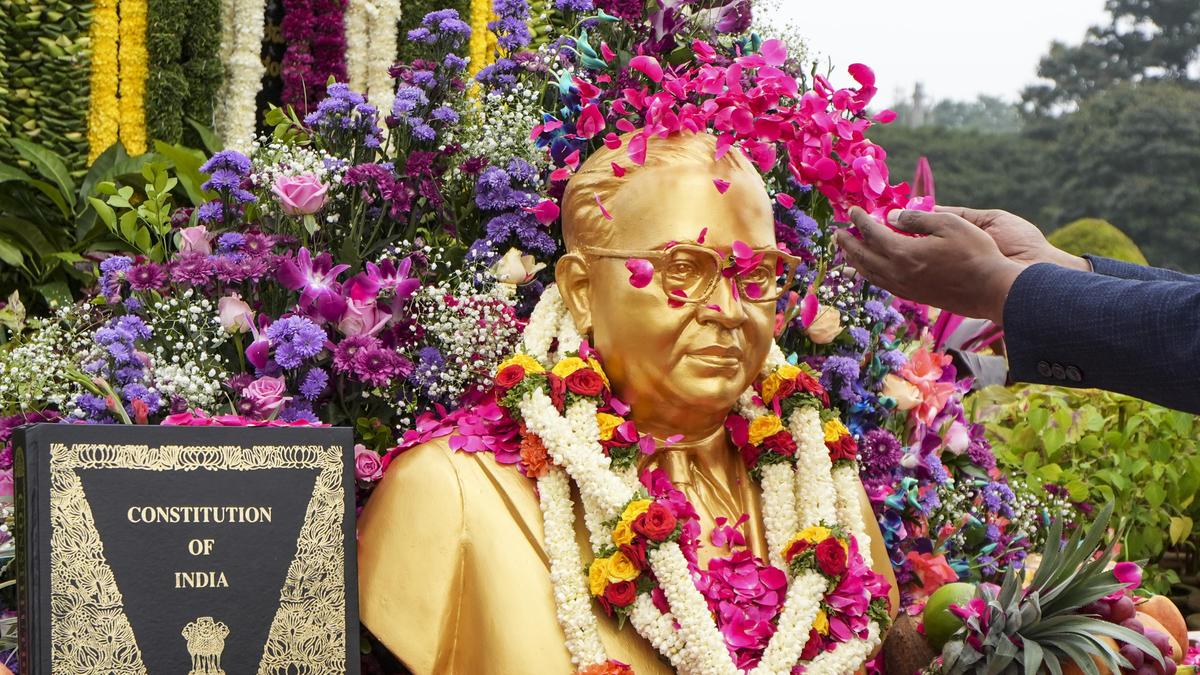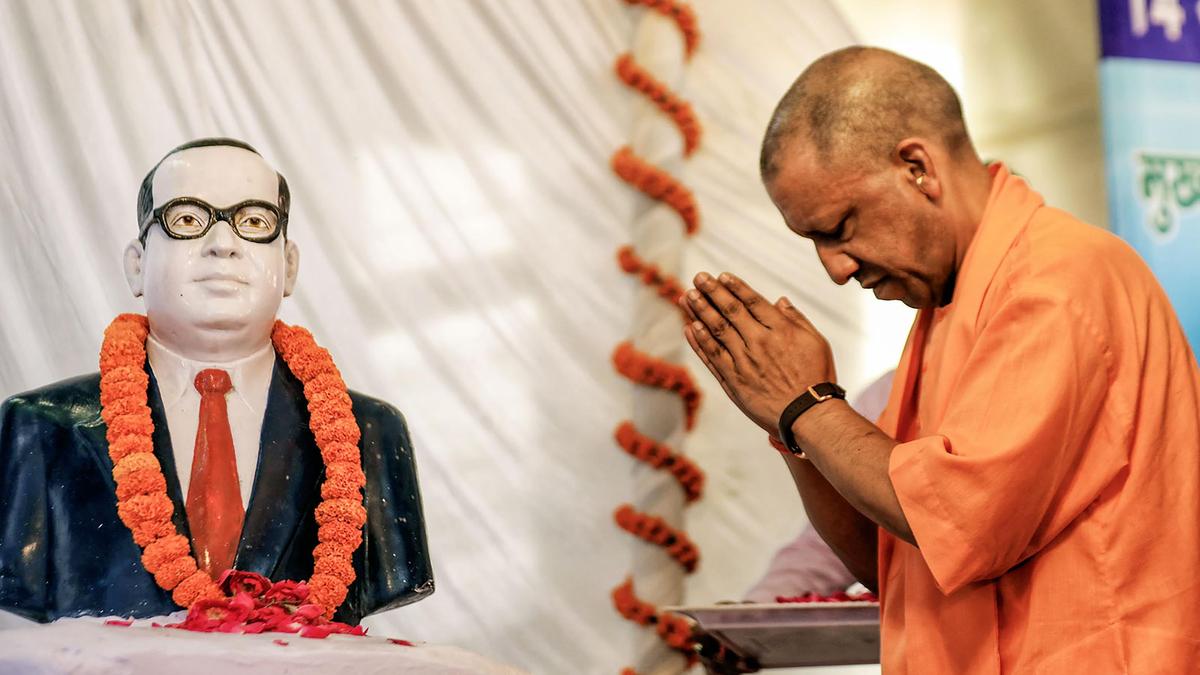
Since 1990, there has been a renewed interest in B.R. Ambedkar, regarded widely as the architect of the Constitution of India. On his 99th birth anniversary in April that year, the country’s highest award— the title of Bharat Ratna— was conferred on him posthumously and his widow, Savita Ambedkar received it from President R. Venkataraman. Prime Minister V.P. Singh had declared 1990 as the Year of Social Justice.
In Tamil Nadu, the then Chief Minister M. Karunanidhi, in May, announced in the Assembly that the Madras Law College would be named after Ambedkar. During his previous spell, he got an arts and science college in Vyasarpadi in north Chennai named after the architect of the Constitution.
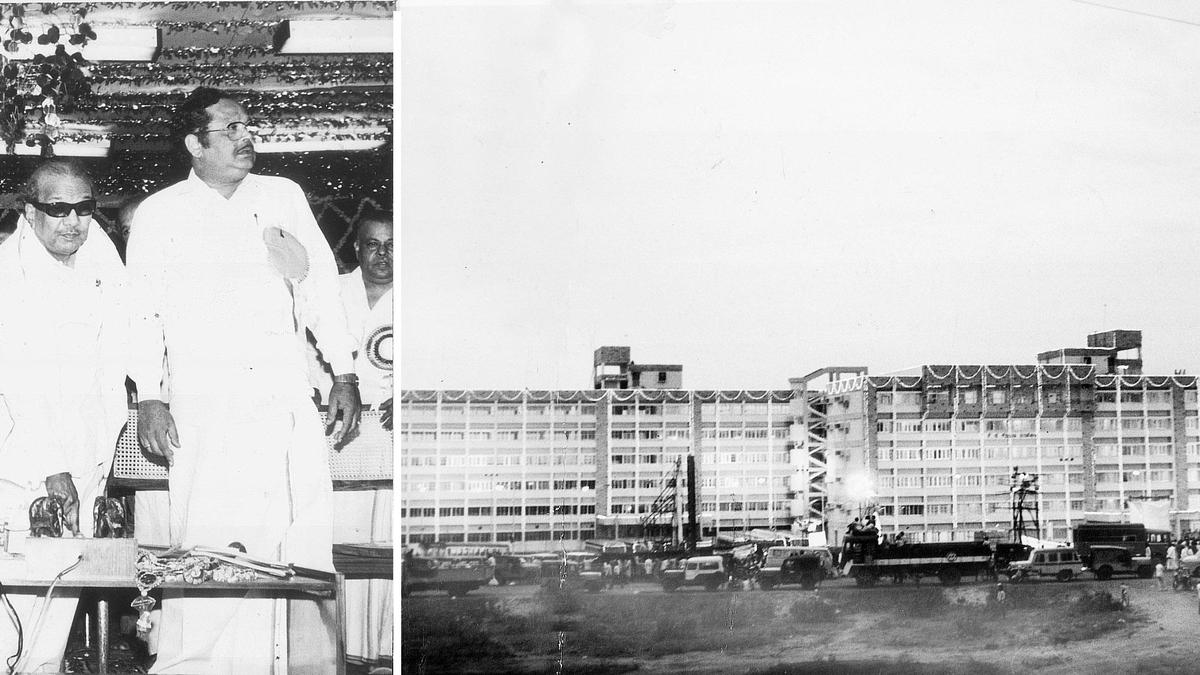
Then Chief Minister M. Karunanidhi, laying a brick to mark the beginning of Dr. Ambedkar Memorial construction in Chennai on Wednesday, as the Mylapore MLA, Ramajayam, the Adi Dravidar and Tribal Welfare Minister Samayanallur Selvarasu, and the Adi Dravidar and Tribal Welfare Department Secretary, R. Rathinasami, look on. | Photo Credit: The Hindu Archives
In no time, the country, particularly northern States, was rocked by students’ agitation against the decision of the Singh’s government to earmark 27% of jobs in the Central government and public sector undertakings for the socially and educationally backward classes (SEBCs or Other Backward Classes - OBCs), which triggered a spell of apprehension among Scheduled Castes and Scheduled Tribes that their quota scheme - 15% for SCs and 7.5% for Scheduled Tribes in the Union government and similar arrangements in States - would be adversely hit. This factor had also provided one more reason for the underprivileged people to remember Ambedkar vigorously. When the Supreme Court had cleared the 27% quota for OBCs, it also stipulated that the quantum of reservation should not exceed 50%.