https://arab.news/gpf6h
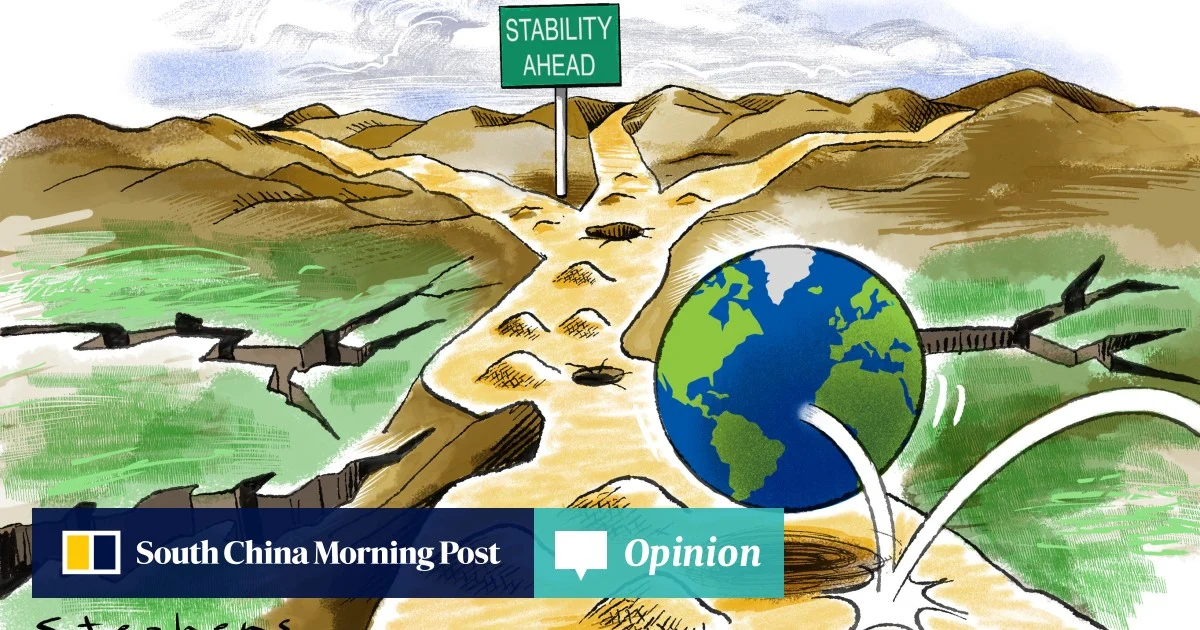
There has been a tendency to look at international relations through the prism of polarity. For hundreds of years, polarity has provided observers of international affairs with a valuable tool for understanding the interactions among states and other international actors by mapping the distribution of power within the system relative to the most powerful. A polar-based world is one that, objectively or subjectively, provides foreign policy decision-makers with a sense of direction on whether to collaborate with it or oppose it.
Scholars have identified three main types of polar-based systems that have existed in history: unipolarity, bipolarity, and multipolarity. All these systems emerged at different points in the past two centuries. However, despite their differences, they all assume that the basic building block of international relations is the nation-state, one of whose main characteristics is sovereignty complemented by that of independence.
Sovereignty meant that the source of power within the state to govern and legislate originates from within the country, and that no external force has the legitimate right to interfere. Yet, throughout the centuries, the world has “shrunk” in terms of accessibility, the intensity and speed of interactions, and the rise of crucial issues that transcend political borders, such as global trade, cyberspace, global climate change, crime, and human trafficking. Increasingly, countries have become interconnected to ensure both their security and prosperity, securing, for instance, energy security and other natural resources, as well as access to markets, technology, and knowledge.