https://arab.news/jc23b
South Sudan’s slide toward yet another civil war will not be the result of state weakness alone. It will be the inevitable byproduct of a political order that survives by keeping the country unsettled. Since independence in 2011, the promise of elections, a permanent constitution, and a unified state has been endlessly deferred. These delays are often framed as technical problems or security concerns. In reality, they form a governing method. Instability is not a failure of elite rule in South Sudan; it is the operating system.
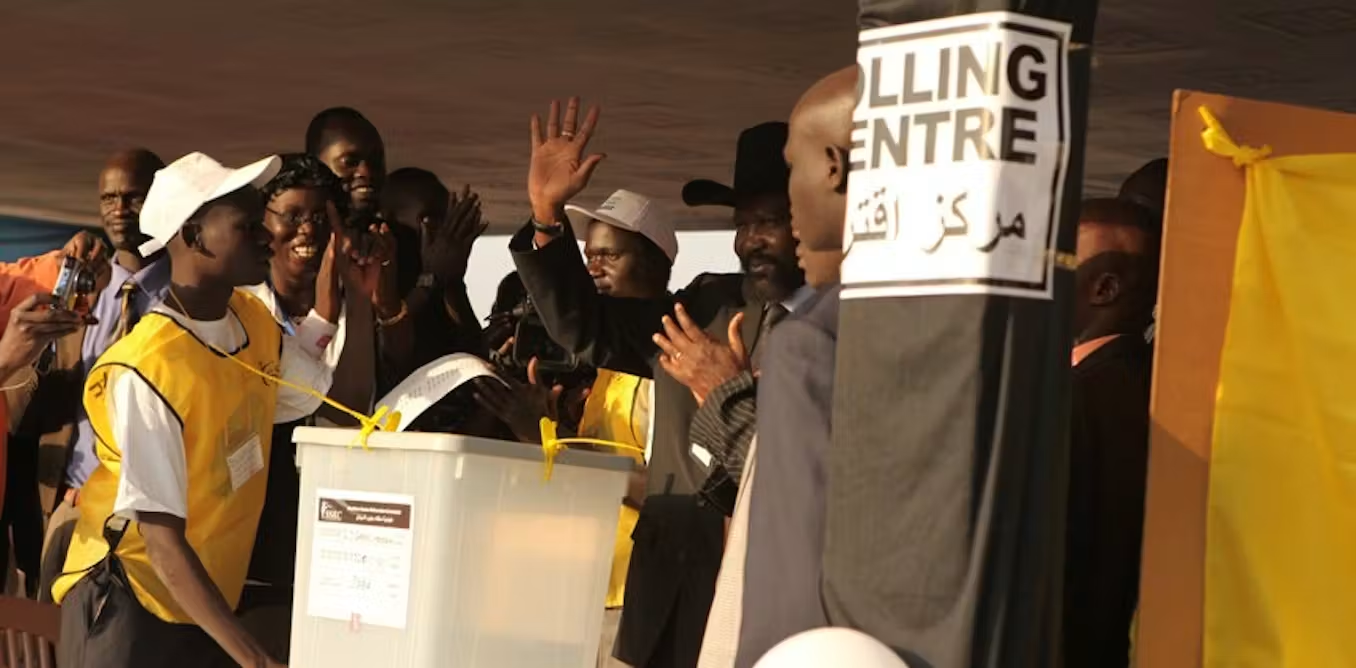
Fourteen years on, South Sudan has yet to hold a single general election. The transitional period has been extended four times. Elections are now penciled in for 2026, though few insiders expect them to happen. A permanent constitution remains unfinished. Key provisions of the Revitalized Agreement on the Resolution of the Conflict in South Sudan sit half-implemented. Security forces remain divided. Transitional justice exists mostly on paper. To even the most untrained eye, it looks like South Sudan’s drift is better understood as design.
After all, the ruling elite’s interest in governing through instability starts with how power actually works. Yes, formal institutions exist, but they are not where authority is exercised. Real control sits in informal networks that connect the presidency, security services, oil revenues, and ethnic patronage. These networks thrive in ambiguity. Clear rules would limit discretion. Elections would introduce risk. A settled constitution would fix power relations that are currently fluid and negotiable.