With ancient standing stones and modern midwinter festivals, the West Penwith peninsula is a land of magic and mystery
T
he light is fading fast as I stand inside Tregeseal stone circle near St Just. The granite stones of the circle are luminous in this sombre landscape, like pale, inquisitive ghosts gathered round to see what we’re up to. Above us, a sea of withered bracken and gorse rises to Carn Kenidjack, the sinister rock outcrop that dominates the naked skyline. At night, this moor is said to be frequented by pixies and demons, and sometimes the devil himself rides out in search of lost souls.
Unbothered by any supernatural threat, we are gazing seawards, towards the smudges on the horizon that are the distant Isles of Scilly. The clouds crack open and a flood of golden light falls over the islands. My companion, archaeoastronomer Carolyn Kennett, and I gasp. It is marvellous natural theatre which may have been enjoyed by the people who built this circle 4,000 years ago.
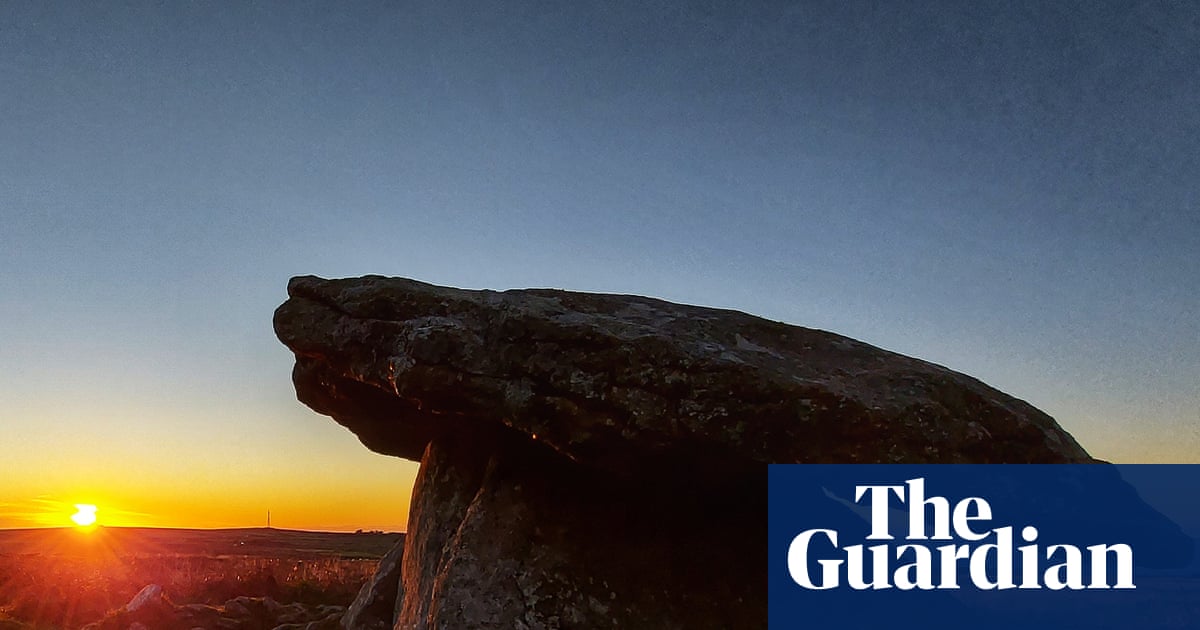
We have met at Tregeseal to talk about the winter solstice. Carolyn’s work focuses on the relationship of Cornwall’s prehistory with the sky, and she describes the whole Land’s End peninsula as an ancient winter solstice landscape. This, she says, is because of the spine of granite that runs south-west along the peninsula, towards the midwinter sunset. If, for example, you stand at winter solstice by Chûn Quoit – the mushroom-shaped burial chamber high on the moors south of Morvah – you will see the sun set over Carn Kenidjack on the south-western horizon. And likely this is exactly as Chûn Quoit’s Neolithic builders intended.