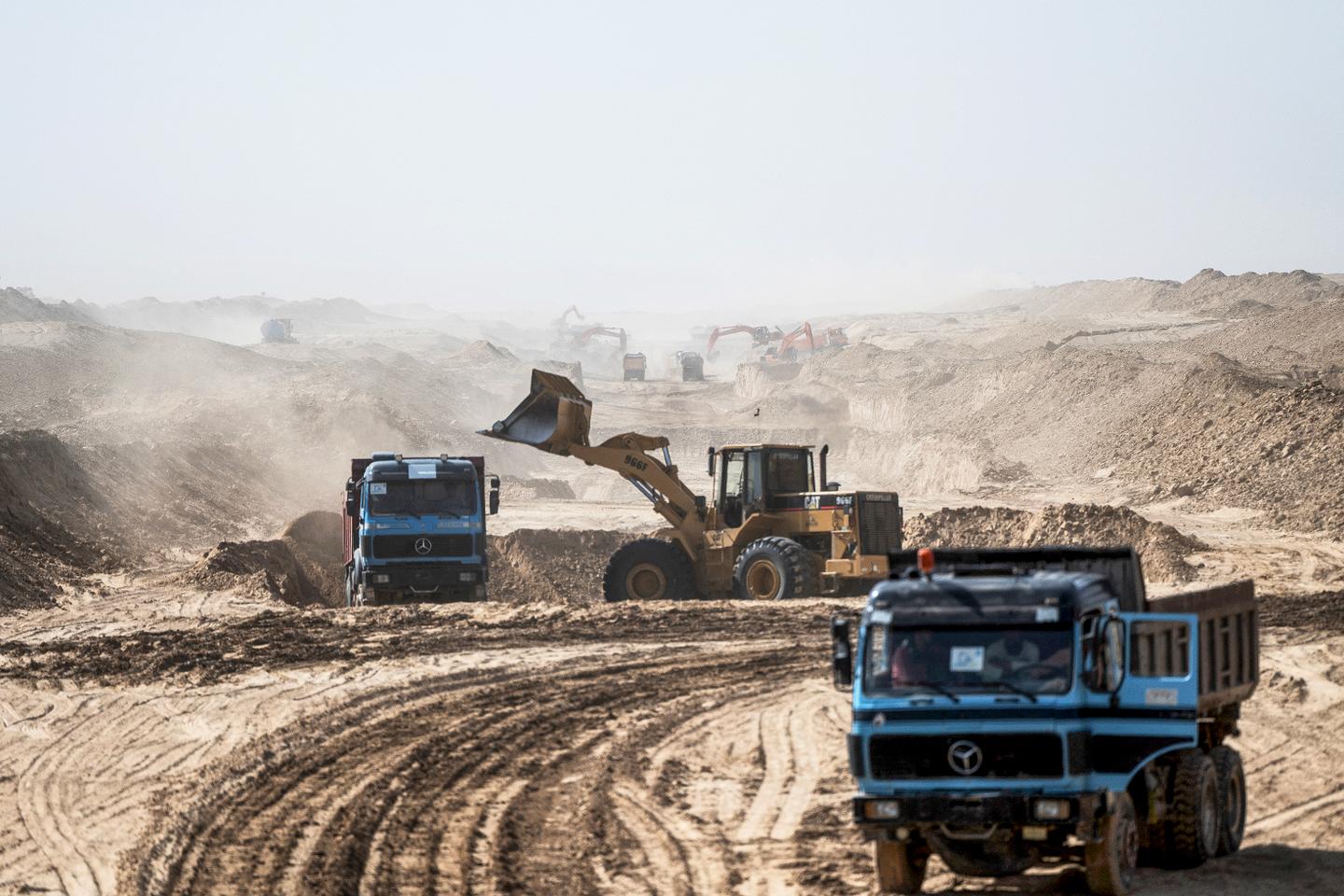
At the Qosh Tepa canal construction site, an irrigation project funded by the Taliban, in Andkhui district (Afghanistan), June 22, 2025. WAKIL KOHSAR / AFP
Isolated by the international community since their return to power in 2021 over their exclusion of women from public life, the Afghan Taliban has spared no effort to improve their tarnished reputation by promoting their economic achievements.
The Kabul regime has strictly controlled visas issued to foreign journalists, allowing them to direct the narrative and attempt to convince the world that the country was on a path to recovery by the end of 2025. However, the reality appears more complex. Large infrastructure projects in progress have not always yielded results, and poorly constructed projects have often been suspended for security reasons, or even jeopardized relations with neighboring countries.
In 2025, Taliban authorities regularly reported on the progress of infrastructure projects, especially roadworks such as the Salang tunnel, which connects the Kabul region with the north of the country. According to a United Nations report on Afghanistan released in June by Secretary-General António Guterres, these projects were financed by tax revenues which, according to the World Bank, rose by 12% compared with the previous year. Meanwhile, the United Nations has continued its monthly currency deliveries. This inflow, according to the US administration, had a positive economic impact and helped ease Afghanistan's liquidity crisis. This allowed the Taliban to claim they were on the road to "self-sufficiency."