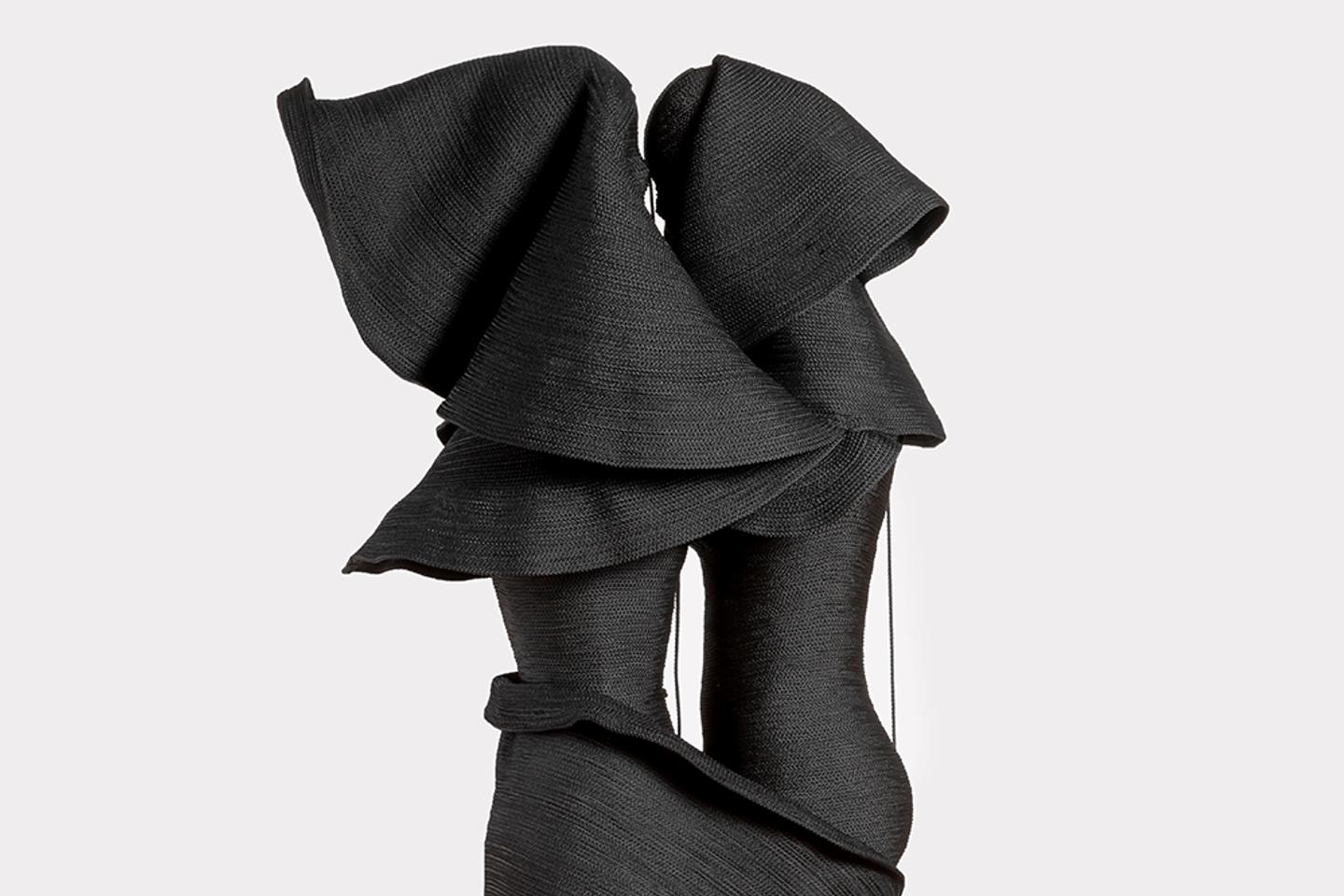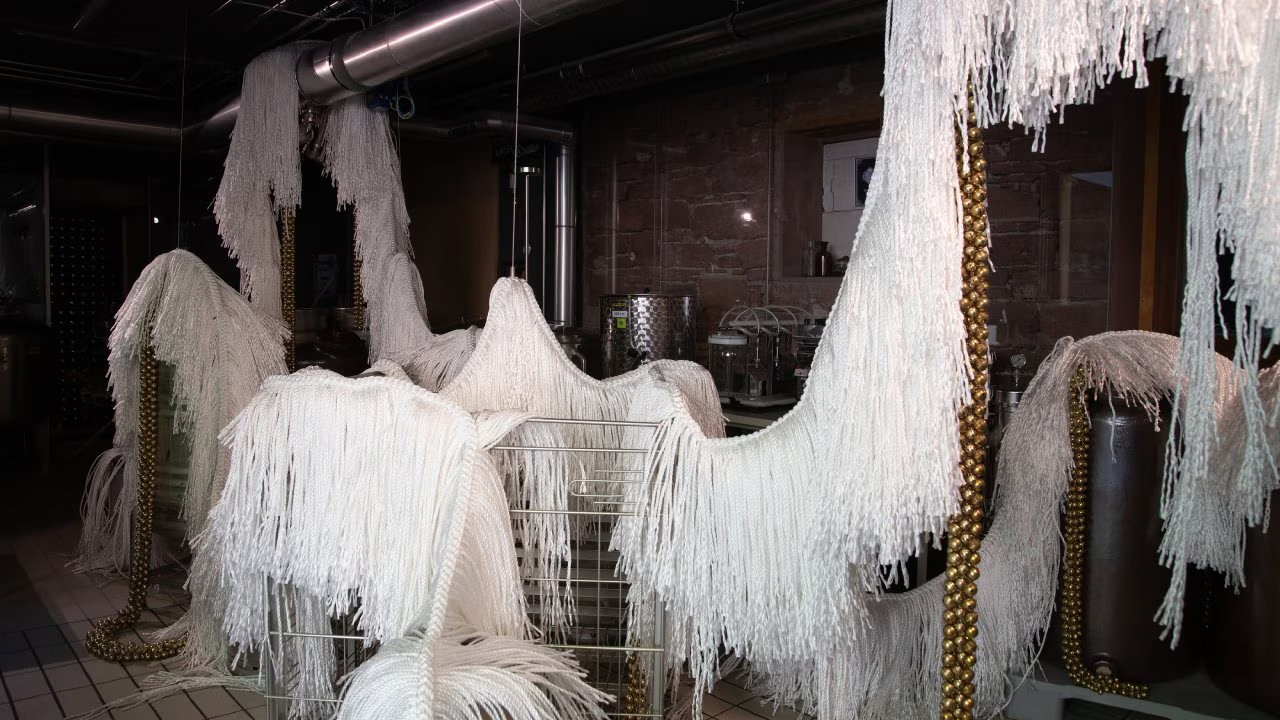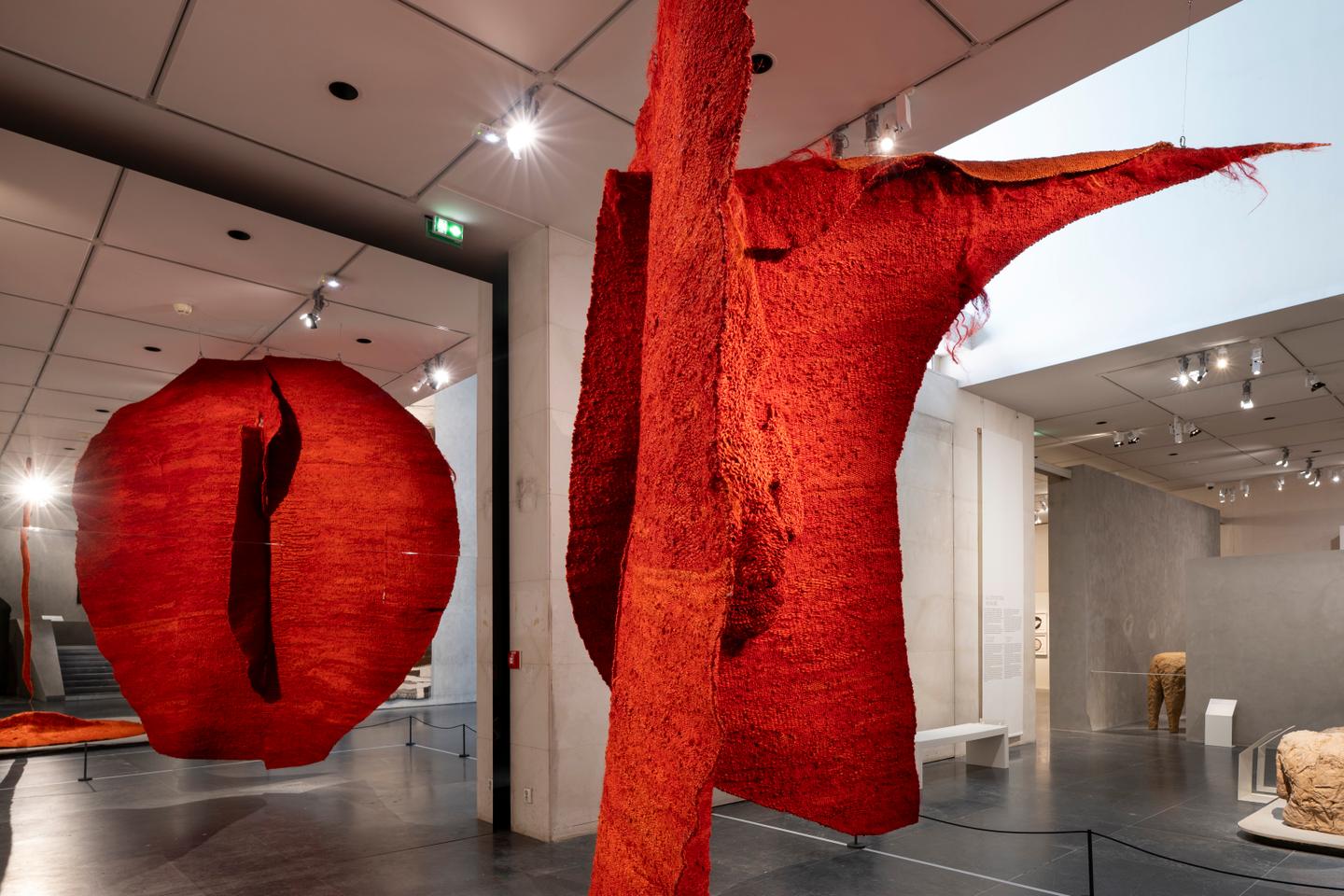
'Abakan rouge' (1969), by Magdalena Abakanowicz, at Musée Bourdelle, in November 2025. NICOLAS BOREL/MUSÉE BOURDELLE/PARIS MUSÉE
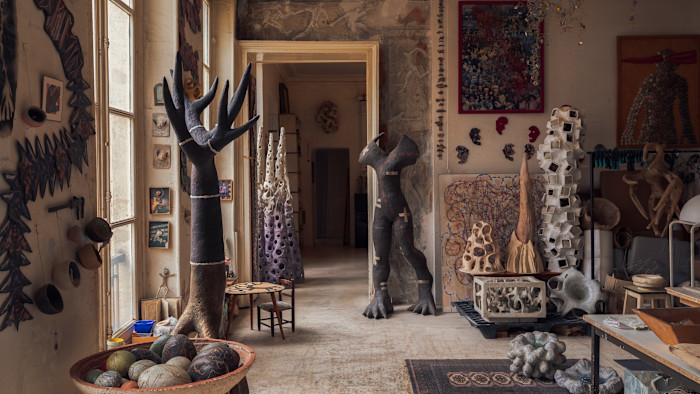
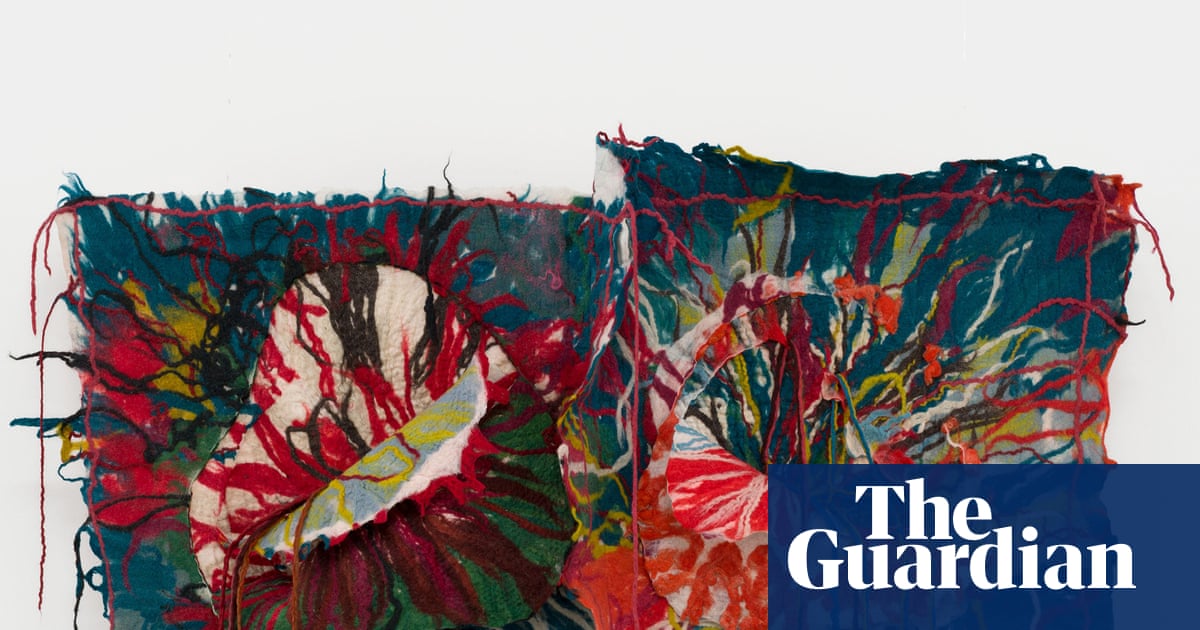
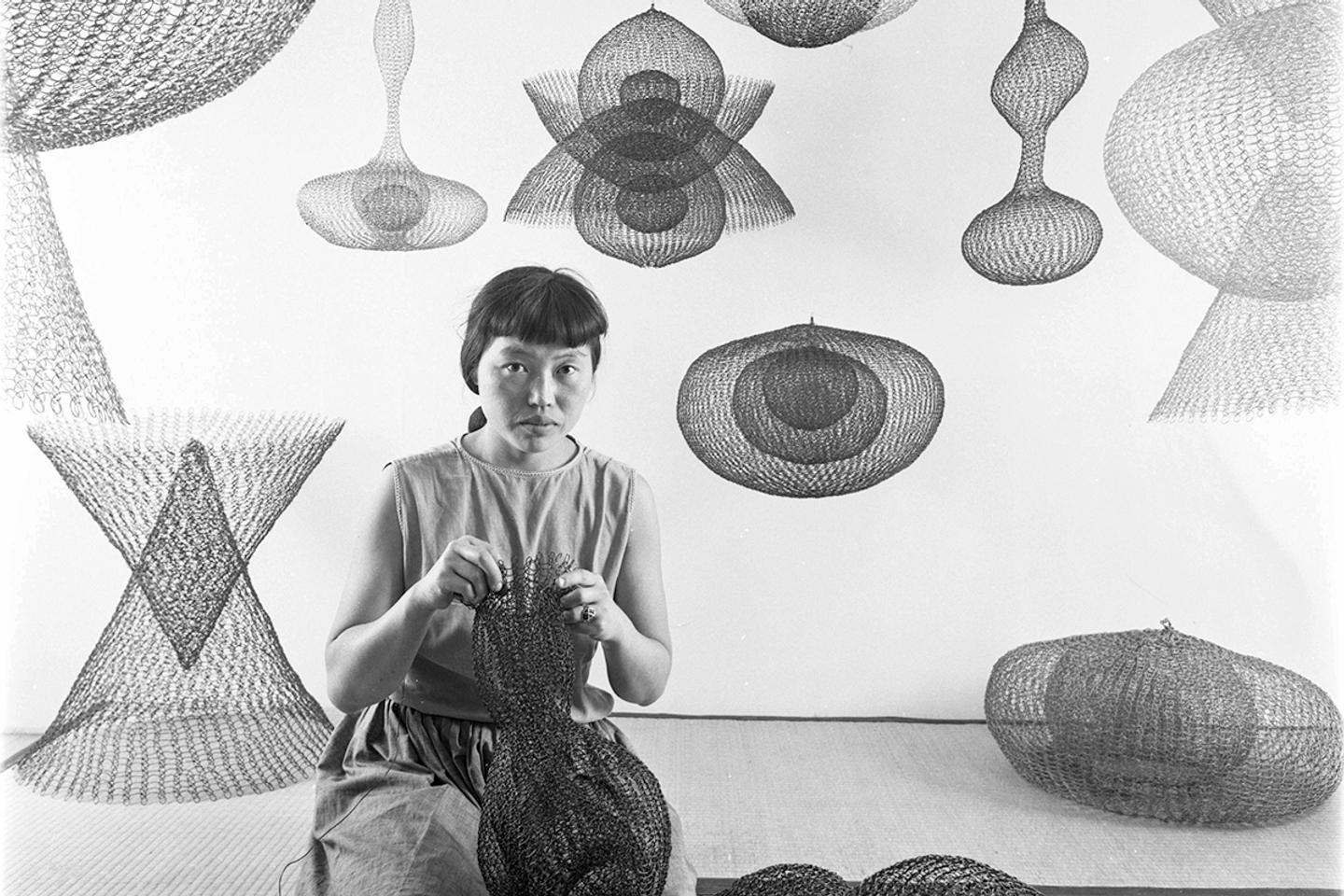
All it takes is a single thread, and it becomes bark, bison, a wave of blood... With an awful grace, Magdalena Abakanowicz (1930-2017) conjured a world of apparitions and nightmares from textiles. A leading figure of the Polish avant-garde, this pioneer strangely remains little known in France, making the Musée Bourdelle's retrospective all the more valuable. The exhibition sheds light on the career of an artist who, like Sheila Hicks and Olga de Amaral – now finally being celebrated as they deserve – revolutionized textile art in the 1960s. With 70 works, including tapestries, sculptures, and drawings, the exhibition unfolds throughout the winding Portzamparc wing of the museum dedicated to the memory of Antoine Bourdelle (1861-1929), alongside the permanent collections.
Textile art does not necessarily mean cross-stitch and domestic embroidery, as many exhibitions have recently reminded us. The world created by Abakanowicz's hands echoes her journey through a tragic century. The war that broke out when she was barely a teenager, the censorship and deprivation under the communist regime in her native Poland: all of this can be read between the lines, between the threads. Hence the exhibition title: "The Fabric of Existence." "It became clear to me that I could build a three-dimensional reality: soft, full of secrets, protecting me, being a shield, and at the same time (...) an integral part of myself," the artist explained.