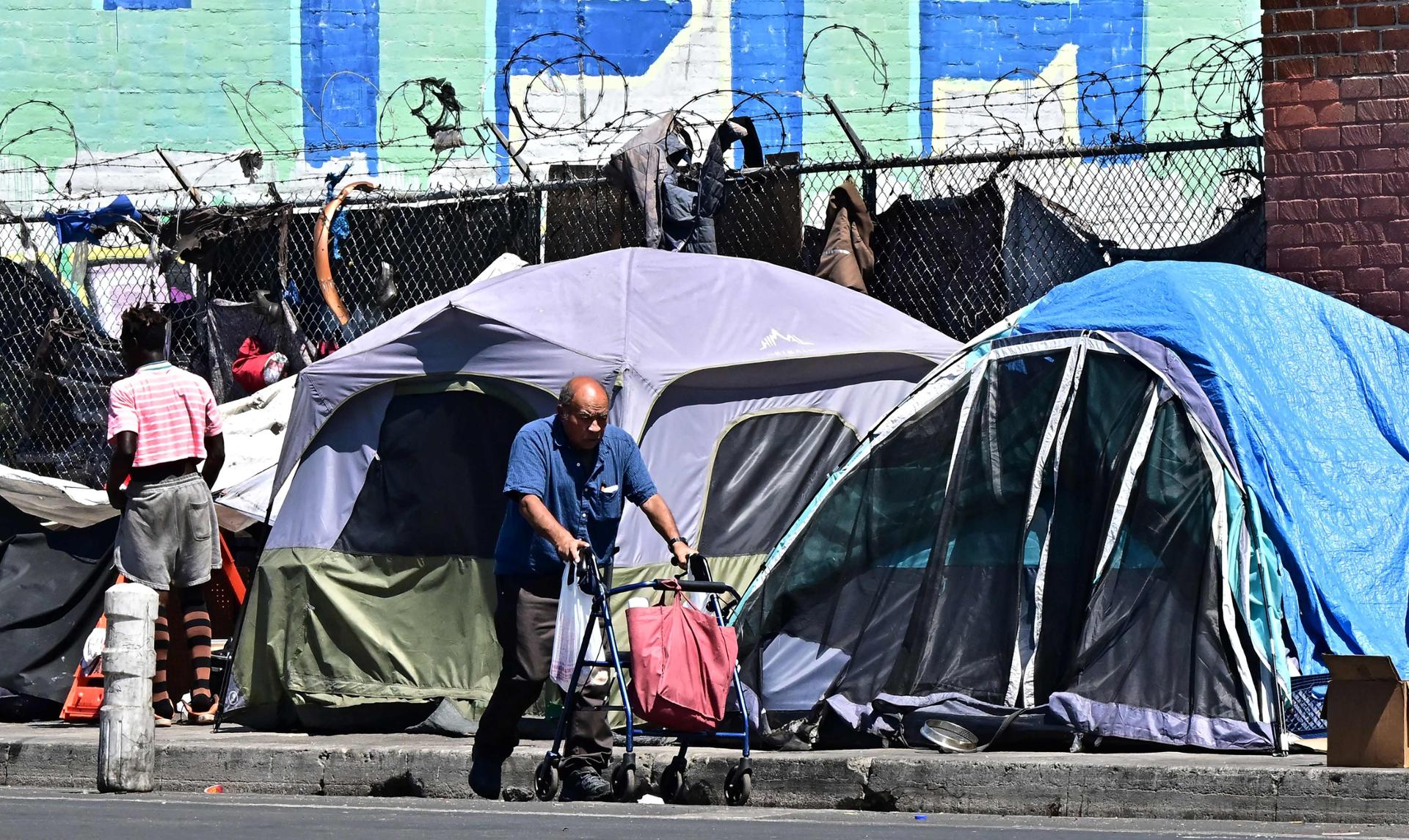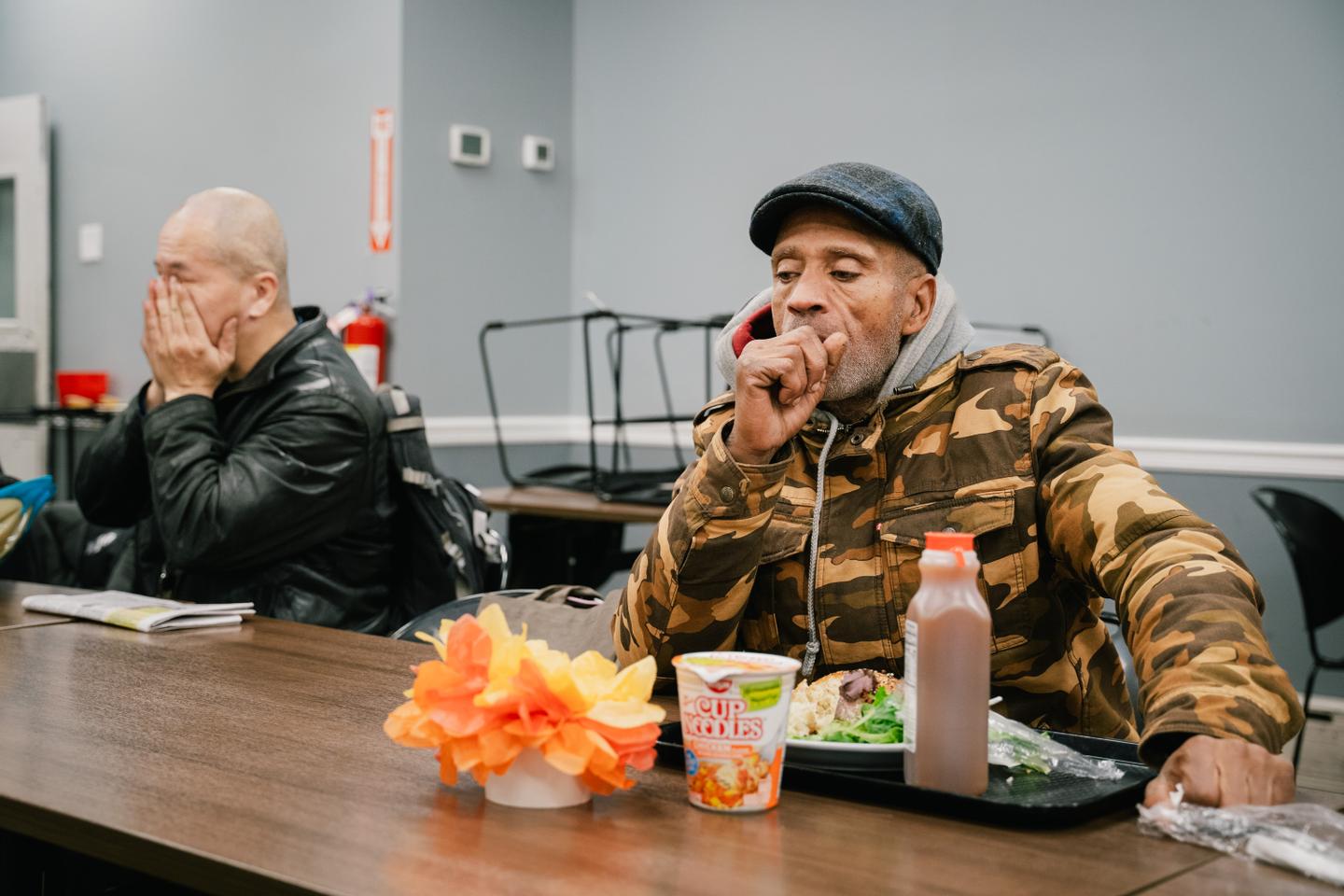
Robert, currently unhoused, sits at a solidarity restaurant in South Harlem, Manhattan, New York, on December 3, 2025. PAOLA CHAPDELAINE FOR « LE MONDE »
Joe finally decided to walk through the door for the first time in early December. The 29-year-old New Yorker, sitting at a table in the South Harlem "community kitchen" in Manhattan, savored a steaming bowl of chili. Joe, who is usually a waiter, was out of work. "Food prices are constantly rising," he said. So, he searched the internet and came across the address of this solidarity restaurant, which serves more than 500 people each day. It is run by Food Bank for NYC, the largest food assistance non-profit in the city. According to its annual report, some 1.3 million residents – out of the eight million in the world's wealthiest metropolitan area – benefited in one way or another from the organization's support.
The "shutdown" – a forty-three-day closure of federal government services from October to mid-November – highlighted this grim American reality. In the world's largest economy, 41 million people, about 12% of the population, rely on government-issued food stamps to have enough to eat each day.
That was the case for Christina (who did not wish to give her last name), 40, who regularly comes with her 8-year-old son Julian. Volunteers at the community kitchen, led by head chef Sheri Jefferson, 61, know the boy's food preferences and prepare a special plate for him. "Food in supermarkets is getting more and more expensive, and portion sizes are shrinking. Here, I appreciate that they take care of us; the food is always good, hot, and the ingredients are fresh," said Christina. Her husband, who works in a factory, had stopped by earlier after work for a quick meal.