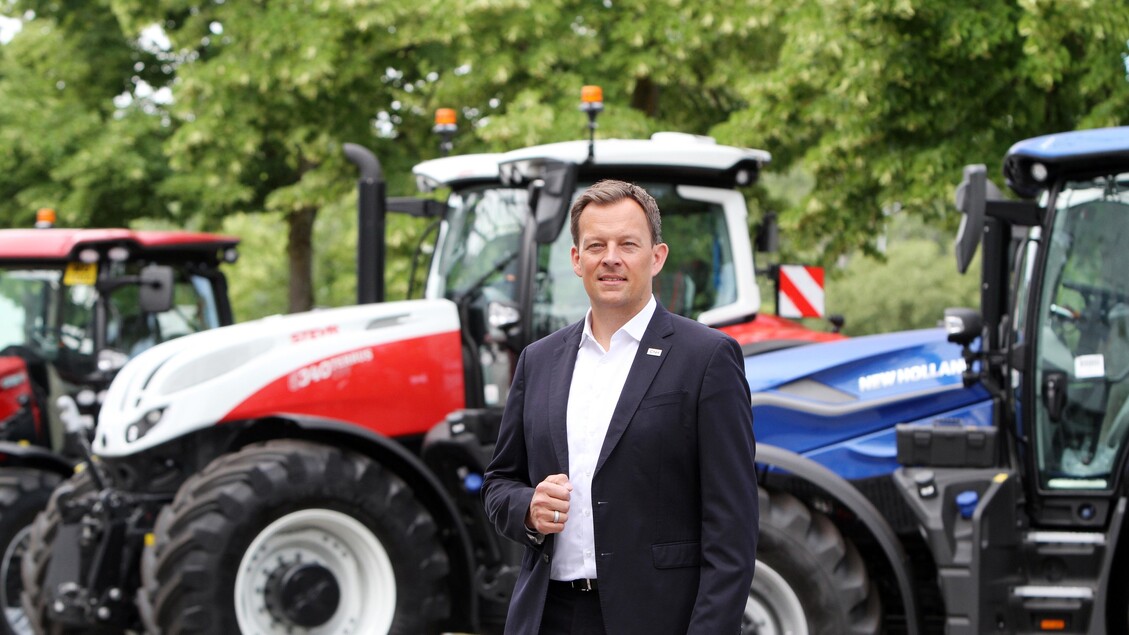
Jay Schroeder, the chief technology officer of CNH, was recently in Brazil, discussing artificial intelligence use cases to support the company’s research and development team. The agricultural equipment maker has put a lot of effort into governance and assessing certified tools from vendors, but the actual application of the technology within its own research division remains very nascent.
What has held Schroeder back, he says, are lingering concerns about the return on investment of AI. He cites an MIT study published over the summer that found that 95% of AI pilots fail.
“It’s great that we’ve got people engaged in AI,” says Schroeder, who quickly pivots to ask rhetorically, “How do we measure success? What are the things that we can measure to say, ‘This has been a worthwhile investment for CNH?’”
Schroeder, a three-decade veteran of CNH who began his career as an engineer focused on mid-range tractor transmission design, isn’t completely cautious when it comes to leveraging AI. The tech has been deployed across broad corners of the business including software development, to assist with drafting contracts, producing R&D database queries, and content management.
CNH has scored some wins that Schroeder has been able to track. The company is leaning on AI to assist software engineers who are focused on precision agricultural technology and the FieldOps farm management systems, where AI, machine learning, and sensors are applied to digitally enhance farming. Early data has shown that these engineers are reducing the time needed for documentation by 60%, giving them more time to write new code.