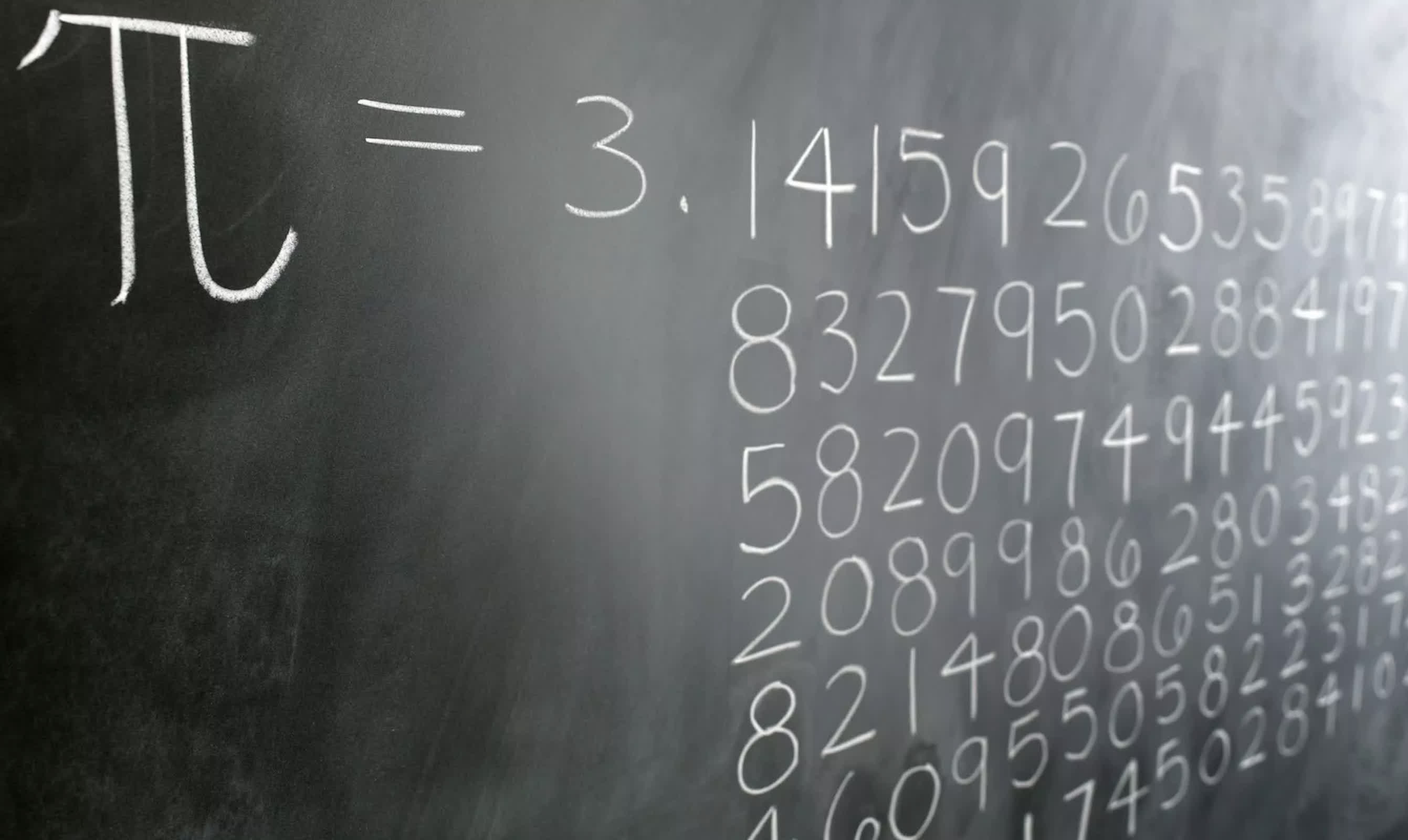
Physicists from the Indian Institute of Science (IISc) have found that pure mathematical formulae used to calculate the value of pi 100 years ago by Indian mathematician Srinivasa Ramanujan has connections to fundamental physics of today – showing up in theoretical models of percolation, turbulence, and certain aspects of black holes.
The IISc, in a release, said that in 1914, just before he sailed from Madras to Cambridge, Ramanujan published a paper listing 17 mathematical formulae to calculate pi. They were highly efficient and helped compute pi faster than other methods at the time.
It said that even with very few mathematical terms in them, the formulae still yielded many correct decimal digits of pi. The formulae were so foundational that they form the basis for modern computational and mathematical techniques- even the ones used by supercomputers- to compute digits of pi.
Chudnovsky algorithm
“Scientists have computed pi up to 200 trillion digits using an algorithm called the Chudnovsky algorithm. These algorithms are actually based on Ramanujan’s work,” said Aninda Sinha, professor at Centre for High Energy Physics (CHEP) and senior author of the new study.