EU’s Copernicus monitoring service hails ‘reassuring sign’ of progress observed this year in hole’s size and duration
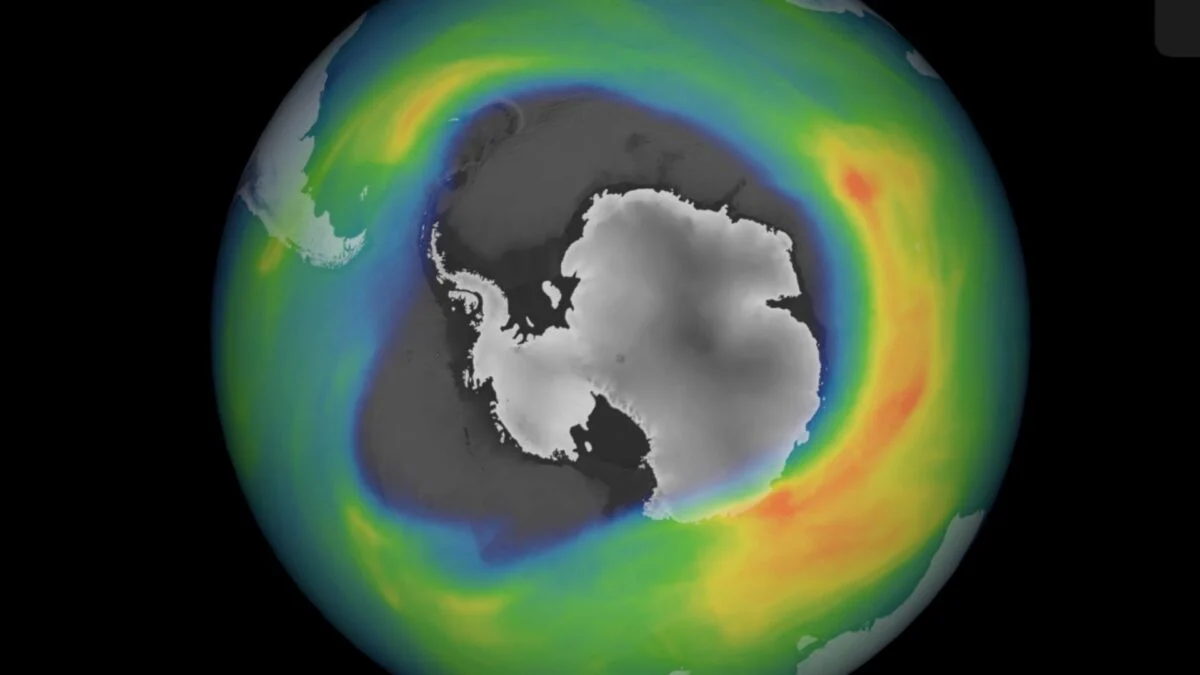
The hole in the ozone layer over the Antarctic this year was the smallest and shortest-lived since 2019, according to European space scientists, who described the finding as a “reassuring sign” of the layer’s recovery.
The yearly gap in what scientists have called “planetary sunscreen” reached a maximum area of 21m sq km (8.1m sq miles) over the southern hemisphere in September – well below the maximum of 26m sq km reached in 2023 – and shrank in size until coming to an early close on Monday, data from the Copernicus Atmosphere Monitoring Service (Cams) shows.
It marks the second year in a row of smaller holes in the ozone layer, after a series of larger and longer-lasting holes that appeared between 2020 and 2023.
“The earlier closure and relatively small size of this year’s ozone hole is a reassuring sign,” said Laurence Rouil, the director of Cams. “[It] reflects the steady year-on-year progress we are now observing in the recovery of the ozone layer thanks to the ODS [ozone-depleting substances] ban.”