NASA and NOAA have announced encouraging news for Earth's climate: The 2025 Antarctic ozone hole is the fifth-smallest recorded in more than two decades.
According to both agencies, international efforts to phase out ozone-depleting chemicals are showing measurable success. The improvement stems largely from the Montreal Protocol, the landmark 1987 international treaty designed to phase out substances that harm the ozone layer.
NOAA reports that this year's ozone hole ranks as the fifth smallest since 1992, the year the Montreal Protocol took effect. The agreement has been instrumental in reducing the presence of chlorofluorocarbons (CFCs) and other harmful compounds in the atmosphere.
According to NOAA, CFCs are found in aerosol sprays, blowing agents for foams and packing materials and as refrigerants.
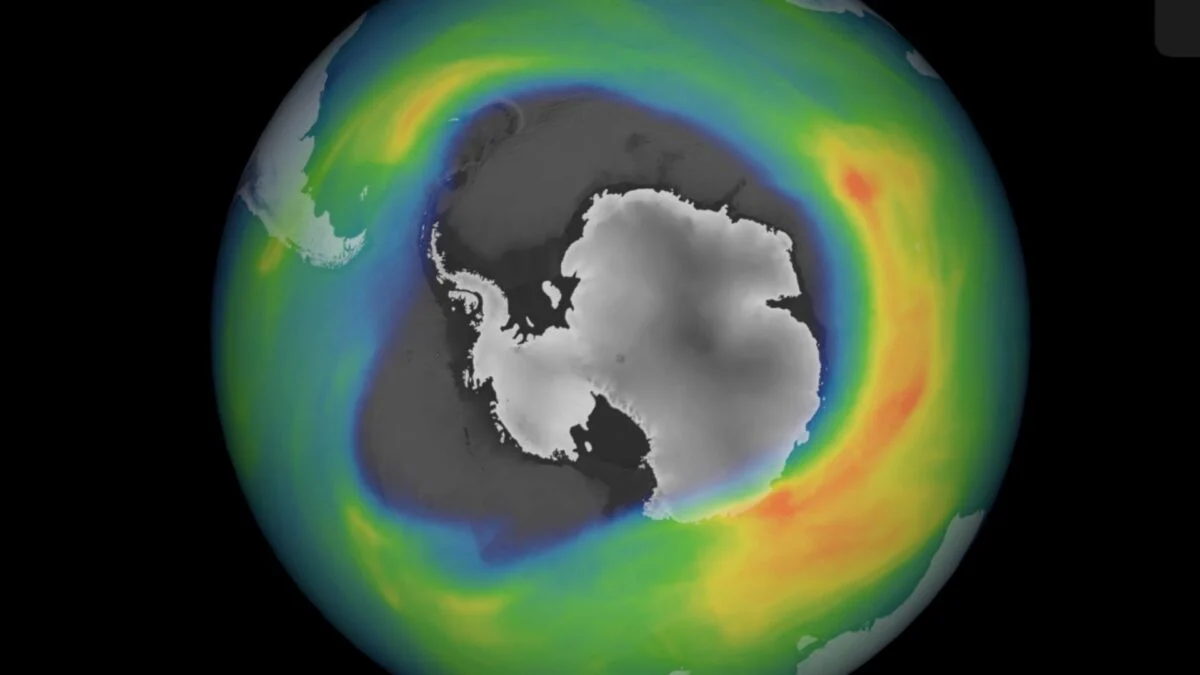
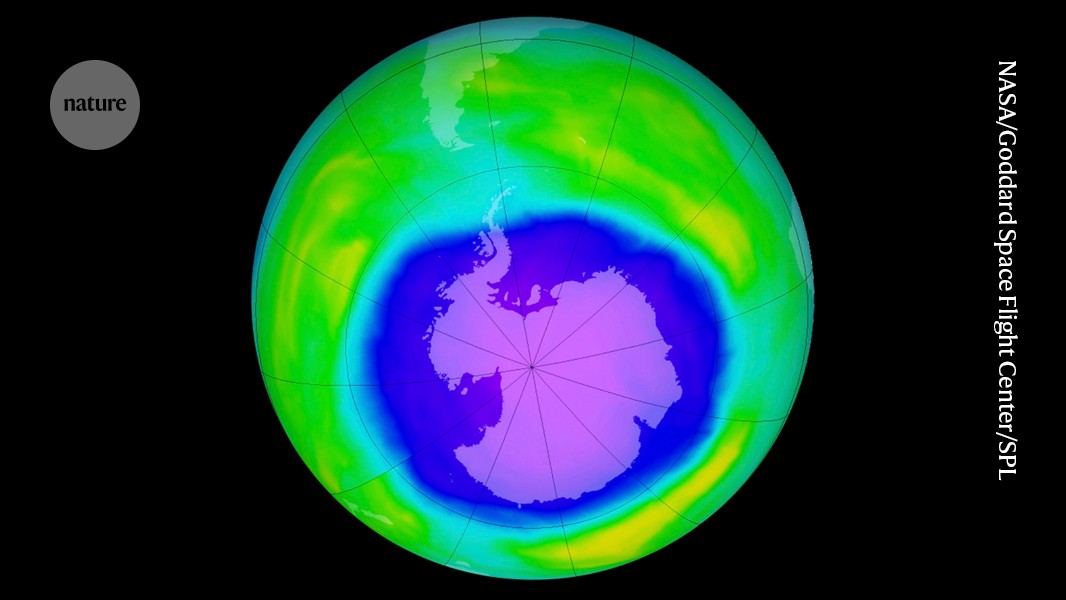
This illustration shows the size and shape of the ozone hole over the South Pole on the day of its 2025 maximum extent. Moderate ozone losses (in orange) are visible amid areas of more potent ozone losses (in red). Scientists describe the ozone &ldquohole&rdquo as the area in which ozone concentrations drop below the historical threshold of 220 Dobson Units. Illustration courtesy of NASA Earth Observatory