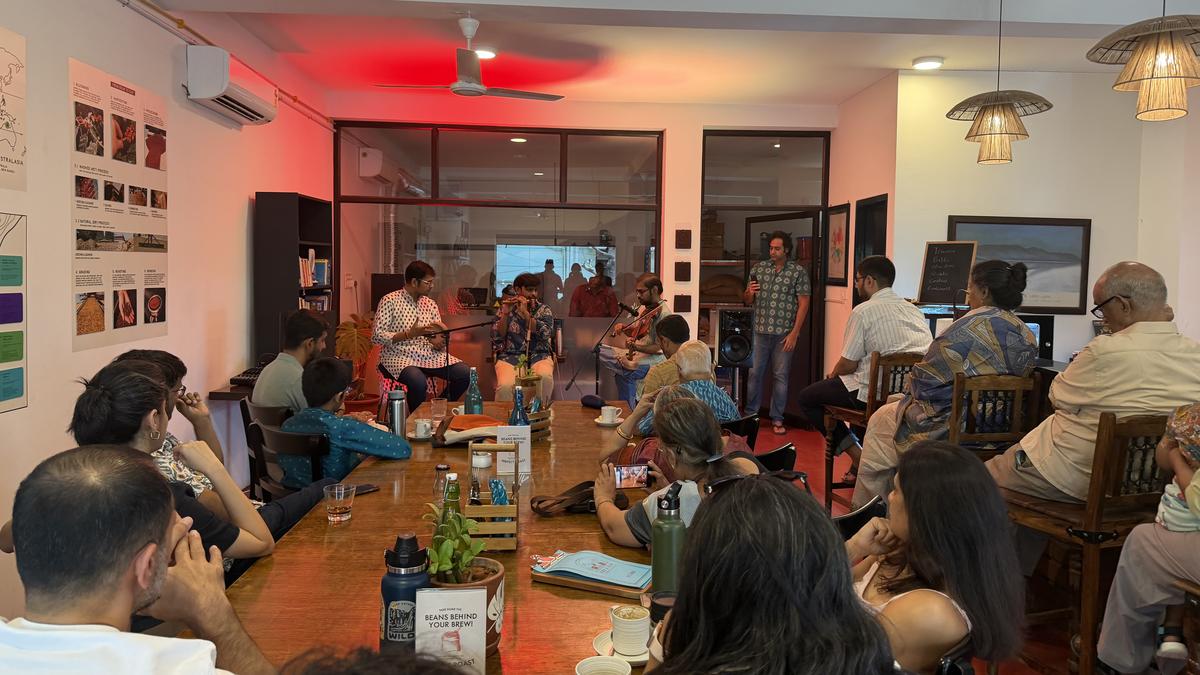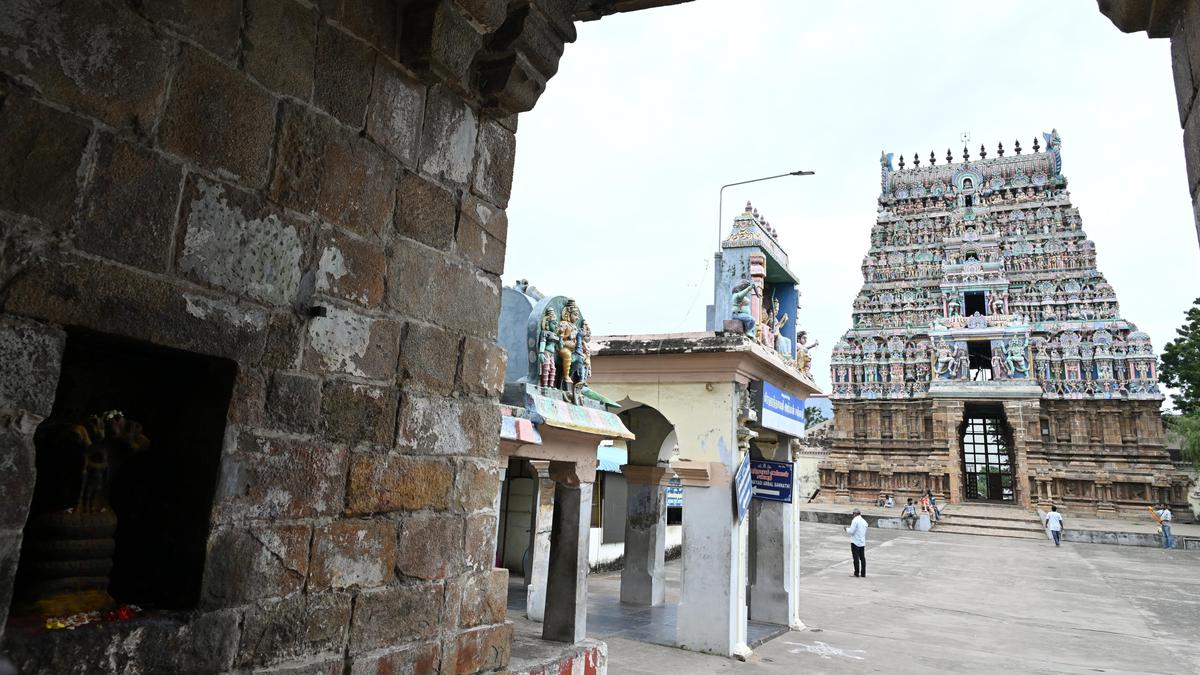
An overwhelming silence prevails in the inner precincts of the Nageswaran Temple, known as ‘Kudanthai Keezhkottam,’ at Kumbakonam in Thanjavur district. Sung in praise by the Saivite saints, the temple, together with the karakoil designed like a chariot, stands as a testimony to the creative zenith of the early Cholas. For lovers of books and music, however, the temple is inseparable from T. Janakiraman’s Tamil novel ‘Mogamul’ (thorn of desire) and the soul-stirring music of the Hindustani performers from Maharashtra.
Janakiraman seems to have chosen the setting with clear intention. The musicians first appear at the Kumbeshwaran Temple, then at the house of Ranganna, the guru of Babu, the novel’s protagonist, and later give a full-fledged concert at the Nageswaran Temple. The temple’s atmosphere is perfectly suited to their performance. Even today, there is little change in the setting.
The book cover of T. Janakiraman’s Tamil novel ‘Mogamul’ | Photo Credit: Special Arrangement
“A commentary on the difference between idealistic Carnatic music and what was prevalent in concert halls underlines the novel throughout. Janakiraman suggests that the soul of the music, embodied by Ranganna, a character modelled on Umayalpuram Swaminatha Iyer, is being lost, and that singers no longer focus on the voice. Conventionally, too, there is an opinion that Carnatic musicians do not pay enough attention to voice culture,” says Lalitharam, historian of Carnatic music.