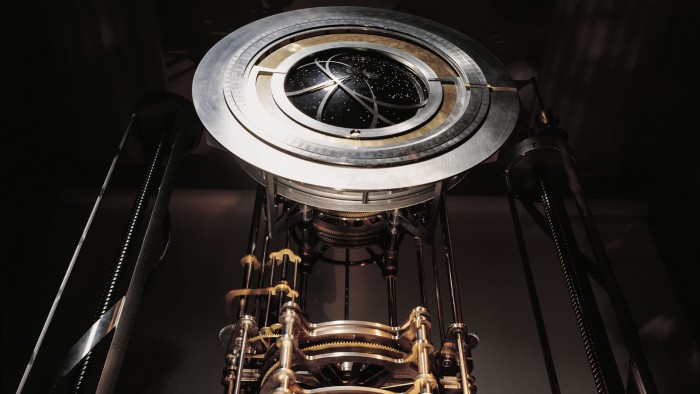
On the midsummer solstice this year, shining down through a window built into a Texas mountain, the sun woke up a clock in the process of being constructed to measure precisely 10,000 years to come. The rays passed through the window, made from sapphire, and on to a giant round quartz lens, warming air in a chamber beneath.
The temperature of the gases rose, causing their pressure to increase, which shifted a lever that released a catch. It moved by the exact amount required to synchronise the instrument, known as the Clock of the Long Now, with the heavenly body above.
“It was a very exciting moment to see the light beam shine into the mountain,” says Danny Hillis, 69, the computer scientist who came up with the idea for the clock more than three decades ago. “It reconciled the astronomical time with the mechanical time of the pendulum swing.”
The clock, in Hillis’s account, is both a philosophical and an engineering challenge. Building a machine to keep precise time over 10 millennia should prompt us to question the values we apply to the short and long terms. Constructing one to withstand 10,000 years of ageing means using enduring materials such as titanium, ceramics and stainless steel, while also making it easy to inspect and maintain. The ambition is for it to tick once a year, chime to mark the centuries — and unveil a cuckoo each millennium.