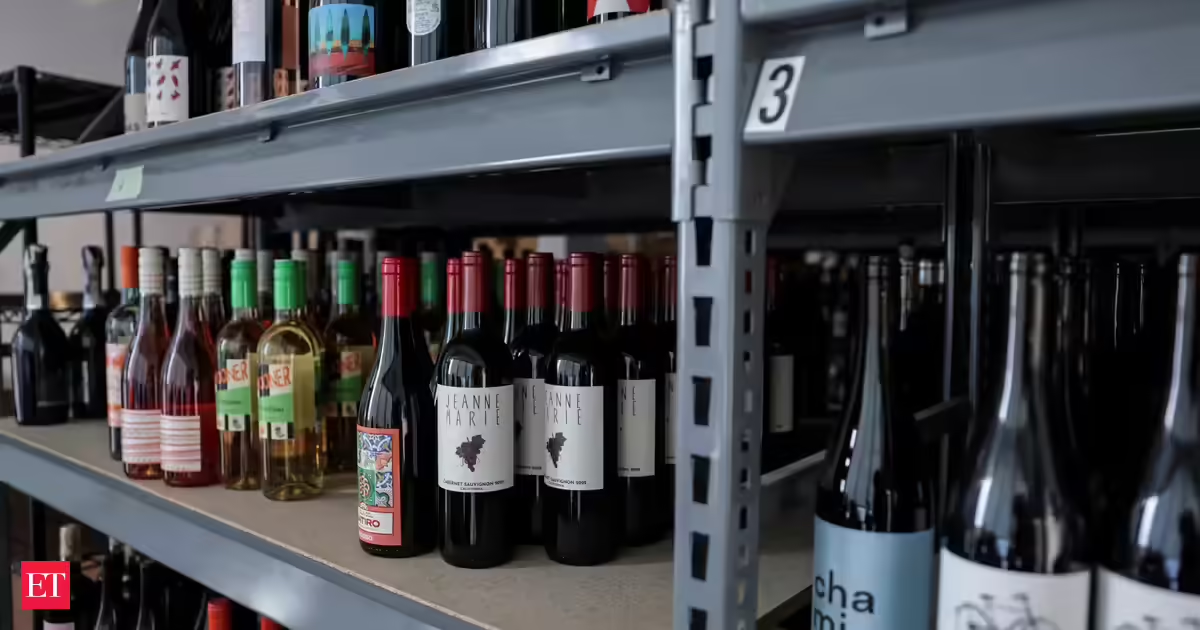
There are solid scientific reasons for bottling wine in a magnum and others that aren’t – one of which being that they are simply great fun
T
here are many reasons you may want to buy a magnum, and those reasons multiply and proliferate around this time of the year. Your usual night in with your partner becomes a party for six. Dinner with the family becomes an enormous pre-Christmas do, with thirsty adults and kids in the way everywhere. And watering the masses can get expensive, not to mention cumbersome.
I often recommend boxed wines for this specific quandary. I’ve written before about the joys of bag-in-box, but to give you the top line: it’s at least two bottles in a fridge-friendly box, and it stays good for up to six weeks. But if you prefer the allure of a glass bottle, and the idea of all attention in the room being drawn to what’s in your hand as you enter it, then a magnum might be a fun thing to unsheathe during the festivities, after the first cocktails have been sipped and glasses are empty.
At one and a half litres, a magnum is simply twice the size of a regular 750ml bottle, but the closure (ie, the entrance to the bottle) is the same size as a regular one, which means that less oxygen gets into the wine. Many wine lovers say this works wonders on the liquid inside. I asked Sandia Chang, co-founder of the two Michelin-starred Kitchen Table in London, about serving from a magnum – does she believe the wines are better? “The ratio of wine to oxygen is much less in a magnum, so any ageing that the wine has under cork is slower and more gentle.”