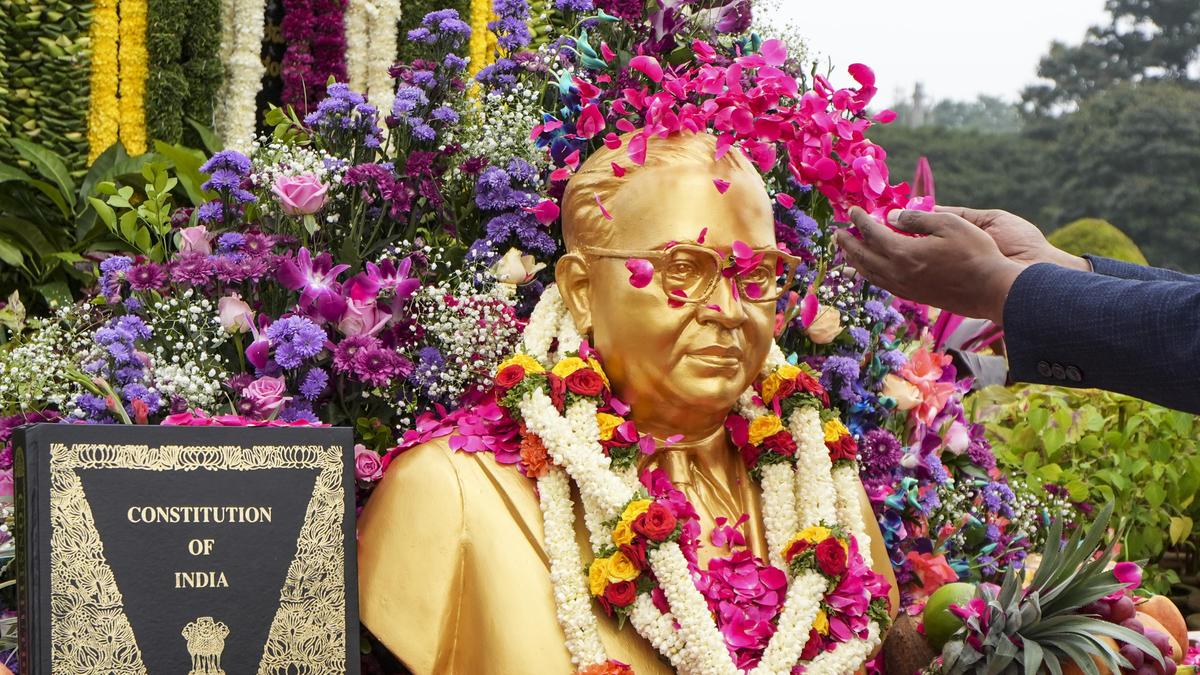
“It is perfectly possible to pervert the Constitution, without changing its form, by merely changing the form of the administration and to make it inconsistent and opposed to the spirit of the Constitution,” Excerpts from the speech delivered by B.R. Ambedkar on November 4, 1948
While the basic structure of the Constitution still resonates with the principles of democracy, federalism and secularism, the warning given by Ambedkar in a speech in the Constituent Assembly seems to become more and more relevant today. Our Constitution has been amended 105 times within 75 years of its adoption. Since the verdict of the apex court in the Kesavananda Bharati v. State of Kerala case (1973), the power of Parliament has been limited.
The Supreme Court in this landmark decision clarified that Parliament has no power to make amendments that touch the basic structure of the Constitution. Interestingly, the restriction placed on Parliament to amend the Constitution through this judgment is the most disturbing factor for the rulers of the day.
The Constitution stands as a stumbling block for them to implement their hidden agendas. It is even more pertinent that the judgment came from a 13-member Constitution Bench, which indirectly means that the overruling of this larger Bench decision cannot be expected in the near future.